

After a relatively slow start to the 2023-2024 large whale season, things are picking up here in the Mid-Atlantic. Last week was the busiest we’ve had so far this season for several of our projects as well as adjacent colleagues.
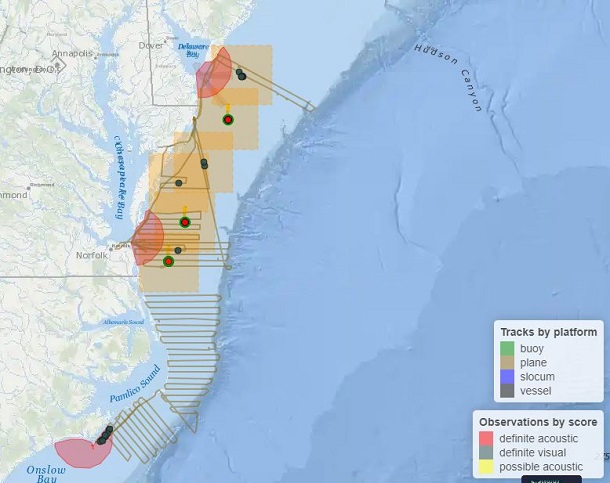
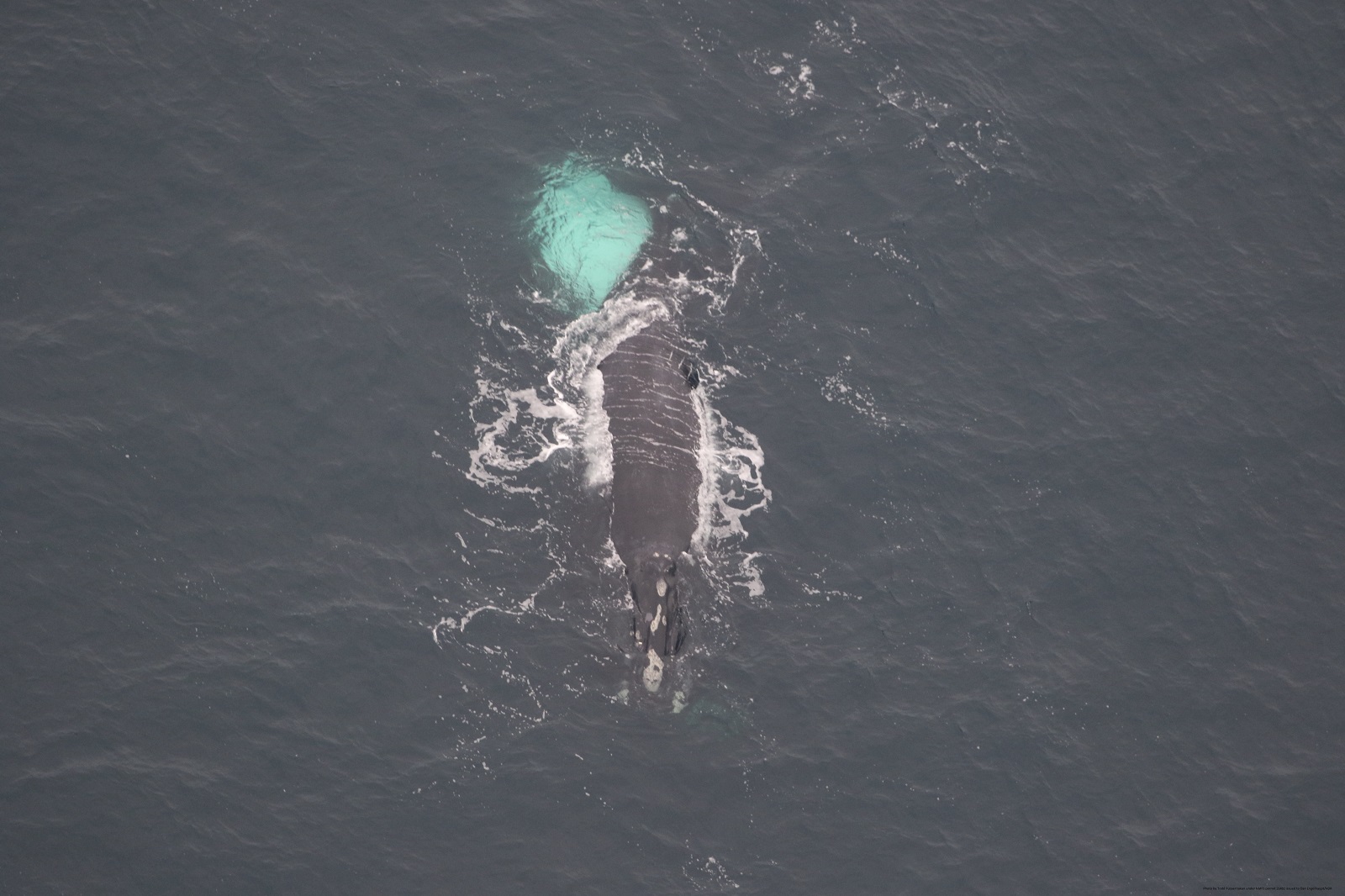
After a relatively slow start to the 2023-2024 large whale season, things are picking up here in the Mid-Atlantic. Last week was the busiest we’ve had so far this season for several of our projects as well as adjacent colleagues. In addition to ongoing passive acoustic monitoring from our real-time DMON buoy, the HDR/Navy team surveyed on January 22 (two vessels) and January 23 (vessel and aerial), along with teams from Azura, Clearwater Marine Aquarium (CMARI), and Duke University, both on the water and in the air across the broader region throughout the week. Everyone had right whale sightings!
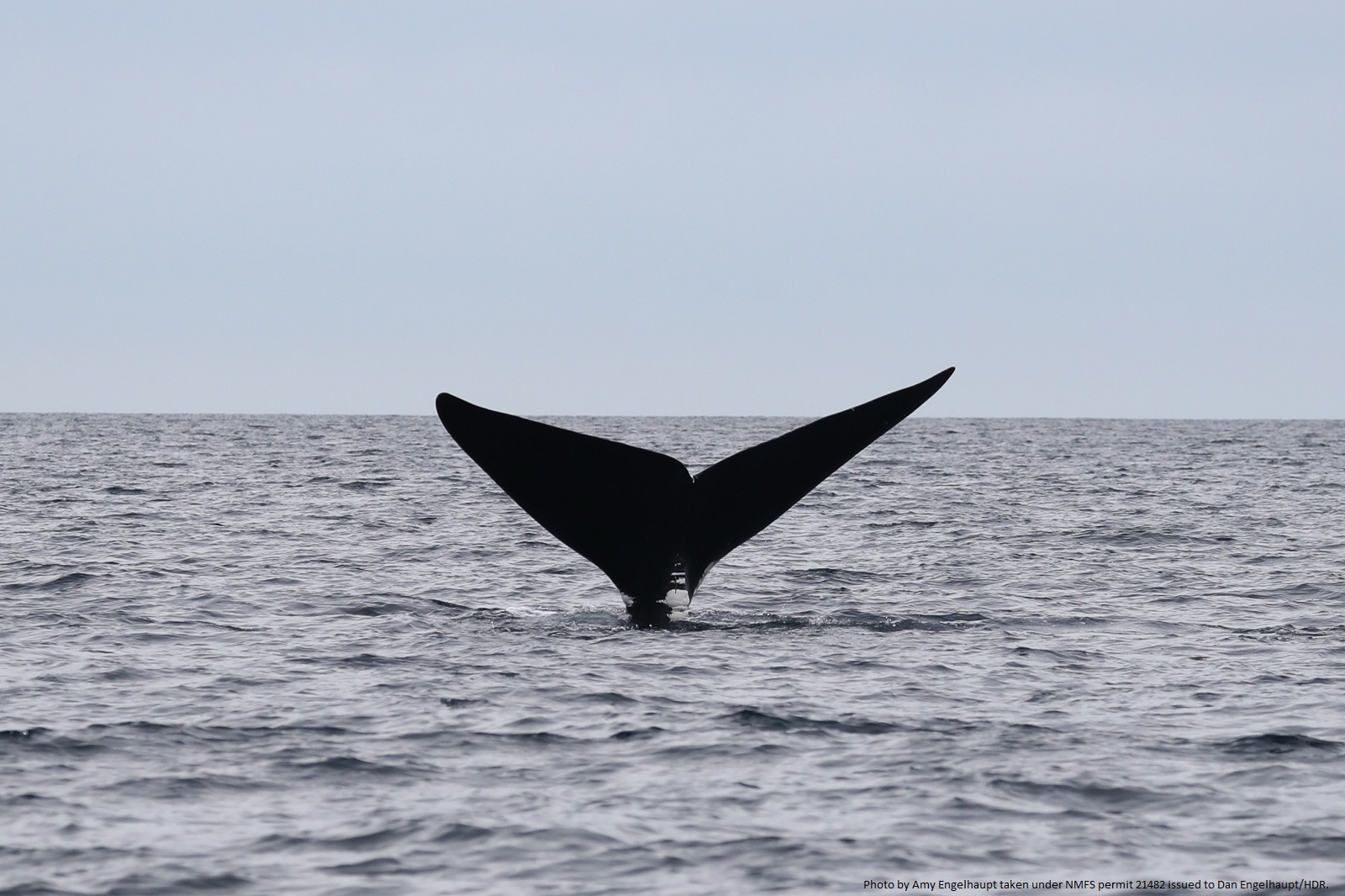
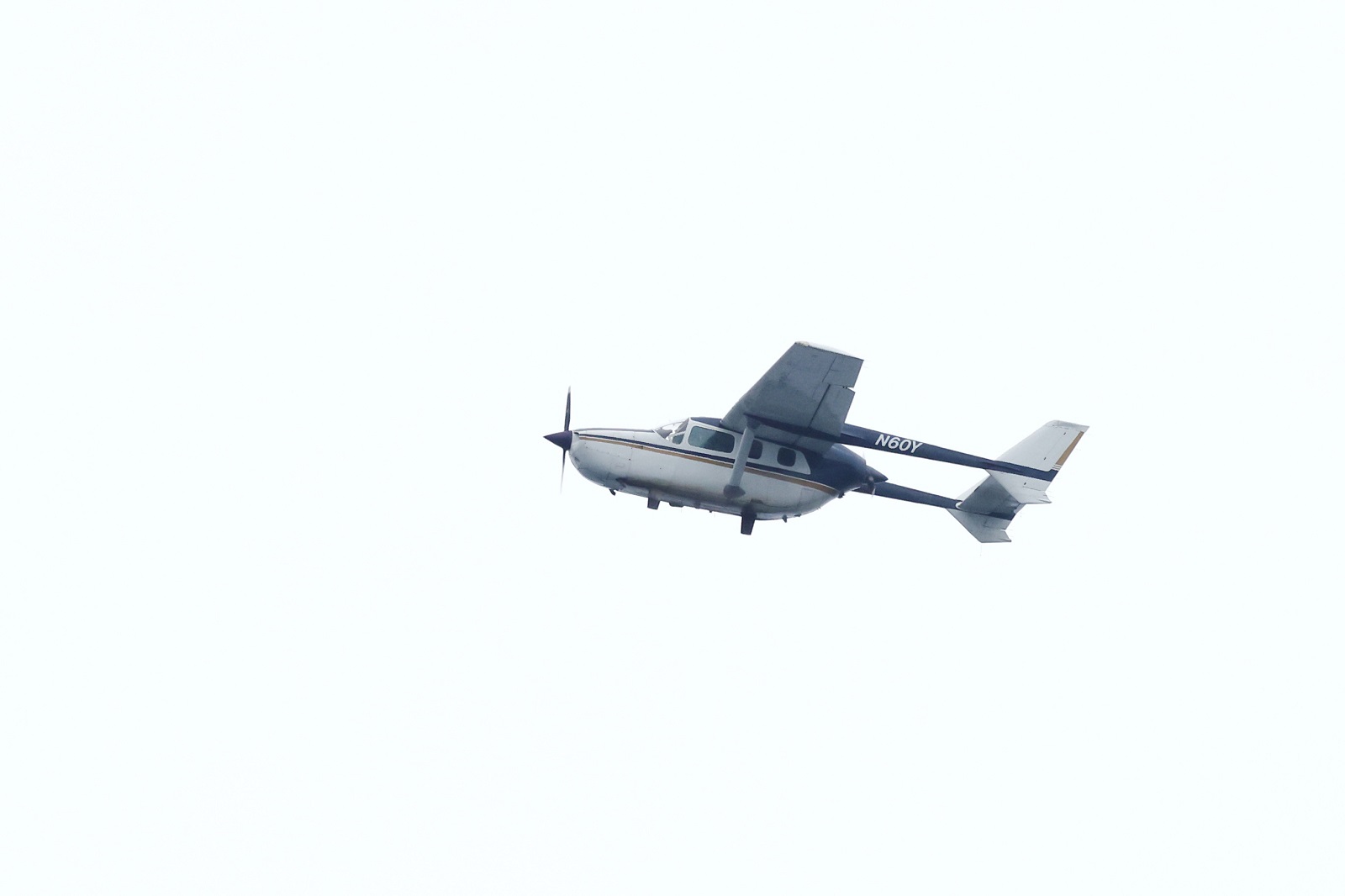
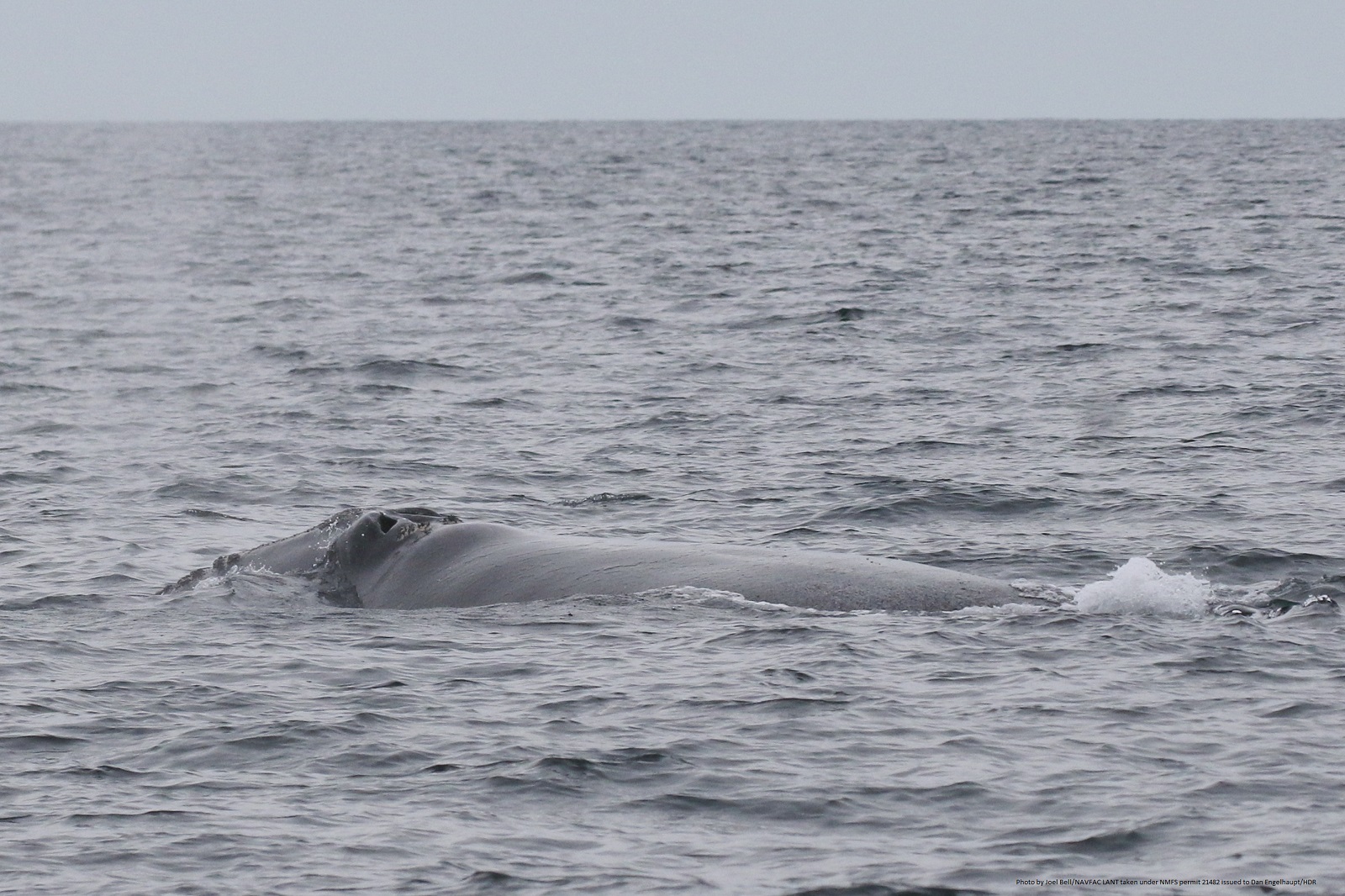
Despite acoustic detections of fin whales, humpbacks, and right whales on the buoy, things started off slow for the visual surveys on 22 January with just common dolphins and a mom-calf pair of Risso’s dolphins. This sighting was just 23 nautical miles from shore, which is a bit unusual for a deep-diving species typically found near the shelf-break. On 23 January, our aerial team sighted two North Atlantic right whales, which our boat was then able to locate. Both whales spent too much time underwater to be approached for tagging, but the drone was launched and recorded social behavior between the two and collected good quality video for identification and health assessment.
The whales were both adult males well known to researchers-- #2440 named Shakleton, and #3623 named Bongo. Shakleton turns 30 years old this year, and when he was younger found himself in a sticky situation which thankfully he survived. When he was just a yearling, he made his way up the Delaware River where he was hit by a tugboat. He came out of the encounter uninjured, and managed to make his way back to the open ocean. Archival news footage of Shakleton in the river as a yearling can be watched here.
The plane also sighted a minke whale and a humpback whale during their transect survey. All of this work is conducted under National Marine Fisheries Service Scientific Research Permit #21482.
Duke University received word of a group of right whales off the coast of Cape Lookout, NC from aerial surveys being conducted by Clearwater Marine Aquarium, and were able to deploy four suction cup tags from the R/V Exocetus over the course of two days (22-23 January.) Tags were deployed on NARW #4501, #3950, #3997 and #2304. All tagged individuals were adult males ranging in age from 9-31 years old. The other whales sighted were NARW #3830, #3808, #3650, #3714, #3351, #2022Calfof4340, #3714, and #4720. This work is done under NOAA NEFSC Permit #27066.
Meanwhile, surveys conducted by our colleagues are also seeing whales in other areas of the Mid-Atlantic. On 23 January, Azura surveys sponsored by National Marine Fisheries Service sighted seven right whales off Cape May, New Jersey, and on 24 January, the same team found another seven right whales off the northernmost coast of Virginia’s Eastern Shore, close to Wallop’s Island.
North Atlantic right whales aren’t only in the Mid-Atlantic during this time of year. Four to seven right whales were also spotted in Cape Cod Bay last week by a team at the Provincetown Center for Coastal Studies, and the 16th North Atlantic right whale mom/calf pair of the season was sighted off Florida by Florida Fish and Wildlife Research Institute. Sadly, two of these calves are assumed to have died already, with one more severely injured.
Our acoustic buoy off Cape Charles has detected humpback whale song every day since last week, and has also detected fin whales on four days, and North Atlantic right whales on three days (with an additional two days with possible detections) since Jan 22. The right whale detections are particularly important since a verified detection triggers a voluntary “slow zone” for ships 65 feet or greater in length to travel 10 knots or less.
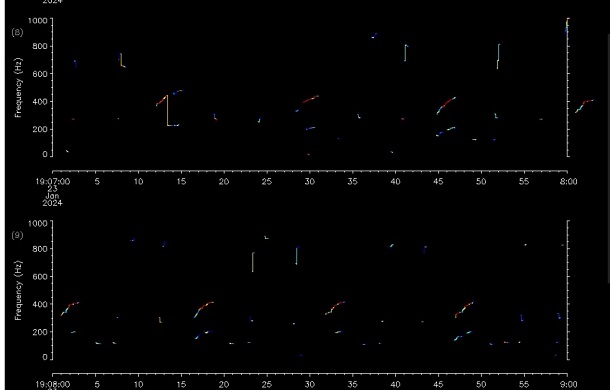
DMON buoy detections of Humpback Whale calls.
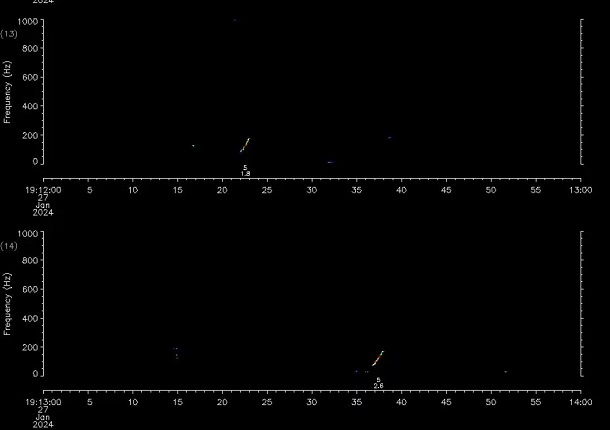
DMON buoy detections of North Atlantic right whale upcalls.
Whales aren’t the only marine mammal visitors to the Mid-Atlantic. Our pinniped haul-out counts are also in full swing at both the Chesapeake Bay Bridge Tunnel and on the Eastern Shore, with our highest counts at these sites being 38 and 23 seals, respectively.
Recent posts
Kaua‘i field project - August 2026
August 25, 2026
Researchers from Cascadia Research Collective are conducting a 9-day field session off Kaua'i to deploy LIMPET satellite tags on odontocete cetaceans…
Another CEE Trial – and Gervais’ beaked whales!
August 10, 2026
A second controlled exposure experiment trial with simulated Continuously Active Sonar (CAS) was conducted on August 1. In addition to the usual…
Killer Whale Ecotype Study (KWEST) kicks off
July 27, 2026
Research scientists from the University of Washington and NOAA recently departed from Kodiak, AK aboard the R/V Aquila for a 2-month research cruise…
