

D-tag and limpet tag on a humpback whale.
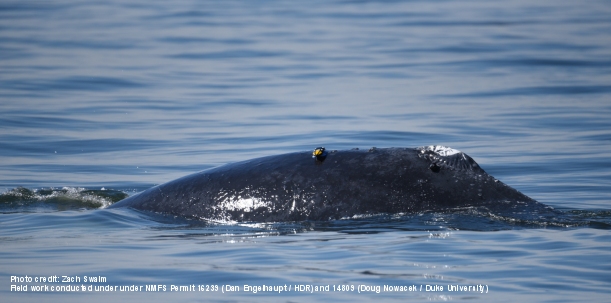
Juvenile humpback whale carrying both satellite-linked tracking tag (just below dorsal fin) and Dtag.
Researchers from HDR Inc. and Duke University logged an unusual accomplishment recently by managing to deploy both a satellite-linked tracking tag and a DTag on a juvenile humpback whale off Virginia Beach. The HDR crew deployed a LIMPET-F tag that tracks movements and diving behavior over days to weeks on March 2 during a routine survey as part of the ongoing Mid-Atlantic Humpback Whale Monitoring Project. They also collected photos for identification and a biopsy sample for genetic analysis. This whale was a new individual to the catalog but had been seen multiple times over the past few weeks by local whale watch tours.
Mid-Atlantic Humpback Whale Monitoring Project. They also collected photos for identification and a biopsy sample for genetic analysis. This whale was a new individual to the catalog but had been seen multiple times over the past few weeks by local whale watch tours.
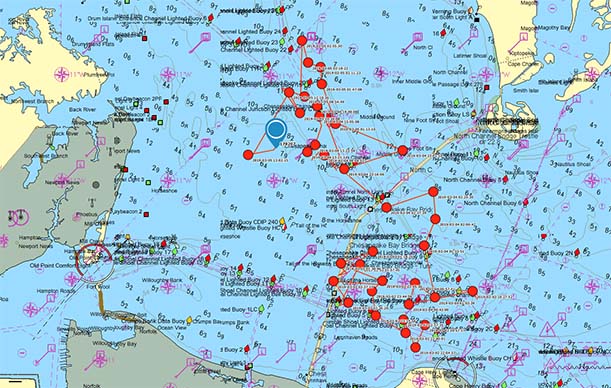
Locations of tagged humpback from satellite-linked tracking tag showing it's movements over several days concentrated in the area of the shipping channels entering the Chesapeake Bay.
Tracking and dive data from the tag show that the whale stayed in the general vicinity and was actually spending the majority of it's time in the deeper shipping channels entering the Chesapeake Bay frequently making dives of 3-4min to depths of 10-16m, suggesting feeding behavior. This was the perfect opportunity to leverage a new collaboration with Duke University to study behavioral reactions of humpback whales to approaching ships. The Duke team mobilized and was on the water Thursday morning armed with the most recent location from the satellite tag with the hopes of finding this particular individual. Sure enough they were able to locate the whale and deploy a Dtag that morning. The DTag was programmed to release within about 20hours and will hopefully record lots of valuable data. Stay tuned for more on this project as it progresses.
Recent posts
Kaua‘i field project - August 2026
August 25, 2026
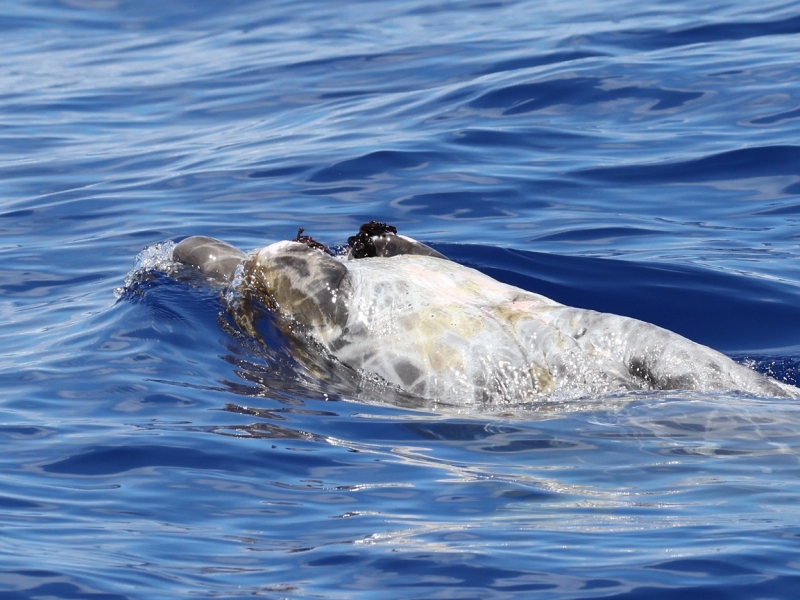
Researchers from Cascadia Research Collective are conducting a 9-day field session off Kaua'i to deploy LIMPET satellite tags on odontocete cetaceans…
Another CEE Trial – and Gervais’ beaked whales!
August 10, 2026
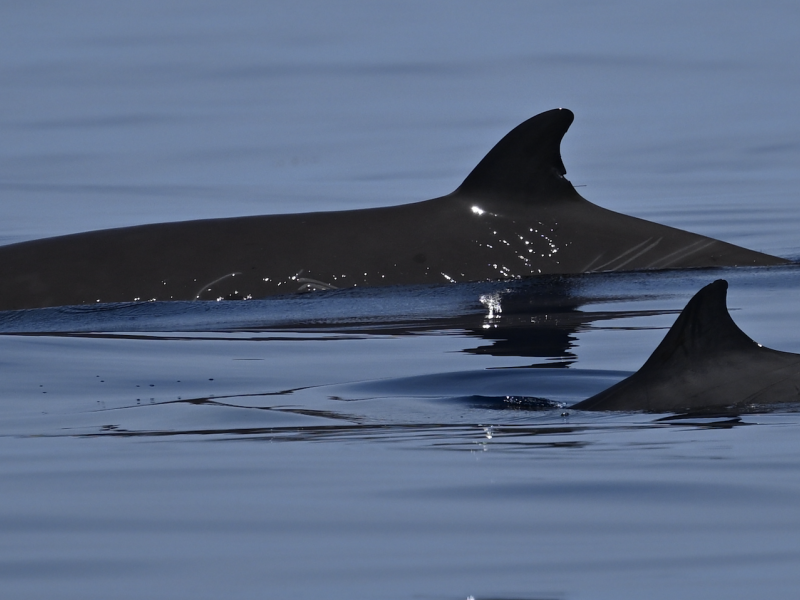
A second controlled exposure experiment trial with simulated Continuously Active Sonar (CAS) was conducted on August 1. In addition to the usual…
Killer Whale Ecotype Study (KWEST) kicks off
July 27, 2026
Research scientists from the University of Washington and NOAA recently departed from Kodiak, AK aboard the R/V Aquila for a 2-month research cruise…
