Identification of western North Atlantic odontocete echolocation click types using machine learning and spatiotemporal correlates.
PLOS One. 2022.
17(3): e0264988
More details
Collapse details
Date Published:
Publication:Ocean:Region:Species:Methods:
- March 24, 2022
A combination of machine learning and expert analyst review was used to detect odontocete echolocation clicks, identify dominant click types, and classify clicks in 32 years of acoustic data collected at 11 autonomous monitoring sites in the western North Atlantic between 2016 and 2019. Previously-described click types for eight known odontocete species or genera were identified in this data set: Blainville’s beaked whales (Mesoplodon densirostris), Cuvier’s beaked whales (Ziphius cavirostris), Gervais’ beaked whales (Mesoplodon europaeus), Sowerby’s beaked whales (Mesoplodon bidens), and True’s beaked whales (Mesoplodon mirus), Kogia spp., Risso’s dolphin (Grampus griseus), and sperm whales (Physeter macrocephalus)
More details
Collapse details
Date Published:
Filesize:
- August 1, 2017
This report forms part of a multi-institutional monitoring project intended to provide information on the species composition, population identity, density, and baseline behavior of marine mammals and sea turtles present in United States (U.S.) Navy range complexes along the U.S. Atlantic Coast.
- 11,346.94 KB
More details
Collapse details
Date Published:
Filesize:
- September 1, 2015
This report forms part of a multi-institutional monitoring project intended to provide information on the species composition, population identity, density, and baseline behavior of marine mammals and sea turtles present in United States (U.S.) Navy range complexes along the U.S. Atlantic Coast.
- 26,430.91 KB
Habitat utilization by beaked whales in the western North Atlantic Ocean using passive acoustics.
Marine Ecology Progress. 2025.
754:137-153
More details
Collapse details
Date Published:
- February 13, 2025
More details
Collapse details
Date Published:
Filesize:
- February 1, 2014
Passive acoustic monitoring was conducted within the Navy’s Cherry Point OPAREA during August – December 2011 and July – October 2012 for a total of 105 and 81 days respectively. This site is located approximately 100 miles from the North Carolina coastline on the shelf break. The 2011 deployment was at a water depth of 952 m and the 2012 deployment was at a water depth of 914 m. Acoustic data collected at this site provide information on the presence of marine mammals and anthropogenic sound sources. High-frequency Acoustic Recording Packages (HARPs) recorded sounds between 10 Hz and 100 kHz with recording cycles of 5 minutes every 10 minutes. The data were divided into three frequency bands and data were analyzed by scans of long-term spectral averages and spectrograms. Four baleen whale species were recorded: blue, fin, minke, and sei whales. The detections of their calls were made between late August and early December 2011. Blue whale calls were the only baleen whale call type detected in the 2012 deployment. No Bryde’s, humpback, or North Atlantic right whale calls were detected in either deployment. Several different toothed whale species were recorded: Blainville’s, Cuvier’s, and Gervais’ beaked whales, killer whales, pygmy or dwarf sperm whales (Kogia spp.), Risso’s dolphins, sperm whales, and unidentified odontocetes. All species except killer whales were recorded in 2011 and 2012. Killer whales were detected only in 2011. Ship noise was the most common anthropogenic sound in both deployments. MFA was noted during both deployments. A total of 391 pings were detected in 2011 with a maximum peak-to-peak received level of 156 dB re 1 μPa. In 2012, a total of 492 pings were detected with a maximum peak-to-peak received level of 167 dB re 1 μPa. Few echosounder pings over a variety of frequencies (4-80 kHz) were detected during both deployments. Explosions were detected in both deployments, though they were more prevalent in 2011 than 2012. High noise levels, possibly caused by instrument strumming and fluid flow at the sensor, occurred intermittently in both deployments and likely decreased the detection range for low-frequency sounds. This strumming was most prevalent in 2012.
- 13,075.42 KB
More details
Collapse details
Date Published:
Filesize:
- September 7, 2024
In the Pacific, the Marine Mammal Monitoring on Navy Ranges (M3R) program maintains systems that continuously run algorithms to detect, classify and localize marine mammals year-round on the U.S. Navy’s deep-water Southern California Antisubmarine Warfare Range (SOAR) in Southern California and the Pacific Missile Range Facility (PMRF) off Kaua‘i, Hawai‘i. Long-term archive data collected on these ranges allow for numerous types of studies on species inhabiting the ranges, including the monitoring of abundance, behavioral responses to naval activities, and habitat usage. They also provide the opportunity to study ambient sound levels and soundscapes.
- 8,141.88 KB
More details
Collapse details
Date Published:
Filesize:
- March 1, 2017
To monitor for the presence of marine mammals, a High-frequency Acoustic Recording Package (HARP) recorded within the Navy’s Virginia Capes Range Complex, offshore from Cape Hatteras (HAT), between April 2015 and January 2016. The HAT site was located approximately 75 nm offshore in about 1000 m of water.
- 12,603.69 KB
More details
Collapse details
Date Published:
Filesize:
- January 1, 2015
Beaked whales (family Ziphiidae) consist of at least 21 different species in six genera with relatively little known about many of the species. Research on this family of odontocetes has increased in the last two decades as a result of a mass stranding event of beaked whales in the Bahamas in 2000 in association with a U.S. Navy training event. Results of this research have identified echolocation click characteristics for several species from different areas of the world based upon both tag data and passive acoustic monitoring data
- 184.39 KB
More details
Collapse details
Date Published:
Filesize:
- January 1, 2018
Passive acoustic monitoring was conducted using High-frequency Acoustic Recording Packages (HARPs) deployed in waters offshore of Virginia, North Carolina, and Florida with support from the US Navy during 2016 - 2017. The HARPs recorded underwater sounds between 10 Hz and 100 kHz. Data analysis consisted of analyst scans of long-term spectral averages (LTSAs) and spectrograms, and automated computer algorithm detection when possible. Three frequency bands were analyzed for marine mammal vocalizations and anthropogenic sounds: (1) Lowfrequency, between 10-1000 Hz, (2) Mid-frequency, between 1,000-5,000 Hz, and (3) Highfrequency, between 1-100 kHz.
- 5,208.04 KB
- Blue whale
- Bryde's whale
- Fin whale
- Minke whale
- North Atlantic right whale
- Sei whale
- Atlantic white-sided dolphin
- Blainville's beaked whale
- Bottlenose dolphin
- Clymene dolphin
- Common dolphin
- Goose-beaked whale
- Dwarf sperm whale
- False killer whale
- Gervais' beaked whale
- Killer whale
- Northern bottlenose whale
- Risso's dolphin
- Rough-toothed dolphin
- Short-finned pilot whale
- Sowerby's beaked whale
- Sperm whale
- Spotted dolphin
- Striped dolphin
More details
Collapse details
Date Published:
Filesize:
- January 1, 2014
A High-frequency Acoustic Recording Package (HARP; Wiggins and Hildebrand 2007) was deployed between August 2011 and July 2012 in Onslow Bay at Site E in 952 m. This HARP sampled at 200 kHz for 5 minutes of every 10 minutes and recorded for 105 days between 19 August 2011 and 1 December 2011. Long-Term Spectral Averages (LTSAs) were created for three frequency bands (10 Hz – 1000 Hz, 500 Hz – 5000 Hz, and 1 kHz – 100 kHz) and scanned for marine mammal vocalizations. Calls of blue whales, fin whales, minke whales, possible sei whales, an unidentified beaked whale species, Blainville’s beaked whales, Cuvier’s beaked whales, Gervais’ beaked whales, killer whales, Kogia spp., Risso’s dolphins, sperm whales, and unidentified delphinids were detected in the data.
- 1,903.07 KB
More details
Collapse details
Date Published:
Filesize:
- January 1, 2014
A High-frequency Acoustic Recording Package (HARP; Wiggins and Hildebrand 2007) was deployed between July and October 2012 in Onslow Bay at Site E in 914 m. This HARP sampled at 200 kHz for 5 minutes of every 10 minutes and recorded for 81 days between 14 July 2012 and 2 October 2012. Long-Term Spectral Averages (LTSAs) were created for three frequency bands (10 Hz – 1000 Hz, 500 Hz – 5000 Hz, and 1 kHz – 100 kHz) and scanned for marine mammal vocalizations. Calls of blue whales, Blainville’s beaked whales, Cuvier’s beaked whales, Gervais’ beaked whales, Kogia spp., Risso’s dolphins, sperm whales, and unidentified delphinids were detected in the data.
- 1,321.32 KB
More details
Collapse details
Date Published:
Filesize:
- April 3, 2015
A High-frequency Acoustic Recording Package (HARP; Wiggins and Hildebrand 2007) was deployed between October 2012 and August 2013 in Onslow Bay at Site E in 853 m. This HARP sampled at 200 kHz for 5 minutes of every 10 minutes and recorded for 250 days between 24 October 2012 and 30 June 2013. Long-Term Spectral Averages (LTSAs) were created for three frequency bands (10 Hz – 1000 Hz, 500 Hz – 5000 Hz, and 1 kHz – 100 kHz) and scanned for marine mammal vocalizations. Calls of blue whales, fin whales, minke whales, possible sei whales, Blainville’s beaked whales, Cuvier’s beaked whales, Gervais’ beaked whales, Kogia spp., Risso’s dolphins, sperm whales, and unidentified odontocetes and mysticetes were detected in the data.
- 2,799.53 KB
More details
Collapse details
Date Published:
Filesize:
- August 17, 2016
A High-frequency Acoustic Recording Package (HARP; Wiggins and Hildebrand 2007) was deployed between May 2014 and April 2015 in the Cape Hatteras, NC, survey area at Site A in 850 m. This HARP sampled continuously at 200 kHz and recorded for 217 days between 9 May 2014 and 11 December 2014. The data were divided into three frequency bands (10 Hz – 1000 Hz, 500 Hz – 5000 Hz, and 1 kHz – 100 kHz) and scanned for marine mammal vocalizations using Long-Term Spectral Averages (LTSAs) and automated detectors. Vocalizations of blue whales, fin whales, minke whales, sei whales, North Atlantic right whales, humpback whales, Kogia spp., Risso’s dolphins, sperm whales, Cuvier’s beaked whales, Gervais’ beaked whales, Blainville’s beaked whales, and unidentified delphinids were detected in the data.
- 2,212.30 KB
More details
Collapse details
Date Published:
Filesize:
- July 1, 2018
The U.S. Navy has been using High-frequency Acoustic Recording Packages (HARPs) to conduct passive acoustic monitoring in waters offshore of Virginia, North Carolina, and Florida to determine patterns of occurrence and distribution of cetacean species and anthropogenic sounds since 2007. Many baleen whale species and six known odontocete taxa (Kogia spp., Risso’s dolphins (Grampus griseus), sperm whales (Physeter macrocephalus), Cuvier’s beaked whale (Ziphius cavisrostris), Gervais’ beaked whale (Mesoplodon europaeus), and Blainville’s beaked whale (M. densirostris)) had previously been identified within these recordings; however, a much larger number of detections of unidentified odontocete clicks remained. This work looked at steps toward classification of these unidentified odontocete clicks.
- 10,763.43 KB
More details
Collapse details
Date Published:
Filesize:
- August 16, 2016
A High-frequency Acoustic Recording Package (HARP; Wiggins and Hildebrand 2007) was deployed between June 2014 and April 2015 in Norfolk Canyon, VA, at Site A in 982 m. This HARP sampled continuously at 200 kHz and recorded for 290 days between 19 June 2014 and 5 April 2015. The data were divided into three frequency bands (10 Hz – 1000 Hz, 500 Hz – 5000 Hz, and 1 kHz – 100 kHz) and scanned for marine mammal vocalizations using Long-Term Spectral Averages (LTSAs) and automated detectors. Vocalizations of blue whales, fin whales, minke whales, sei whales, humpback whales, Kogia spp., Risso’s dolphins, sperm whales, Cuvier’s beaked whales, Gervais’ beaked whales, possible Sowerby’s beaked whales, and unidentified delphinids were detected in the data.
- 2,844.76 KB
More details
Collapse details
Date Published:
Filesize:
- August 17, 2016
A High-frequency Acoustic Recording Package (HARP; Wiggins and Hildebrand 2007) was deployed between May 2013 and March 2014 in the Cape Hatteras, NC, survey area at Site A in 970 m. This HARP sampled continuously at 200 kHz and recorded for 290 days between 29 May 2013 and 15 March 2014. The data were divided into three frequency bands (10 Hz – 1000 Hz, 500 Hz – 5000 Hz, and 1 kHz – 100 kHz) and scanned for marine mammal vocalizations using Long-Term Spectral Averages (LTSAs) and automated detectors. Vocalizations of blue whales, fin whales, minke whales, sei whales, North Atlantic right whales, humpback whales, Kogia spp., Risso’s dolphins, sperm whales, Cuvier’s beaked whales, Gervais’ beaked whales, Blainville’s beaked whales, possible Sowerby’s beaked whales, and unidentified delphinids were detected in the data.
- 2,842.35 KB
More details
Collapse details
Date Published:
Filesize:
- August 16, 2016
A High-frequency Acoustic Recording Package (HARP; Wiggins and Hildebrand 2007) was deployed between October 2012 and May 2013 in the Cape Hatteras, NC, survey area at Site A in 970 m. This HARP sampled continuously at 200 kHz and recorded for 212 days between 9 October 2012 and 9 May 2013. The data were divided into three frequency bands (10 Hz – 1000 Hz, 500 Hz – 5000 Hz, and 1 kHz – 100 kHz) and scanned for marine mammal vocalizations using Long-Term Spectral Averages (LTSAs) and automated detectors. Vocalizations of blue whales, fin whales, minke whales, sei whales, North Atlantic right whales, humpback whales, Kogia spp., Risso’s dolphins, sperm whales, Cuvier’s beaked whales, Gervais’ beaked whales, Blainville’s beaked whales, and unidentified delphinids were detected in the data.
- 2,669.81 KB
More details
Collapse details
Date Published:
Filesize:
- June 1, 2017
The U.S. Navy has been using High-frequency Acoustic Recording Packages (HARPs) to conduct passive acoustic monitoring in waters offshore of Virginia, North Carolina, and Florida to determine patterns of occurrence and distribution of cetacean species and anthropogenic sounds since 2007. The datasets discussed in this annual report came from seven HARP deployments made from 2012 through 2016: one near Norfolk Canyon, off the coast of Virginia (982 meter [m] depth) between June 2014 and April 2015; four off Cape Hatteras, North Carolina (850–980 m depths) between October 2012 and April 2016; and two off Jacksonville, Florida (800–806 m depths) between August 2014 and April 2016.
- 7,021.28 KB
More details
Collapse details
Date Published:
Filesize:
- April 1, 2016
A High-frequency Acoustic Recording Package (HARP; Wiggins and Hildebrand 2007) was deployed between August 2014 and July 2015 in the Jacksonville, FL, survey area at Site D in 806 m. This HARP sampled continuously at 200 kHz and recorded for 279 days between 23 August 2014 and 29 May 2015. The data were divided into three frequency bands (10 Hz – 1000 Hz, 500 Hz – 5000 Hz, and 1 kHz – 100 kHz) and scanned manually for marine mammal vocalizations using Long-Term Spectral Averages (LTSAs) and automated computer algorithm detection when possible. Vocalizations of fin whales, minke whales, sei whales, Kogia spp., Risso’s dolphins, sperm whales, Blainville’s beaked whales, Gervais’ beaked whales, and unidentified delphinids were detected in the data.
- 1,876.70 KB
More details
Collapse details
Date Published:
Filesize:
- January 1, 2014
This report forms part of a multi-institutional monitoring project intended to provide information on the species composition, population identity, density and baseline behavior of marine mammals and sea turtles present in Navy range complexes along the Atlantic coast. This program began in 2007, with baseline aerial and vessel surveys and a passive acoustic monitoring program in Onslow Bay, North Carolina and has since expanded to include study areas off Jacksonville, Florida and Cape Hatteras, North Carolina. In Onslow Bay, six years of monitoring have yielded a comprehensive picture of the density, distribution and abundance of marine mammals and sea turtles and provided new insights into residency patterns among pelagic delphinid cetaceans in this region. More than four years of monitoring in Jacksonville have provided similar information on the density and distribution of marine mammals and sea turtles in this area. In Cape Hatteras, almost three years of surveys have provided preliminary information on the complex patterns of distribution and diversity of the marine mammals and sea turtles in this highly productive area. The current report builds on this past body of work and describes passive acoustic monitoring activities that occurred at these three sites between January and December 2013.
- 4,410.11 KB
More details
Collapse details
Date Published:
Filesize:
- February 28, 2015
In October 2005, the U.S. Department of the Navy proposed the installation of an Undersea Warfare Training Range (USWTR) in one of four sites along the Atlantic coast, for the purpose of anti-submarine warfare training using mid-frequency tactical sonar (1-10 kilohertz [kHz]) in shallow waters. The initial preferred site for the USWTR was Onslow Bay, North Carolina.
- 5,329.59 KB
More details
Collapse details
Date Published:
Filesize:
- February 1, 2016
The primary objectives of the passive acoustic 26 monitoring program are to: 1) Determine the patterns of occurrence at each monitoring site; 2) Compare patterns of occurrence to better understand distributional patterns; and 3) Document species-specific characteristics of the vocalizations of marine mammal species 30 in each area.
- 9,348.40 KB
More details
Collapse details
Date Published:
Filesize:
- January 1, 2014
This report forms part of a multi-institutional monitoring project intended to provide information on the species composition, population identity, density and baseline behavior of marine mammals and sea turtles present in Navy range complexes along the Atlantic coast. This program began in 2007, with baseline aerial and vessel surveys and a passive acoustic monitoring program in Onslow Bay, North Carolina and has since expanded to include study areas off Jacksonville, Florida and Cape Hatteras, North Carolina. In Onslow Bay, six years of monitoring have yielded a comprehensive picture of the density, distribution and abundance of marine mammals and sea turtles and provided new insights into residency patterns among pelagic delphinid cetaceans in this region. More than four years of monitoring in Jacksonville have provided similar information on the density and distribution of marine mammals and sea turtles in this area. In Cape Hatteras, almost three years of surveys have provided preliminary information on the complex patterns of distribution and diversity of the marine mammals and sea turtles in this highly productive area. The current report builds on this past body of work and describes monitoring activities that occurred between January and December 2013.
- 10,899.34 KB
More details
Collapse details
Date Published:
Filesize:
- January 1, 2014
This report forms part of a multi-institutional monitoring project intended to provide information on the species composition, population identity, density and baseline behavior of marine mammals and sea turtles present in Navy range complexes along the Atlantic coast. This program began in 2007, with baseline aerial and vessel surveys and a passive acoustic monitoring program in Onslow Bay, North Carolina and has since expanded to include study areas off Jacksonville, Florida and Cape Hatteras, North Carolina
- 20,130.06 KB
Species diversity and abundance at a cetacean "hot spot" off Cape Hatteras, North Carolina, USA.
21st Biennial Conference on the Biology of Marine Mammals .
More details
Collapse details
Date Published:
Filesize:
- December 13, 2015
We have been conducting ongoing monthly aerial surveys off Cape Hatteras, NC, USA as part of the US Navy's marine species monitoring program in the Atlantic since 2011. We utilize line transect survey methods and extensively photograph all sightings to confirm species identification. Survey tracklines extend from shallow continental shelf waters, across the shelf break, to deep pelagic waters. From May 2011 through December 2014, 26,131km of trackline were flown, and 9,941 individual cetaceans were documented during 437 encounters. Nineteen species of cetaceans, including three mysticetes (Balaenoptera physalus, B. acutorostrata, Megaptera novaeangliae), five deep-divers (Physeter microcephalus, Kogia spp., Ziphius cavirostris, Mesoplodon europaeus, M. mirus), and eleven delphinids (Tursiops truncatus, Stenella frontalis, S. attenuate, S. coeruleoalba, S. clymene, S. longirostris, Steno bredanensis, Peponocephala electra, Lagenodelphis hosei, Grampus griseus and Globicephala macrorhynchus) were encountered. Similar surveys at the adjacent Onslow Bay, NC site yielded only 257 sightings (4,773 individuals representing nine species) despite nearly two times the survey effort flown (48,698km). At Cape Hatteras, minimum abundance estimates (i.e. uncorrected for availability or perception bias) were generated using spatio-temporal density surface modelling for species with sufficient detections. Predicted monthly abundance of T. truncatus varied between 170 (95% confidence interval; 0 - 17,100) and 3,450 (300 - 8,510). Monthly Stenella spp. abundance varied between 110 (0 - 360) and 1,720 (400 - 5,390). Monthly abundance of G. macrorhynchus varied between 10 (0 - 960) and 1,230 (220 - 4,300). These results demonstrate that the waters off Cape Hatteras support both higher diversity and density of cetaceans than adjacent waters along the US Atlantic coast. This site is included in the area of interest identified in six pending permits for large-scale, commercial seismic surveys. We suggest that the high density and diversity of cetaceans at this site warrants a special degree of concern by the US Bureau of Ocean Energy Management.
- 92.54 KB
Year-round presence of beaked whales off Cape Hatteras North Carolina.
21st Biennial Conference on the Biology of Marine Mammals .
More details
Collapse details
Date Published:
Filesize:
- December 13, 2015
We conducted monthly aerial surveys off Cape Hatteras, NC, USA as part of an ongoing monitoring project of sites utilized by the US Navy for training and testing activities along the US Atlantic coast. Survey tracklines extend from shallow continental shelf waters, across the continental shelf break, to deep pelagic waters. During surveys we record the geographic position of each marine mammal sighting, take extensive photographs of each animal, and review these images in the lab to confirm species identification. Characteristics utilized to identify beaked whales to species are based upon our sightings of adult males with erupted teeth and from comparisons with images of stranded animals. Between May 2011 and December 2014, we recorded 63 beaked whale sightings, representing 173 individuals. Beaked whales were observed in every month of the year, with the highest number of sightings (n=42) from May through August. The most commonly encountered species, observed in every month of the year, was Ziphius cavirostris (n=36 sightings, 106 individuals). Mesoplodon spp. (n=27 sightings, 67 individuals) were encountered in all months except September and October. Five of these mesoplodont sightings could be identified to species with M. europaeus (n=4 sightings, 12 individuals) and M. mirus (n=1 sighting, 2 individuals) identified from May through July. All beaked whales were encountered along the continental shelf break suggesting a restricted distribution. This area has recently been opened by the US Bureau of Ocean Energy Management to offshore oil and gas exploration. The geographic distribution of beaked whales off Cape Hatteras overlaps the "Manteo Prospect" and is included in the areas of interest identified in six pending permits for large-scale, commercial seismic surveys. The cumulative impacts of seismic surveys are of special concern as deep-diving beaked whales have been shown to be vulnerable to high-amplitude, impulsive anthropogenic sounds.
- 91.92 KB
Distribution and abundance of beaked whales (Family Ziphiidae) off Cape Hatteras, North Carolina, U.S.A.
Marine Mammal Science. 2018.
34:997-1017
More details
Collapse details
Date Published:
Publication:Ocean:Region:Species:Methods:
- March 30, 2018
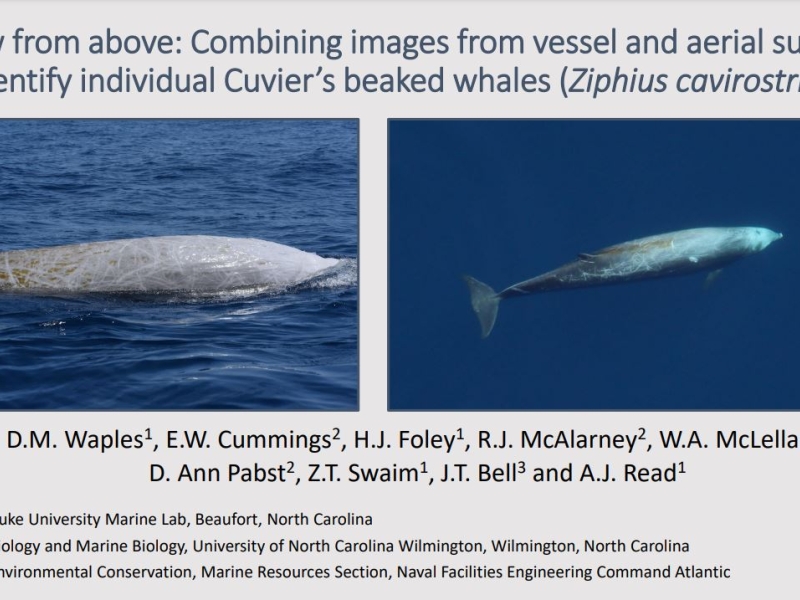
Beaked whales are vulnerable to the impacts of disturbance from several sources of anthropogenic sound. Here we report the distribution and abundance of beaked whales off Cape Hatteras, North Carolina, U.S.A., an area utilized by the U.S. Navy for training exercises, and of particular interest for seismic geophysical surveys. From May 2011 through November 2015, monthly aerial surveys were conducted at the site. Beaked whales were encountered 74 times (n = 205 individuals) during these surveys. Ziphius cavirostris, the most commonly encountered species, was observed in every month of the year. Mesoplodon spp. were encountered in ten months of the year. Photographs of adult males with erupted teeth permitted six sightings to be identified conclusively as M. europaeus; M. mirus was also photographed just outside the study area. Beaked whale surface densities stratified by depth (0.005–0.007/km2) were among the highest reported in the world for small ziphiids. A quantitative comparison of sightings and stranding records suggests that strandings do not accurately reflect the relative abundance of beaked whale species in this area. We conclude that Cape Hatteras, at the convergence of the Labrador Current and Gulf Stream, is a particularly important year-round habitat for several species of beaked whales.
Year-round presence of beaked whales off Cape Hatteras North Carolina.
SEAMAMMS (Southeast and Mid-Atlantic Marine Mammal Symposium) .
More details
Collapse details
Date Published:
Filesize:
- April 1, 2016
We conducted monthly aerial surveys off Cape Hatteras, NC, USA as part of an ongoing monitoring project of sites utilized by the US Navy for training and testing activities along the US Atlantic coast. Survey tracklines extend from shallow continental shelf waters, across the continental shelf break, to deep pelagic waters. During surveys we record the geographic position of each marine mammal sighting, take extensive photographs of each animal, and review these images in the lab to confirm species identification. Characteristics utilized to identify beaked whales to species are based upon our sightings of adult males with erupted teeth and from comparisons with images of stranded animals we have confirmed species ID.
- 205.10 KB
More details
Collapse details
Date Published:
Filesize:
- May 20, 2026
From 2007 to2013,acomprehensive acoustic monitoring effort was conducted within the boundaries of the Onslow Bay study area to study marine mammal presence and ambient noise levels. The objective was to characterize the vocalizations of marine mammal species in the area, identify their seasonal presence patterns, and assess the potential impacts of naval operations on these species. This report presents the findings from the analysis of data collected using High-frequency Acoustic Recording Packages (HARPs; (Wiggins & Hildebrand 2007)), which were strategically deployed within the Onslow Bay study area across a shelf-to-slope gradient.
- 4,896.89 KB
More details
Collapse details
Date Published:
Filesize:
- May 20, 2026
From 2012 to 2020, a comprehensive acoustic monitoring effort was conducted within the boundaries of the Virginia Capes Range Complex to study marine mammal presence and ambient noise levels. The objective was to characterize the vocalizations of marine mammal species in the area, identify their seasonal presence patterns, and assess the potential impacts of naval operations on these species. This report presents the findings from the analysis of data collected using 12 High-frequency Acoustic Recording Packages (HARPs; Wiggins & Hildebrand 2007), which were strategically deployed offshore from Cape Hatteras within the southern portion of the Virginia Capes Range Complex (Figure 1 & Table 1).
- 5,094.49 KB
More details
Collapse details
Date Published:
Filesize:
- May 20, 2026
From 2014 to2021, a comprehensive acoustic monitoring effort was conducted within the boundaries of the Virginia Capes Range Complex to study marine mammal presence and ambient noise levels. The objective was to characterize the vocalizations of marine mammal species in the area, identify their seasonal presence patterns, and assess the potential impacts of naval operations on these species. This report presents the findings from the analysis of data collected using six High-frequency Acoustic Recording Packages (HARPs; Wiggins & Hildebrand 2007), which were strategically deployed within the Virginia Capes Range Complex near Norfolk Canyon (Figure 1 & Table 1).
- 4,651.75 KB
More details
Collapse details
Date Published:
Filesize:
- March 2, 2019
Two High-Frequency Acoustic Recording Packages (HARP) were deployed sequentially from May 2017 to June 2018 to record marine mammal and anthropogenic sounds in the Navy’s Virginia Capes Range Complex offshore ~ 44 nm northeast from Cape Hatteras (HAT).
- 11,290.13 KB
More details
Collapse details
Date Published:
Filesize:
- July 2, 2018
A High-Frequency Acoustic Recording Package (HARP) was deployed from April 2016 to June 2017 to detect marine mammal and anthropogenic sounds in the Navy’s Virginia Capes Range Complex offshore from Norfolk Canyon (NFC). The HARP was located 75 nm offshore in approximately 1000 m of water. The HARP recorded sound in the frequency band 10 Hz – 100 kHz. Data analysis consisted of analyst scans of long-term spectral averages (LTSAs) and spectrograms, and automated computer algorithm detection when possible. Three frequency bands were analyzed for marine mammal vocalizations and anthropogenic sounds: (1) Low-frequency, between 10-500 Hz, (2) Mid-frequency, between 10-5,000 Hz, and (3) High-frequency, between 1- 100 kHz.
- 4,807.47 KB
More details
Collapse details
Date Published:
Filesize:
- June 1, 2020
Three High-Frequency Acoustic Recording Packages (HARPs) were deployed from June 2018 to September 2019 to detect marine mammal and anthropogenic sounds offshore in the Navy’s Virginia Capes Range Complex, approximately 44 nm northeast from Cape Hatteras (HAT).
- 10,035.71 KB
More details
Collapse details
Date Published:
Filesize:
- June 2, 2020
A High-Frequency Acoustic Recording Package (HARP) was deployed from June 2018 to May 2019 to detect marine mammal and anthropogenic sounds in the Navy’s Virginia Capes Range Complex near Norfolk Canyon (NFC).
- 5,621.20 KB
More details
Collapse details
Date Published:
Filesize:
- March 1, 2019
A High-Frequency Acoustic Recording Package (HARP) was deployed from June 2017 to June 2018 to detect marine mammal and anthropogenic sounds in the Navy’s Virginia Capes Range Complex offshore from Norfolk Canyon (NFC).
- 6,924.92 KB
More details
Collapse details
Date Published:
Filesize:
- July 1, 2018
A High-Frequency Acoustic Recording Package (HARP) was deployed from April 2016 to February 2017 to detect marine mammal and anthropogenic sounds in the Navy’s Virginia Capes Range Complex offshore from Cape Hatteras (HAT). The HARP was located 75 nm offshore in approximately 1000 m of water. The HARP recorded sound in the frequency band 10 Hz – 100 kHz. Data analysis consisted of analyst scans of long-term spectral averages (LTSAs) and spectrograms, and automated computer algorithm detection when possible. Three frequency bands were analyzed for marine mammal vocalizations and anthropogenic sounds: (1) Low-frequency, between 10-500 Hz, (2) Mid-frequency, between 500-5,000 Hz, and (3) High-frequency, between 5- 100 kHz.
- 4,689.56 KB
More details
Collapse details
Date Published:
Filesize:
- June 3, 2020
Three High-Frequency Acoustic Recording Packages (HARPs) were deployed from June 2018 to September 2019 to detect marine mammal and anthropogenic sounds offshore in the Navy’s Virginia Capes Range Complex, approximately 44 nm northeast from Cape Hatteras (HAT).
- 10,035.71 KB
Do foraging beaked whales and sperm whales target the Gulf Stream frontal edge off Cape Hatteras? Using long-term passive acoustic monitoring to explore habitat associations.
21st Biennial Conference on the Biology of Marine Mammals .
More details
Collapse details
Date Published:
Filesize:
- December 13, 2015
Beaked whales (family Ziphiidae) and sperm whales (Physeter macrocephalus) inhabit the continental shelf slope and pelagic waters in the western North Atlantic Ocean, but little is known about their associations with dynamic oceanographic features, such as fronts, which can aggregate prey. Here we analyze data from a multi-year passive acoustic monitoring program to explore associations between the foraging activity of beaked and sperm whales and the presence of the Gulf Stream, the dominant oceanographic feature off Cape Hatteras, North Carolina. From 2012 to 2015 we collected acoustic recordings on the continental slope using an autonomous, bottom-mounted acoustic recording package moored at approximately 900 m depth and sampling at 200 kHz.
- 92.29 KB
Passive acoustic monitoring of beaked whales off North Carolina, USA.
Watkins Memorial Marine Mammal Bioacoustics Symposium .
More details
Collapse details
Date Published:
Filesize:
- March 26, 2015
Little is known about the ecology, habitat preferences, or seasonal distributions of beaked whale species (family Ziphiidae) in the western North Atlantic. Here we present an analysis of passive acoustic monitoring data which provides a multi-year record of beaked whale acoustic activity at two sites along the shelf break off North Carolina: Cape Hatteras (HAT) and Onslow Bay (OB).
- 190.09 KB
Effects of duty-cycled passive acoustic recordings on detecting the presence of beaked whales in the northwest Atlantic.
Journal of the Acoustical Society of America. 2026.
140(1):EL31-EL37
More details
Collapse details
Date Published:
Publication:Ocean:Region:Species:Methods:
- March 2, 2026
This study investigated the effects of using duty-cycled passive acoustic recordings to monitor the daily presence of beaked whale species at three locations in the northwest Atlantic. Continuous acoustic records were subsampled to simulate duty cycles of 50%, 25%, and 10% and cycle period durations from 10 to 60 min. Short, frequent listening periods were most effective for assessing the daily presence of beaked whales. Furthermore, subsampling at low duty cycles led to consistently greater underestimation of Mesoplodon species than either Cuvier's beaked whales or northern bottlenose whales, leading to a potential bias in estimation of relative species occurrence.
Using passive acoustic monitoring to document the distribution of beaked whale species in the western North Atlantic Ocean.
Canadian Journal of Fisheries and Aquatic Sciences. 2017.
74(12): 2098-2109. https://doi.org/10.1139/cjfas-2016-0503
More details
Collapse details
Date Published:
Publication:Ocean:Region:Species:Methods:
- December 1, 2017
Little is known about the ecology of many beaked whale species, despite concerns raised by mass strandings linked to certain sources of anthropogenic noise. Here, we used passive acoustic monitoring to examine spatial and temporal patterns in beaked whale occurrence at six locations along the continental slope in the western North Atlantic Ocean.
More details
Collapse details
Date Published:
Filesize:
- January 1, 2025
Long-term high-frequency acoustic recording packages (HARPs) at eight sites along the western North Atlantic shelf break.
- 1,276.05 KB
More details
Collapse details
Date Published:
Filesize:
- January 1, 2024
To better understand patterns in species distribution and vocal activity, NOAA’s Northeast Fisheries Science Center (NEFSC) and Scripps Institution of Oceanography (SIO) collaboratively deployed long-term high-frequency acoustic recording packages (HARPs) at eight sites along the western North Atlantic shelf break. This work was conducted from 2015-2019, with financial support from the Bureau of Ocean Energy Management (BOEM). Likewise, the U.S. Navy has been monitoring the shelf break region at 3 to 4 sites since 2007. Together these combined efforts bring the total to 11 recording sites spanning the U.S. eastern seaboard, from New England to Florida. The work this year was aimed at finalizing components for these key objectives: I. Submit a manuscript describing the methodology of the beaked whale neural net classifier to be cited in future publications utilizing this approach II. Submit a manuscript comparing and contrasting two passive acoustic monitoring methodologies - towed array and shelf break HARPs - concerning beaked whale temporal, spatial presence and diving behavior. III. Utilize passive acoustic data from ten shelf-break environments to evaluate composition and dissimilarity of marine mammal community groups at different latitudes.
- 879.96 KB
More details
Collapse details
Date Published:
Filesize:
- January 1, 2020
Long-term high-frequency acoustic recording packages (HARPs) at eight sites along the western North Atlantic shelf break.
- 1,430.35 KB
- Blue whale
- Fin whale
- Humpback whale
- North Atlantic right whale
- Sei whale
- Atlantic white-sided dolphin
- Blainville's beaked whale
- Bottlenose dolphin
- Common dolphin
- Goose-beaked whale
- False killer whale
- Gervais' beaked whale
- Killer whale
- Northern bottlenose whale
- Pilot whale
- Rough-toothed dolphin
- Short-finned pilot whale
- Sowerby's beaked whale
- Sperm whale
- Spotted dolphin
- Striped dolphin
- True's beaked whale
More details
Collapse details
Date Published:
Filesize:
- January 1, 2021
Long-term high-frequency acoustic recording packages (HARPs) at eight sites along the western North Atlantic shelf break.
- 2,135.09 KB
More details
Collapse details
Date Published:
Filesize:
- January 27, 2022
Over 25 species of cetaceans utilize the shelf break regions of the US eastern seaboard, including several endangered species. Understanding patterns in species distribution, and the anthropogenic and environmental drivers that may impact their distribution, are critical for appropriate management of marine habitats. To better understand patterns in species distribution and vocal activity, NOAA’s Northeast Fisheries Science Center and Scripps Institution of Oceanography (SIO) collaboratively deployed long-term high-frequency acoustic recording packages (HARPs) at eight sites along the western North Atlantic shelf break. This work was conducted from 2015-2019, in coordination with the Bureau of Ocean Energy Management (BOEM). Likewise, the US Navy has been monitoring the shelf break region at 3 to 4 sites since 2007. Together these combined efforts bring the total to 11 recording sites spanning the U.S. eastern seaboard, from New England to Georgia.
- 3,732.50 KB
More details
Collapse details
Date Published:
Filesize:
- January 1, 2017
A High-frequency Acoustic Recording Package (HARP) was deployed from July 2015 to April 2016, with recordings made between July 2015 and November 2015, to detect marine mammal and anthropogenic sounds in the Navy’s Jacksonville Range Complex. The HARP was located 83 nm off the Florida coastline on the continental slope.
- 2,586.30 KB
More details
Collapse details
Date Published:
Filesize:
- April 1, 2024
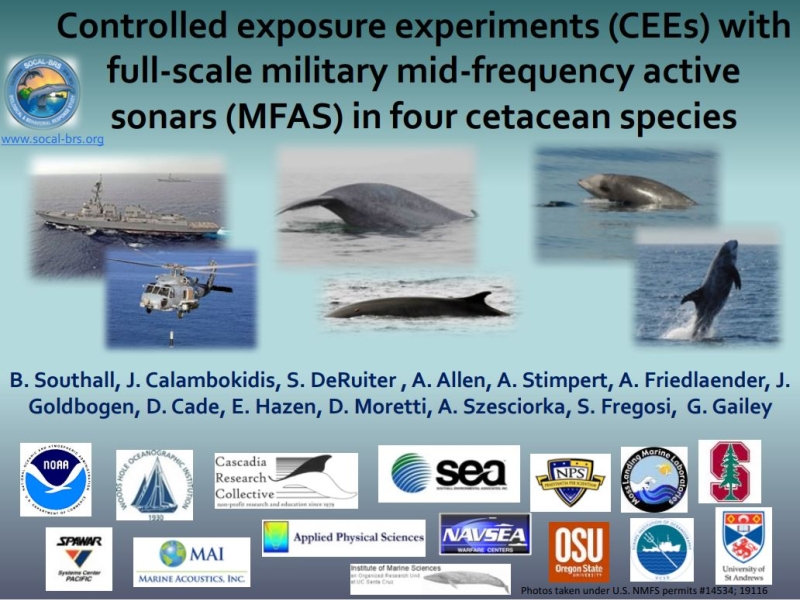
During fieldwork supporting the Atlantic Behavioral Response Study (BRS) in 2023 (Southall et al. 2024) and other related research, more than 17,000 digital images were collected within the Cape Hatteras study area. These images were used to confirm species, identify individual animals, compile sighting histories, and conduct follow-up monitoring of satellite-tagged animals. Digital photographs were taken with Canon or Nikon digital single lens reflex cameras equipped with 100- to 400-millimeter zoom lenses in 24-bit color at a resolution of 6016 × 4016 pixels and saved in .jpg format. Photographs were obtained from five species, with most of them being Ziphius cavirostris, which will be referred to as ‘Ziphius’ or Zc, the primary focal species of BRS field efforts.
- 6,762.29 KB
Monitoring the acoustic ecology of the shelf break of Georges Bank, Northwestern Atlantic Ocean: new approaches to visualizing complex acoustic data.
Marine Policy. 2021.
Volume 130. DOI: 10.1016/j.marpol.2021.104570
More details
Collapse details
Date Published:
Publication:Ocean:Region:Species:Methods:
- August 1, 2021
This study aims to assess the co-occurrence of cetaceans and anthropogenic activities, presenting simple and accessible visualizations of the temporal and spectral overlap.
Complete
Accelerometry Tag Development
Project Objectives
Increase capacity and develop training for marine mammal monitoring in Hawaii utilizing non-invasive triaxial accelerometry biologging tags to quantify fine-scale behavioral and energetic responses of protected species to potential anthropogenic disturbance
Complete
Acoustic Tagging of Green Sturgeon to Evaluate Habitat Use Along the Washington Coast
Project Objectives
With acoustic telemetry, determine 1) the location of green sturgeon detections within Washington, 2) the season for specific habitat use (e.g., estuaries; coastal waters), 3) the frequency an animal moves between coastal and estuarine waters, and 4) the range of each tagged animal.
Current
Atlantic and Shortnose Sturgeon Monitoring in the Lower Kennebec River
Project Objectives
Assess Atlantic and shortnose sturgeon seasonal occurrence, migration, and overwintering
Current
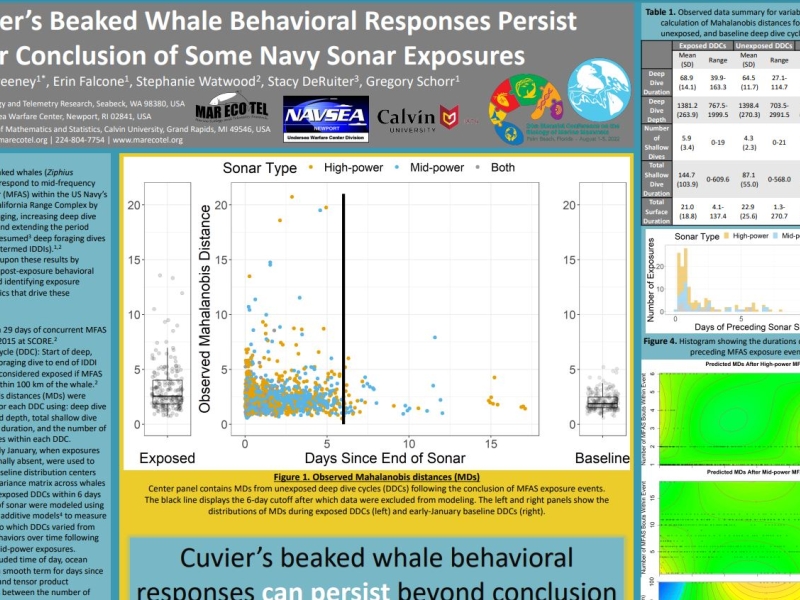
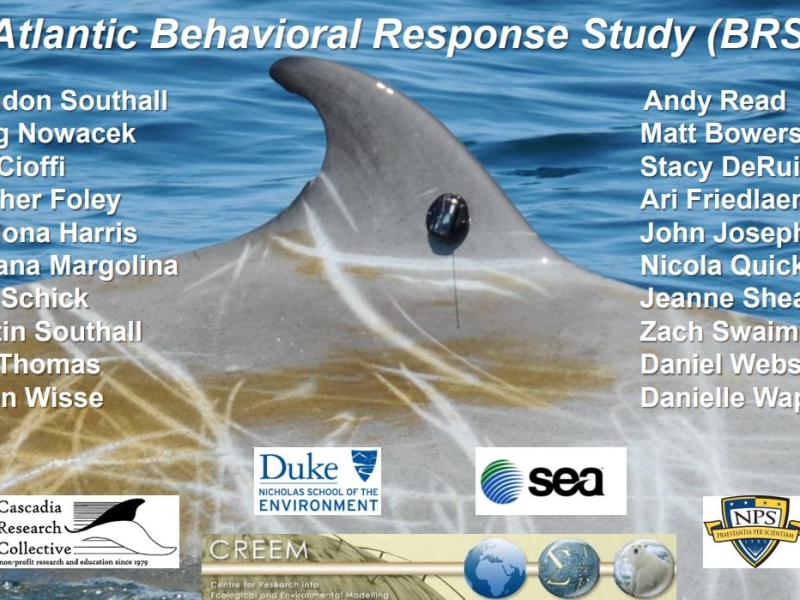
Atlantic Behavioral Response Study
Project Objectives
Assess behavioral response of beaked and pilot whales to mid-frequency tactical sonar
Complete
Atlantic Marine Assessment Program for Protected Species (AMAPPS)
Project Objectives
Assess the abundance, distribution, ecology, and behavior of marine mammals, sea turtles, and seabirds in U.S. Atlantic EEZ
Current
Behavioral Response Analysis of Two Populations of Short-Finned Pilot Whales to Mid-Frequency Active Sonar
Project Objectives
Utilize newly developed statistical methods from the Atlantic BRS project and apply them to all the satellite-tagged pilot whales from both the Atlantic and Pacific studies.
Complete
Behavioral Response of Humpback Whales to Vessel Traffic
Project Objectives
Understand the behavioral response of humpback whales to approaching vessels in the shipping channels at the mouth of the Chesapeake Bay.
Complete
Behavioral Response Research Evaluation Workshop II (BRREW II)
Project Objectives
Response
Complete
Blue and Fin Whale Satellite Tagging
Project Objectives
Determine the movement patterns, occurrence, and residence times of blue whales and fin whales within U.S. Navy training and testing areas as well as Biologically Important Areas along the U.S. West Coast
Complete
Characterizing the Distribution of ESA-listed Salmonids in Washington and Alaska
Project Objectives
Use acoustic tagging technology to provide critical information on spatial and temporal distribution of salmonids to inform salmon management, U.S. Navy activity, and Southern Resident Killer Whale (SRKW) conservation. The study seeks to 1) determine the occurrence and timing of salmonids within the Navy training ranges, 2) describe the influence of environmental covariates on salmonid occurrence; and, 3) describe the occurrence of salmonids in relation to SRKW distribution.
Current
Distribution of Gulf Sturgeon in the Panama City Testing Range
Project Objectives
Assess Gulf Sturgeon distribution and habitat use through a multi-phase biotelemetry approach
Current
Estimation of Received Levels of MFAS and Behavioral Response of Marine Mammals at PMRF
Project Objectives
Further our understanding of the Monitoring Questions: 1) What is the occurrence and estimated received levels of MFAS on 'blackfish', humpback, minke, sperm and Blainville's beaked whales within the PMRF instrumented range? and 2) What, if any, are the short term behavioral responses of 'blackfish,' humpback, minke, sperm and Blainville's beaked whales when exposed to MFAS/explosions at different levels/conditions at PMRF?
Current
Goose-Beaked Whale and Fin Whale Population Dynamics and Impact Assessment at the Southern California Offshore Antisubmarine Warfare Range (SOAR)
Project Objectives
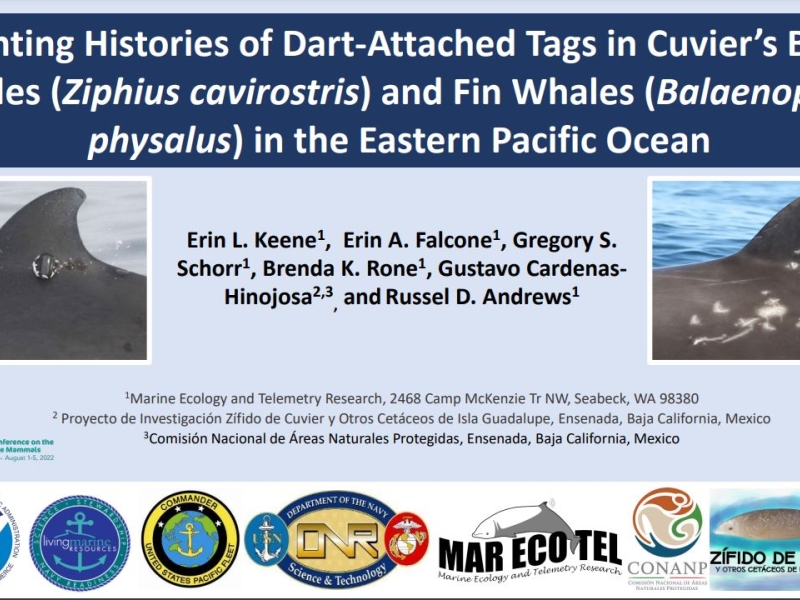
Improve knowledge of baseline population demographics, vital rates, and movement patterns of Cuvier’s beaked whales and fin whales. Examine what, if any, short term behavioral and/or vocal responses occur when exposed to sonar or explosions at different levels and conditions. Determine if exposure to sonar or explosives impact the long term fitness and survival of individuals or the population, species, or stock
Current
Green and Kemp's Ridley Turtle Tagging for Availability Bias Estimates
Project Objectives
Assess availability bias and habitat associations of endangered Kemp’s ridley and threatened green sea turtles to improve spatial density models
Complete
Guadalupe Fur Seal Satellite Tracking
Project Objectives
Determine the at-sea distribution of endangered Guadalupe fur seals and whether they travel through or utilize the offshore waters of the Southern California Range Complex and Northwest Training and Testing area
Current
Gulf of Alaska Acoustic Moorings and Analysis
Project Objectives
Conduct systematic line transect survey for marine mammals for density estimates; conduct survey to determine ecotype identity of killer whales; analyze existing and newly collected data for seasonal occurrence, abundance, and density of cetacean
Complete
Hawaiian Monk Seal Tagging
Project Objectives
Investigate potential impacts of naval activities on Hawaiian monk seals
Current
Jacksonville Shallow Water Training Range Vessel Surveys and M3R Species Verifications
Project Objectives
Monitor species composition and distribution on JSWTR, support M3R species verifications
Complete
Lower Chesapeake Bay Sea Turtle Tagging and Tracking
Project Objectives
Assess ocurrence and behavior of loggerhead, green, and Kemp's ridley sea turtles in the Hampton Roads region of Chesapeake Bay and coastal Atlantic Ocean
Complete
Mid-Atlantic Humpback Whale Monitoring
Project Objectives
Assess occurrence, habitat use, and baseline behavior of humpback whales in the mid-Atlantic region
Current
Mid-Atlantic Nearshore & Mid-shelf Baleen Whale Monitoring
Project Objectives
Assess occurrence, habitat use, and baseline behavior of baleen whales in the mid-Atlantic region
Current
Mid-Atlantic Offshore Cetacean Study
Project Objectives
Assess occurrence, habitat use, and baseline behavior of cetaceans in the offshore and continental shelf break region of the VACAPES OPAREA
Current
Monitoring Cetaceans in Hood Canal
Project Objectives
This 12‑month integrated pilot project combines three complementary components: (A) shore‑based theodolite monitoring of harbor porpoises, (B) high‑bandwidth passive acoustic monitoring and soundscape characterization, and (C) suction‑cup multi‑sensor tag deployments on Bigg’s (transient) killer whales. Together, these data streams will quantify occurrence, movement, diving, and behavioral context for these two key species in relation to the local soundscape—including operational signals near the Dabob Bay Range Complex (DBRC) and the Bangor Trident Base. Results can provide an empirical foundation and inform the study design of future cetacean behavioral response studies (BRS) in Hood Canal.
Complete
North Atlantic Right Whale Monitoring in the Southeast Calving Area
Project Objectives
Assess behavior of right whales in coastal waters of the Southeast calving grounds, including rates of travel of individuals, dive behavior, and rates of sound production
Current
North Atlantic Right Whale Monitoring, Conservation, and Protection
Project Objectives
Assess occurrence, habitat use, and behavior of North Atlantic right whales in the mid-Atlantic region
Complete
North Pacific Humpback Whale Tagging
Project Objectives
Determine the occurrence, movement patterns, and residency patterns of multiple humpback whale Distinct Population Segments within Pacific Ocean Navy Range Complexes
Complete
Occurrence of Green Sturgeon in Inland Waters (historical tag analysis)
Project Objectives
Compile green sturgeon tag and receiver data and analyze historical data for occurrence, distribution, and seasonality in Puget Sound and the Straits of Juan de Fuca
Complete
Occurrence, Ecology, and Behavior of Deep-diving Odontocetes
Project Objectives
Establish behavioral baseline and foraging ecology. Assess behavioral response to acoustic stimuli and Navy training activities
Complete
Offshore Distribution of Southern Resident Killer Whales in the Pacific Northwest
Project Objectives
1) Identify and classify Southern Resident killer whale (SRKW) detections from acoustic recorders and satellite tag tracking; 2) Develop a model to estimate the seasonal and annual occurrence patterns of southern resident killer whales relative to offshore Navy training ranges. 3) Characterize occurrence of anthropogenic sounds in potential SRKW habitat. 4) Develop state space habitat model for SRKW prey, based on fall Chinook salmon tagged released from California to British Columbia between 1977 and 1990 to estimate seasonal distribution along the west coast.
Current
Pacific Marine Assessment Program for Protected Species (PACMAPPS) survey
Project Objectives
Identify species of beaked whales, odontocetes, and baleen whales that occur in the surveyed areas; Monitor marine mammal and sea turtle presence, distribution, and diversity in offshore waters; Develop a better understanding of marine mammal distribution, movement patterns, habitat use, population structure, and abundance; Develop reference library of visually-validated acoustic recordings of marine mammals.
Complete
Pinniped Monitoring in the Northeast
Project Objectives
Document habitat use, haul-out patterns, and baseline behavior of seals
Complete
Pinniped Tagging and Tracking in Southeast Virginia
Project Objectives
Document habitat use, movement and haul-out patterns of seals in the Hampton Roads region of Chesapeake Bay and coastal Atlantic Ocean
Current
Salmonid and Southern Resident Killer Whale Distribution in the Pacific Northwest
Project Objectives
1) Determine the occurrence of bull trout within and near the boundaries of the NWTT; 2) Determine the spatiotemporal occurrence of killer whale and baleen whale in the NWTT; 3) Characterize the occurrence of endangered fish species within the NWTT
Complete
Satellite Tagging and Behavioral Monitoring of Male California Sea Lions in the Pacific Northwest to Assess Haul-out Behavior on Puget Sound Navy Facilities and Foraging Behavior in Marine Navy Testing and Training Areas
Project Objectives
To determine the abundance and habitat use of California sea lions that haul out at Navy facilities and forage in testing and training areas
Complete
Sea turtle tagging in the Mariana Islands Range Complex
Project Objectives
Develop a better understanding of sea turtle distribution and habitat use in the Mariana Islands, particularly in relation to locations used by the Navy for underwater detonation training
Complete
Small vessel visual surveys in the Mariana Islands Range Complex
Project Objectives
Identify species of beaked whales, odontocetes, and baleen whales that occur in the Mariana Islands; Monitor marine mammal and sea turtle presence, distribution, and diversity in nearshore waters during key seasons (summer and winter); Develop a better understanding of marine mammal distribution, movement patterns, habitat use, population structure, and abundance; Develop reference library of visually-validated acoustic recordings of marine mammals.
Current
Telemetry and Genetic Identity of Chinook Salmon in Alaska
Project Objectives
To use a combination of pop-up satellite technology and salmon genetics to provide critical information on Chinook salmon spatial and temporal distribution in the Gulf of Alaska and along the Washington coast to inform salmon management and U.S. Navy training activities. The study seeks to 1) determine the occurrence, timing, and specific run of Chinook salmon through genetics within the Navy training areas; 2) describe the influence of environmental covariates on Chinook salmon occurrence; and 3) improve the understanding of run-specific timing and geographical occurrence of Chinook salmon as the prey of Southern Resident killer whales in Washington.
Current
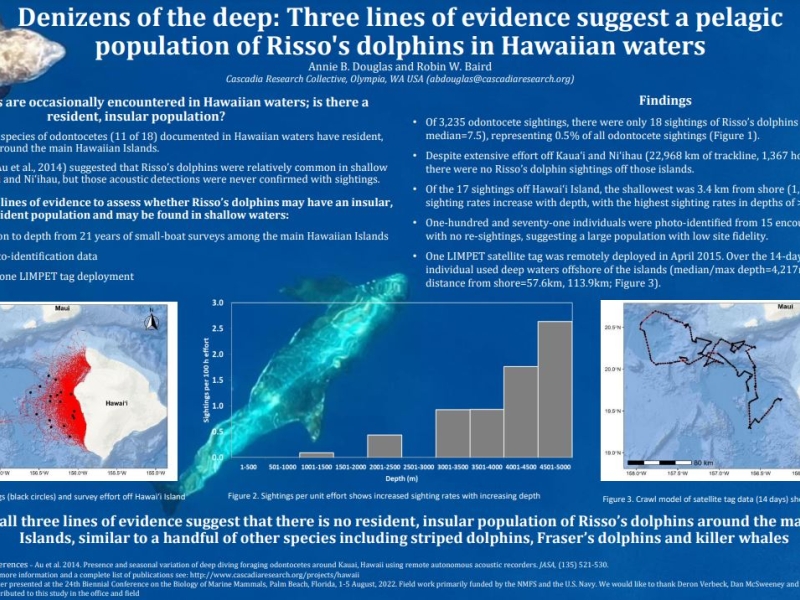
Visual Survey and Tagging of Hawaiian Odontocetes
Project Objectives
(1) define the spatial movement and habitat use patterns of species that are exposed to mid-frequency active (MFA) sonar (2) determine how these patterns influence exposure and potential responses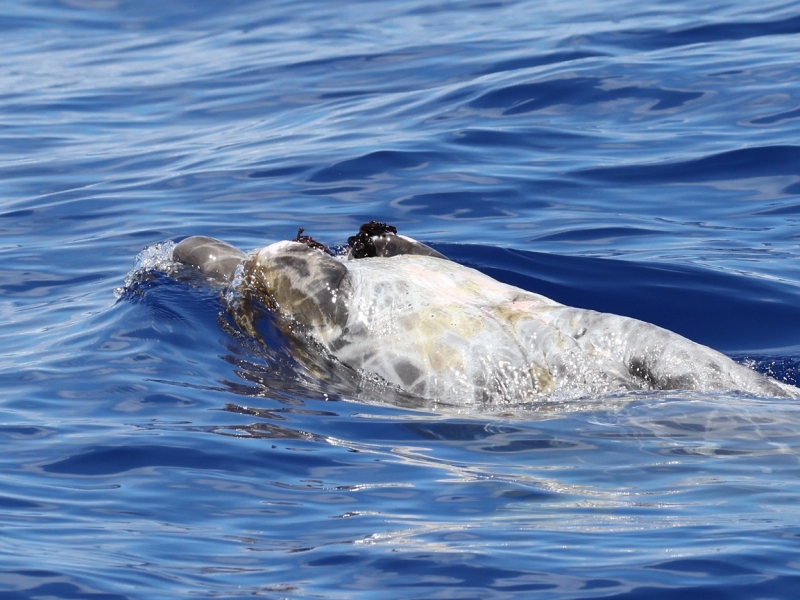
Kaua‘i field project - August 2026
August 25, 2026
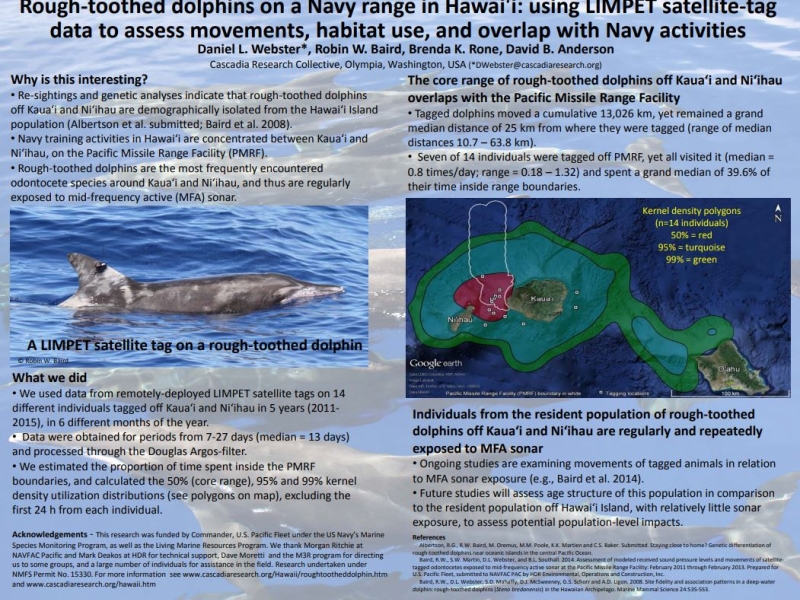
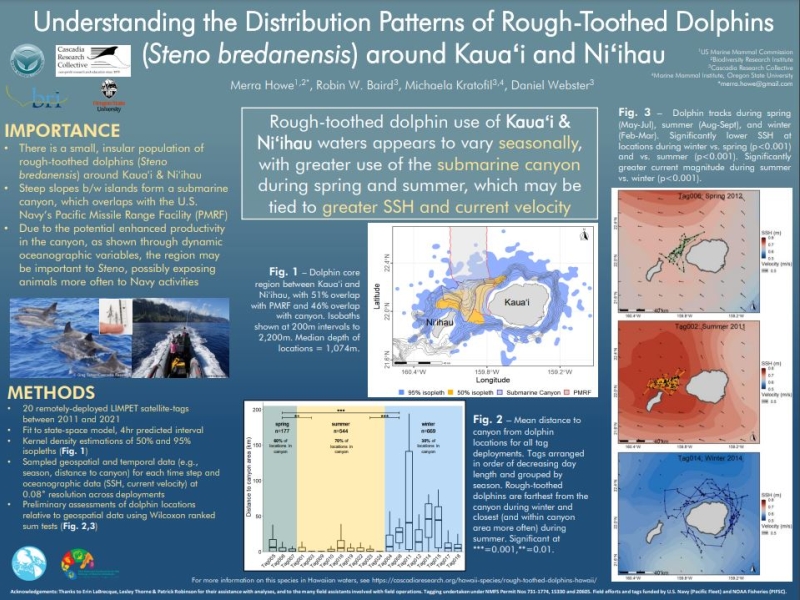
Researchers from Cascadia Research Collective are conducting a 9-day field session off Kaua'i to deploy LIMPET satellite tags on odontocete cetaceans prior to a Submarine Command Course (SCC) to be able to examine their behavior before, during, and after the training event. Click on the image below to see daily updates from the field.
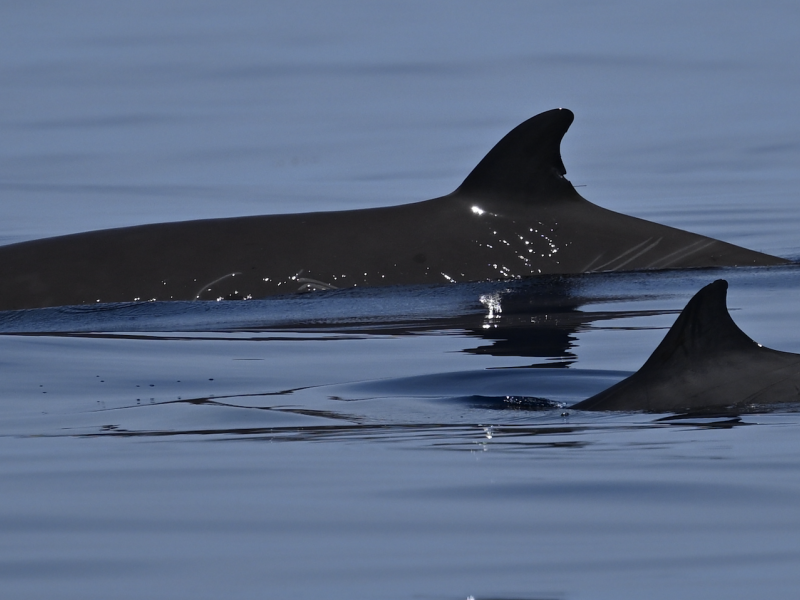
Another CEE Trial – and Gervais’ beaked whales!
August 10, 2026
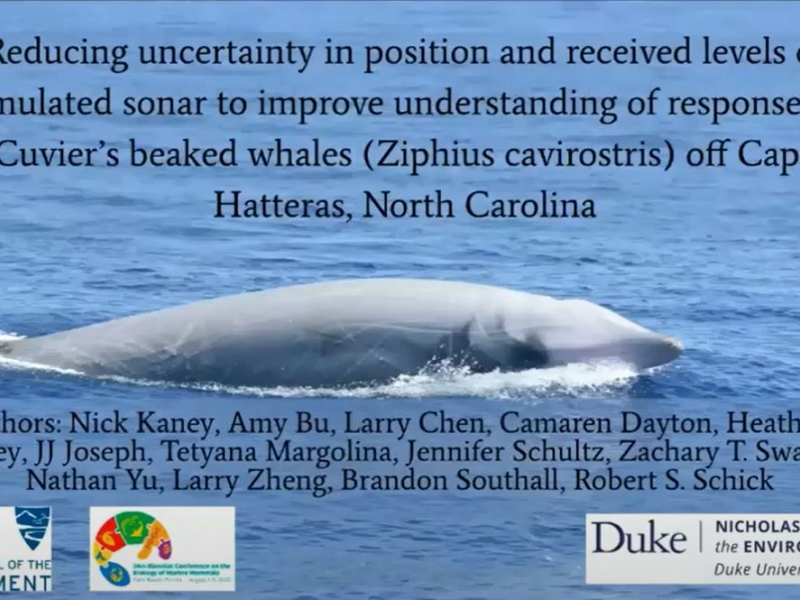
A second controlled exposure experiment trial with simulated Continuously Active Sonar (CAS) was conducted on August 1. In addition to the usual goose-beaked whales, we also had a sighting of less common Gervais' beaked whales.
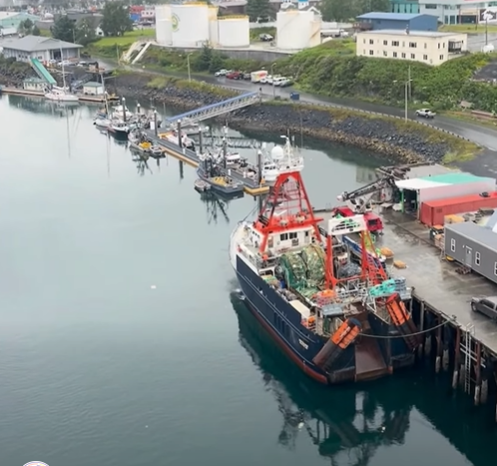
Killer Whale Ecotype Study (KWEST) kicks off
July 27, 2026
Research scientists from the University of Washington and NOAA recently departed from Kodiak, AK aboard the R/V Aquila for a 2-month research cruise focused on distinct groups of killer whales, or ecotypes, that hunt different prey and travel in different parts of the Gulf of Alaska.
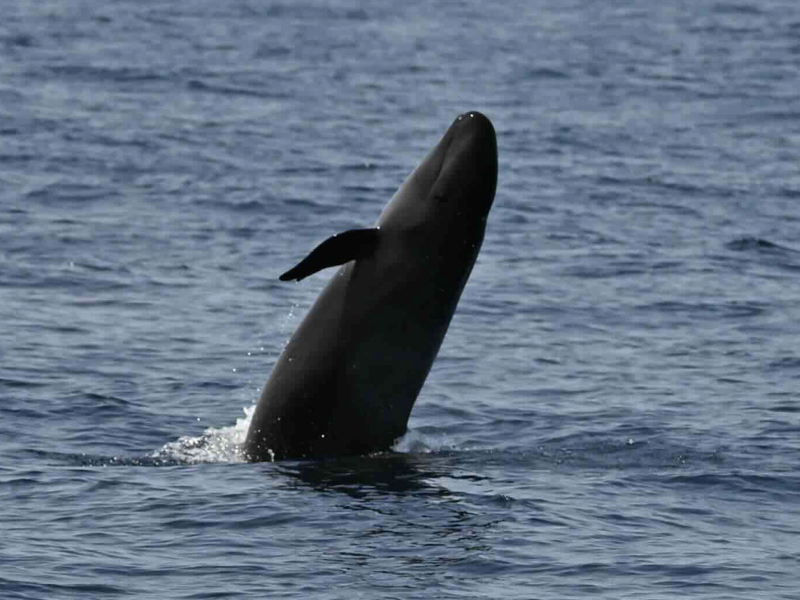
First CEE Trial of 2026 – and False Killer Whales
July 23, 2026
The Atlantic BRS team had an extremely productive day on Friday, July 17th with tags deployed on both false killer whales and goose-beaked whales, as well as a successful controlled exposure experiment with simulated Continuous Active Sonar signals.
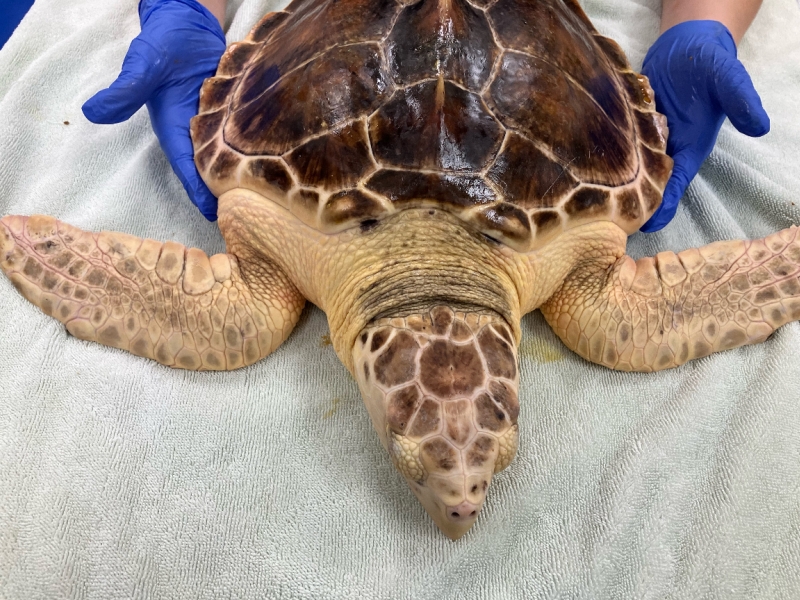
Kemp’s ridley / Loggerhead Hybrid Turtle Tagged at Jekyll Island
June 15, 2026
Researchers were surprised by an unusual turtle that stranded in Georgia-- a Kemp’s ridley / Loggerhead Hybrid Turtle, and were able to tag the animal for release.
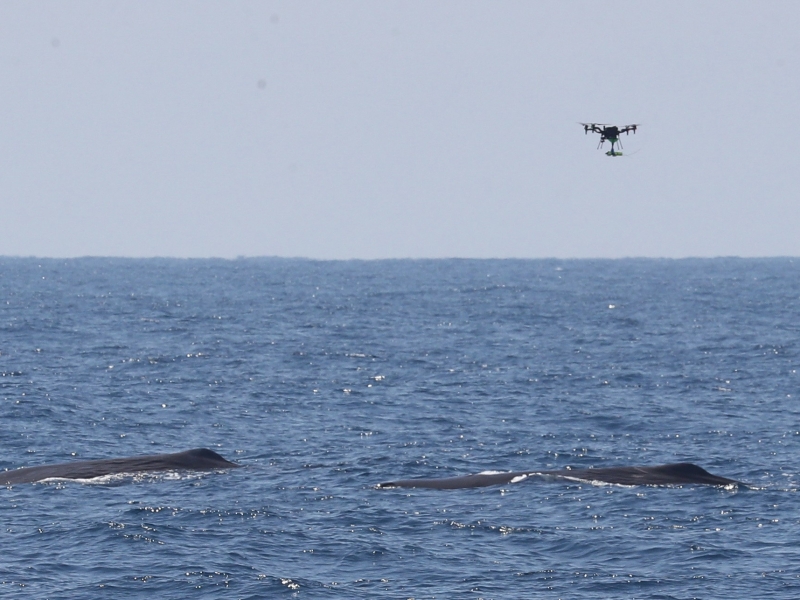
A Macrocephalus Mother's Day Tradition
May 27, 2026
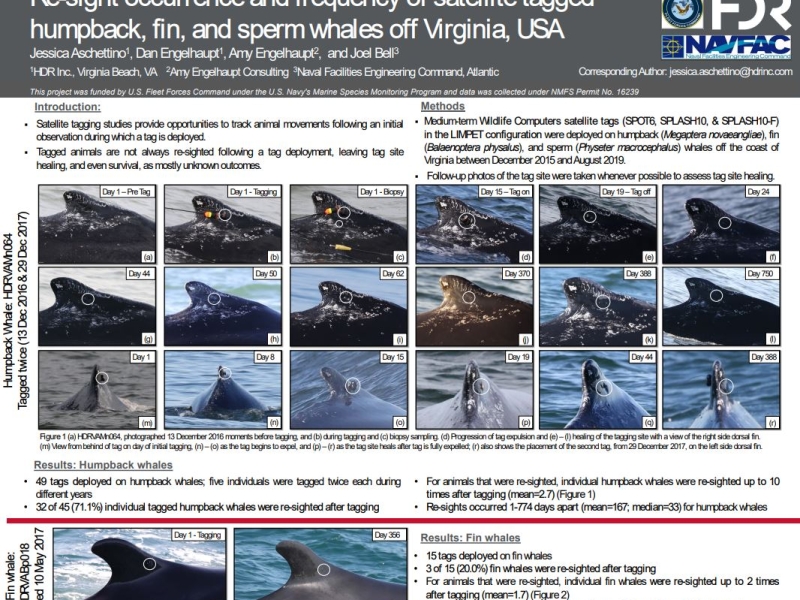
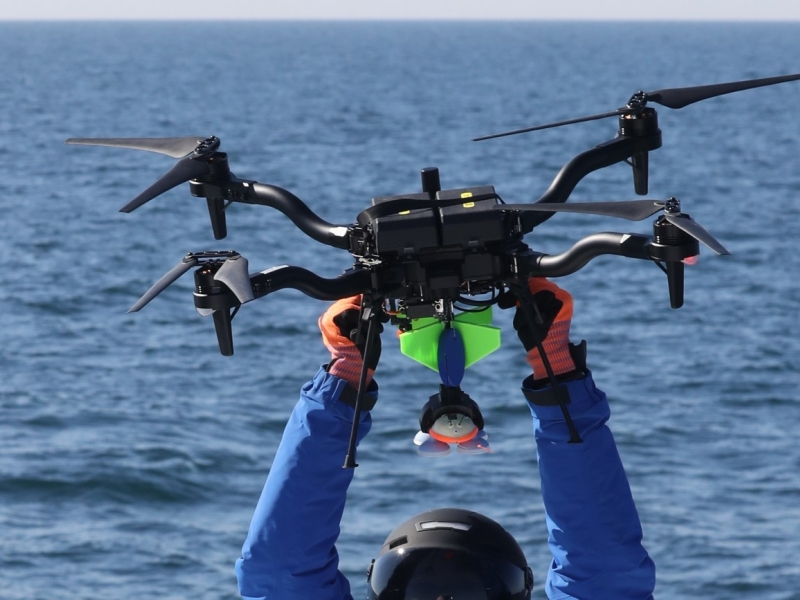
HDR-lead team encountered a group of mainly female sperm whales with calves on Mother's Day for the 2nd year in a row, and successfully deployed a tag from a drone. We believe it's the first CATS tag deployed on a sperm whale via drone.
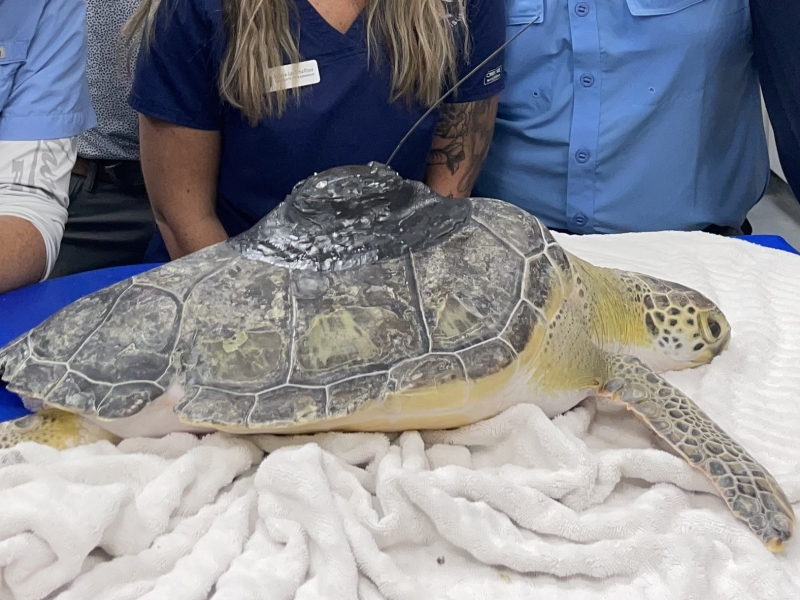
First Tagged Sea Turtle Released from Jekyll Island, Georgia
October 17, 2025
Collaborators at the Jekyll Island Authority in Georgia have released the first satellite-tagged green turtle in Georgia waters under the Navy’s “Green and Kemp's Ridley Turtle Tagging for Availability Bias Estimates” Project.
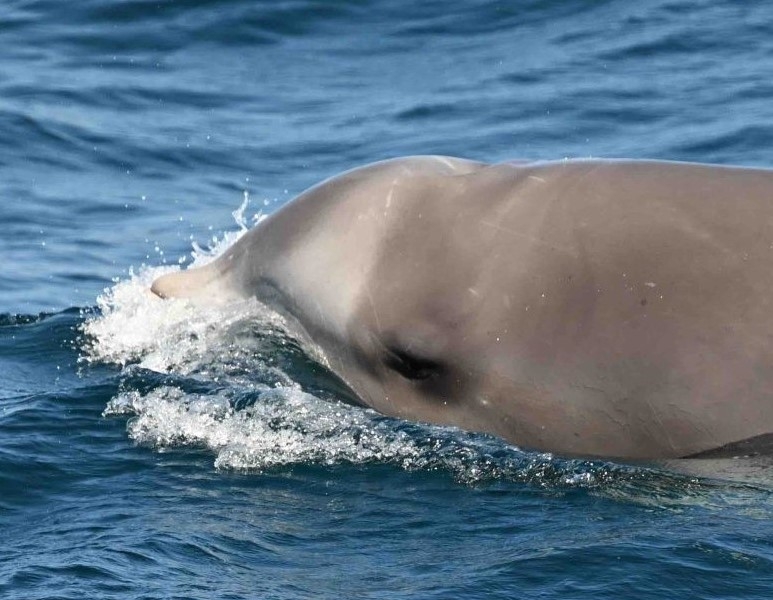
Controlled Exposure Experiment Trial with Simulated CAS Signals
October 1, 2025
On Friday, September 19th, the project team led by Duke University and Southall Environmental Associates conducted a Controlled Exposure Experiment (CEE) trial with goose-beaked whales Ziphius cavirostris in our study area off Cape Hatteras. They generated simulated Continuous Active Sonar (CAS) signals with a brand-new sound source built specifically for this purpose.
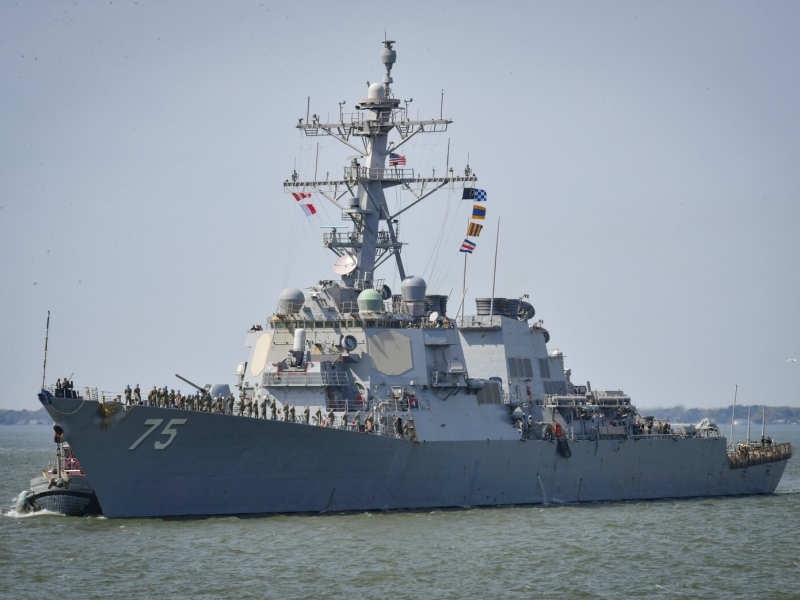
Atlantic BRS - successful CEE trial with the USS Donald Cook
July 22, 2025
The Atlantic BRS team just completed a successful controlled exposure experiment with the Arleigh Burke-class guided-missile destroyer USS Donald Cook (DDG 75) involving eight satellite-tagged beaked whales off Cape Hatteras.
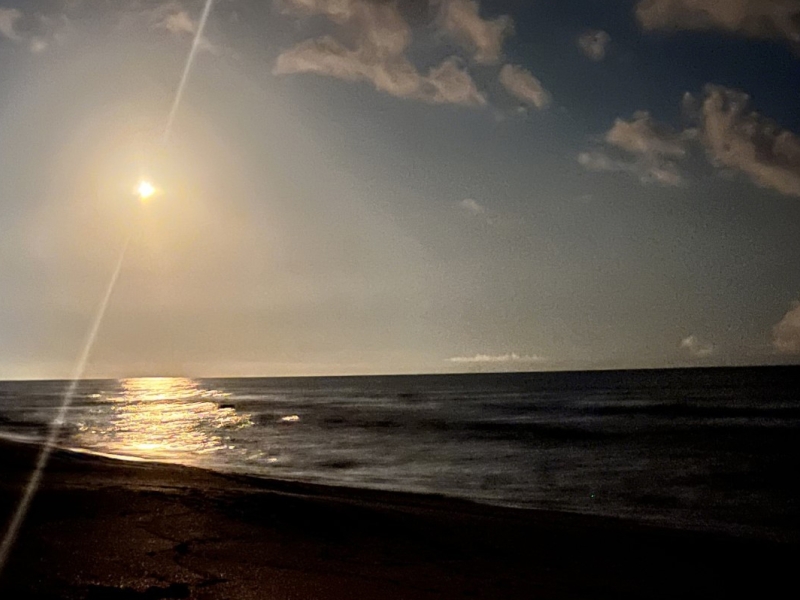
Green turtles are back on the Space Coast
July 21, 2025
A field team led by co-Principle Investigator Dr. Kate Mansfield of the Marine Turtle Research Group at the University of Central Florida kicked off the second year of tagging for our “Kemp’s Ridley and Green Sea Turtle Tagging for Availability Bias Analysis” project.
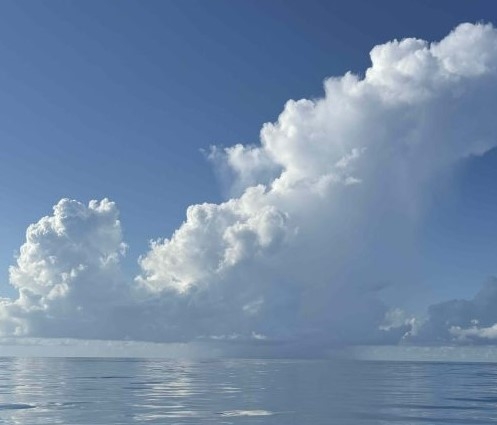
Atlantic BRS - field work update
July 16, 2025
You never know what you will see offshore, and this weekend was no exception.
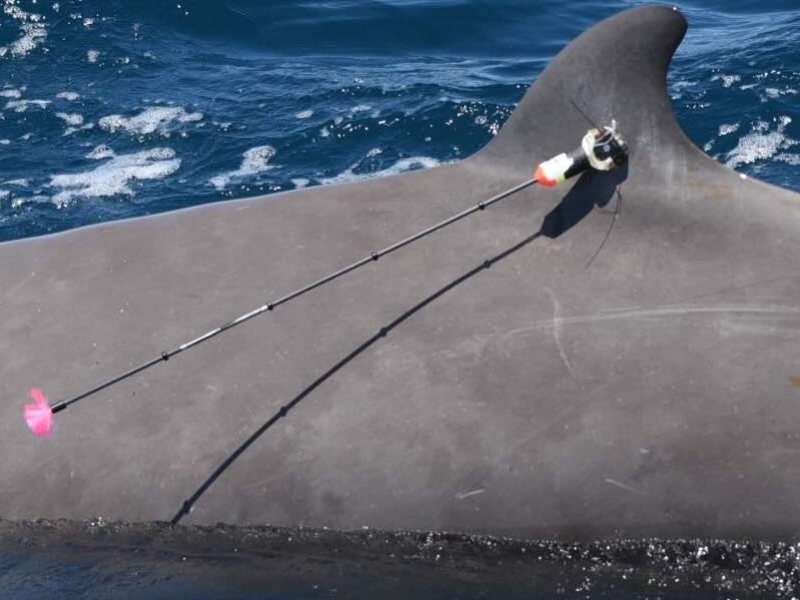
Atlantic BRS 2025 - Old Friends & Baby Beaked Whales
June 26, 2025
Field work recently kicked off for the Atlantic BRS project field season and we're happy to say that things appear much more "normal" compared to 2024 when Ziphius were relatively scarce at the Hatteras study site.
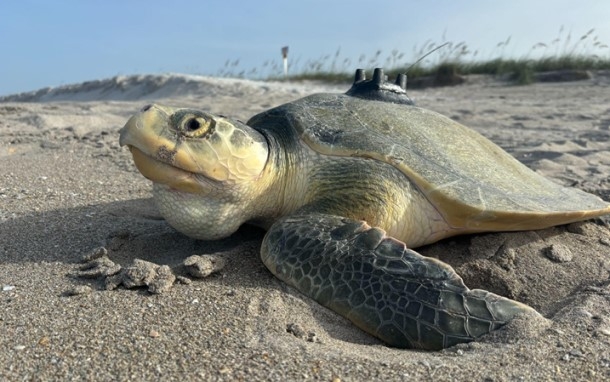
Kemp's on the move!
May 19, 2025
Five Kemp’s ridley turtles satellite tagged on the east coast of Florida have moved out of Florida waters.
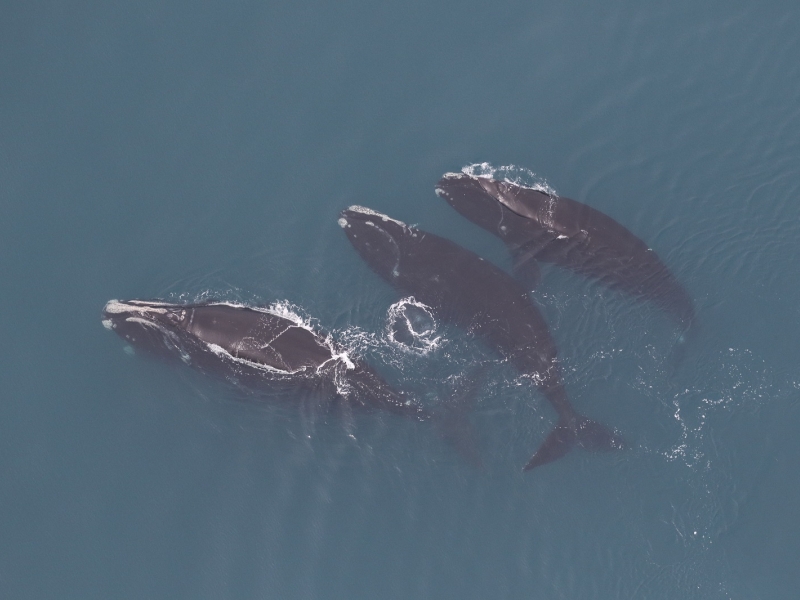
2024-2025 Large Whale Season Summary
March 24, 2025
We have two separate efforts focusing on cetaceans off the coast of Virginia. The first is our Offshore (Outer Continental Shelf) Cetacean Study, which focuses primarily on deep diving odontocetes like sperm whales. The second effort is our Nearshore and Mid-Shelf Baleen Whale Monitoring Project.
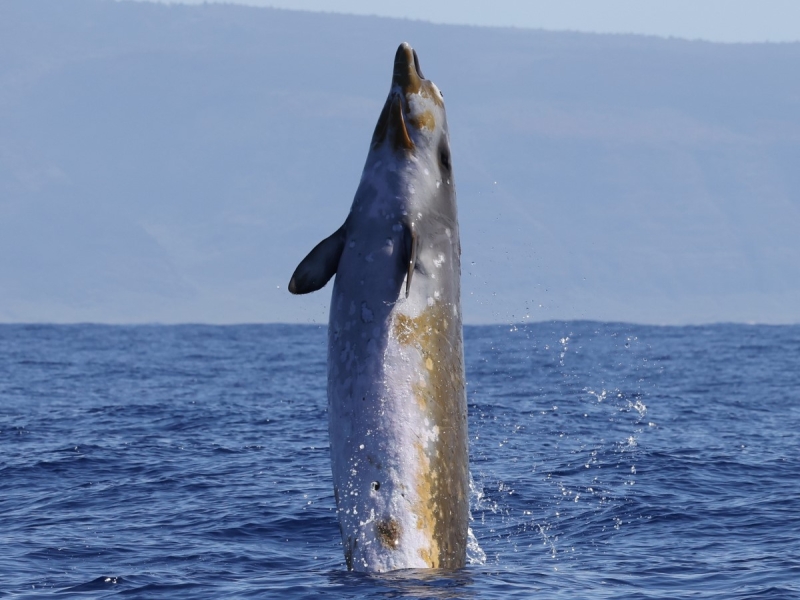
Kaua'i Field Work Updates
February 20, 2025
Scientists from Cascadia Research Collective recently completed a ~9-day field project off Kaua’i that started on February 9th. This project is timed to occur prior to a Submarine Command Course (SCC) training event. The primary goal is to deploy satellite telemetry tags on multiple species of odontocete cetaceans prior to the SCC, to be able to examine their behavior before, during, and after the event. This approach has been very successful in the past as a way of examining how different species respond to Navy training activities including mid-frequency active sonar (MFAS). Click through the picture below to see daily updates.
Males have joined the turtle tagging party
July 15, 2024
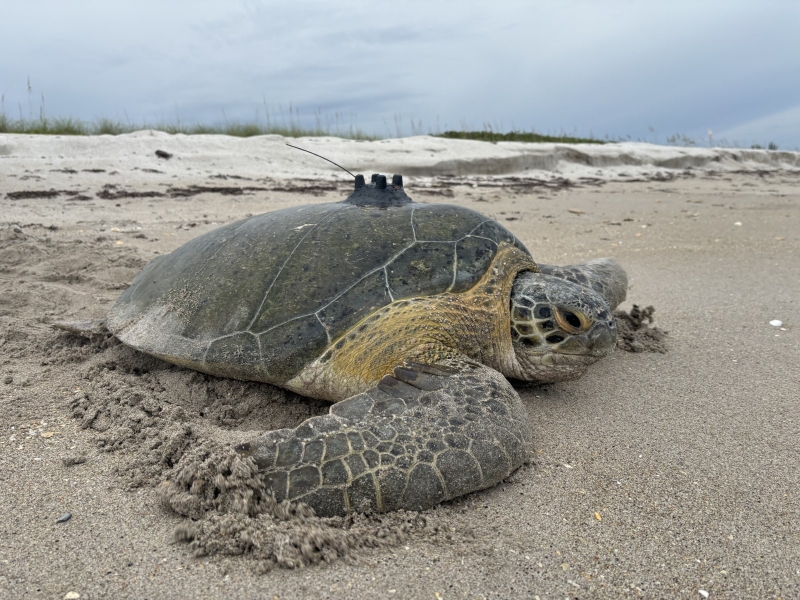
Researchers from Inwater Research Group (IRG), supported by Dr. Kate Mansfield of the UCF Marine Turtle Research Group and Andrew DiMatteo of CheloniData LLC, have deployed a satellite-linked data logger on an adult male green sea turtle in St. Lucie County, Florida. This initiative aims to study the diving behavior and habitat use of male green turtles along the U.S. east coast.
First Satellite Tag Deployments for Atlantic BRS 2024
July 8, 2024
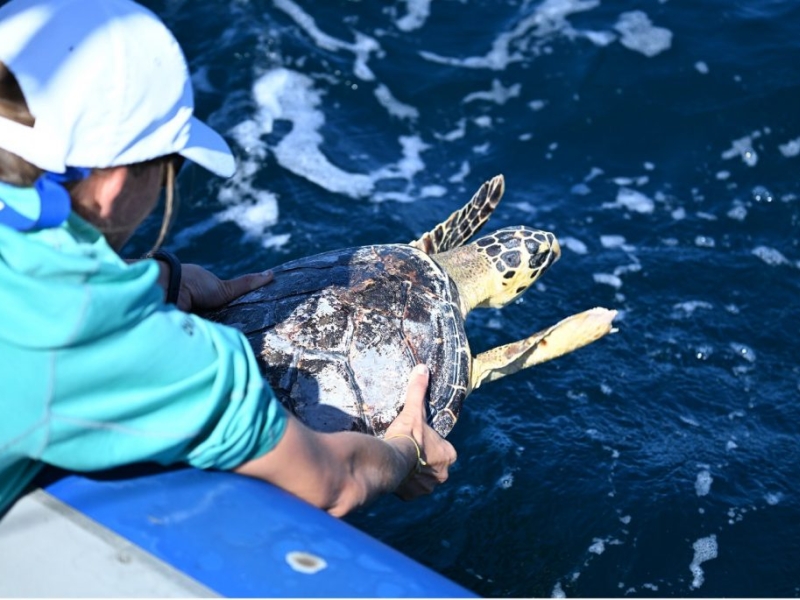
In June 2024, a Duke University team initiated the Atlantic Behavioral Response Study (BRS) by deploying satellite-linked dive recorders on goose-beaked whales (Cuvier's beaked whales) off the coast of North Carolina. These tags collect data on the whales' diving behavior and locations, enhancing understanding of their baseline activities. Additionally, the team released a rehabilitated hawksbill sea turtle named Bagheera back into the Atlantic Ocean.
Back in the turtle tagging business
June 28, 2024
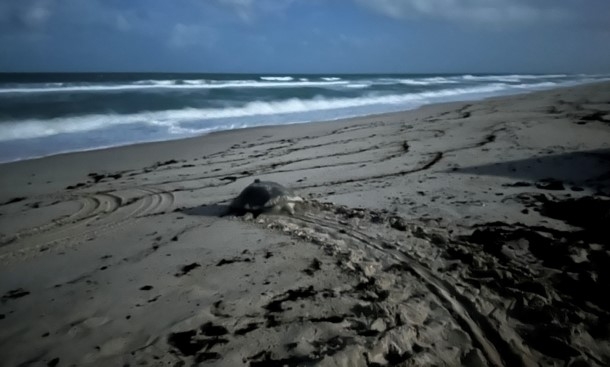
Researchers at the University of Central Florida (UCF), led by Dr. Kate Mansfield and supported by the UCF Marine Turtle Research Group and Andrew DiMatteo of CheloniData LLC, deployed five satellite-linked data loggers on adult nesting green turtles at the Archie Carr National Wildlife Refuge in Florida during the week of June 17th.
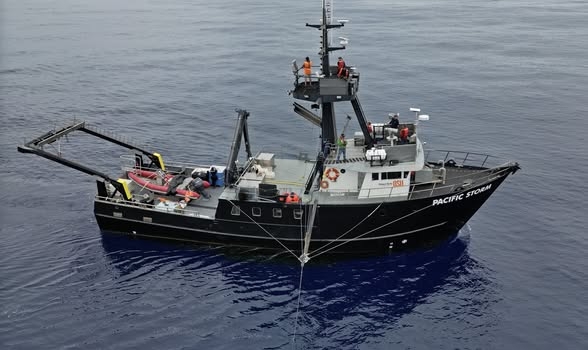
Mesoplodon mysterioso
June 13, 2024
We are thrilled to be part of the "Mystery Mesoplodon Expedition" off the west coast of Baja California searching for an elusive new species of beaked whale. Read about the initial discovery and stay tuned for updates on this exciting expedition!
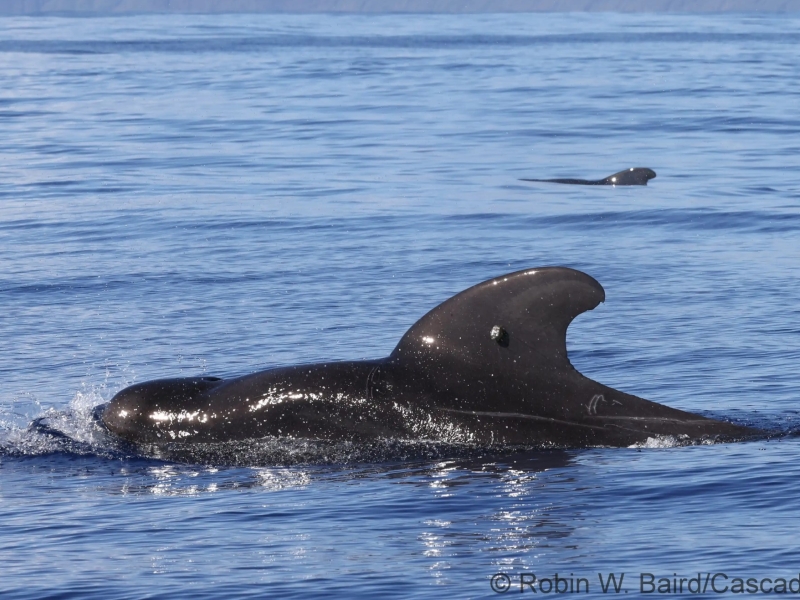
Kauai' Field Work Updates
February 16, 2024
Scientists from Cascadia Research Collective are leading a ~9-day field project off Kaua’i that started on February 11th.
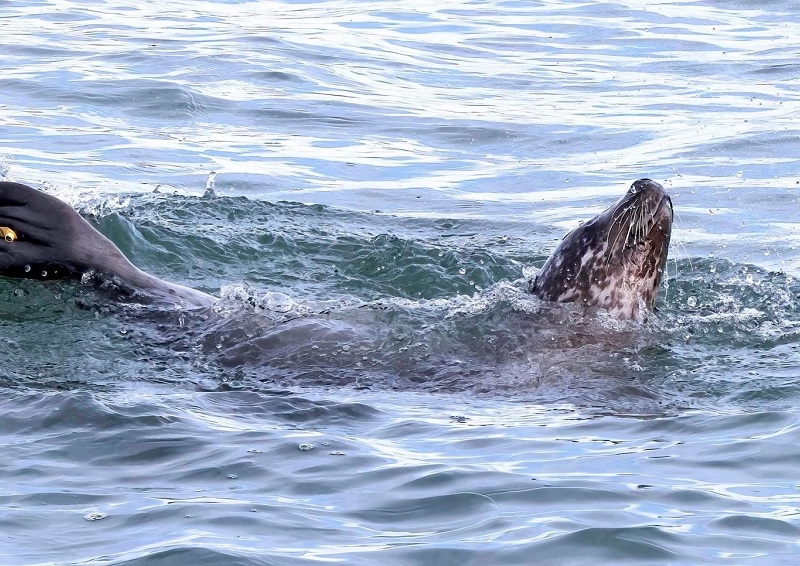
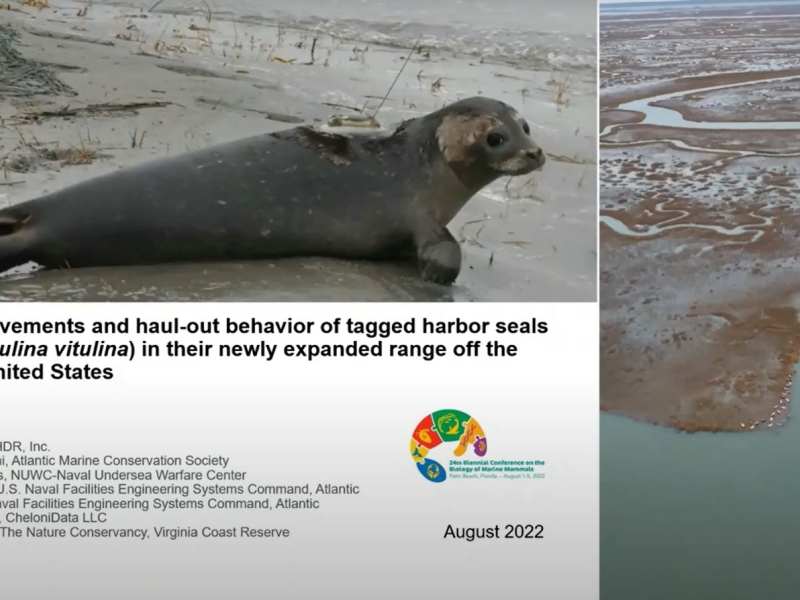
Seal Tagged in 2022 is Back Again!
February 14, 2024
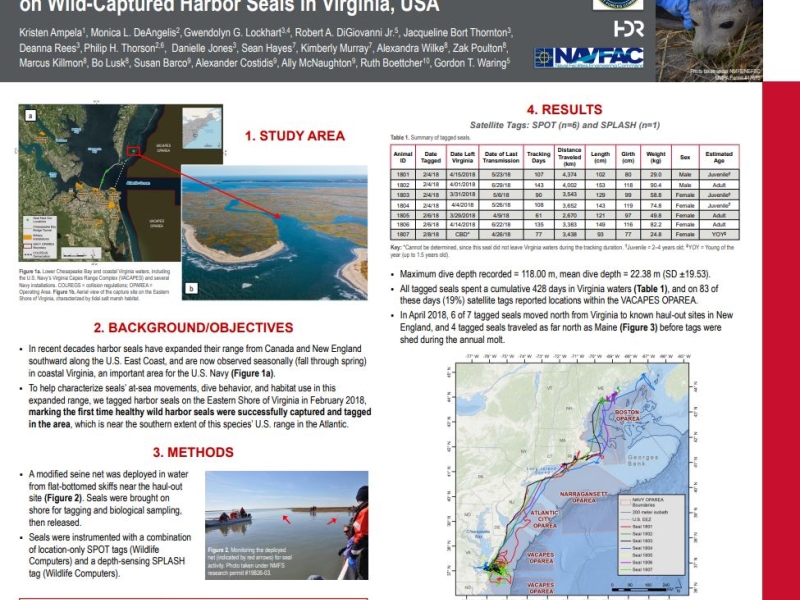
On 10 February 2024, a local wildlife enthusiast, Caroline Prevost, was out on the Chesapeake Bay when she observed some harbor seals enjoying time in the water near island 4 of the Chesapeake Bay Bridge Tunnel.
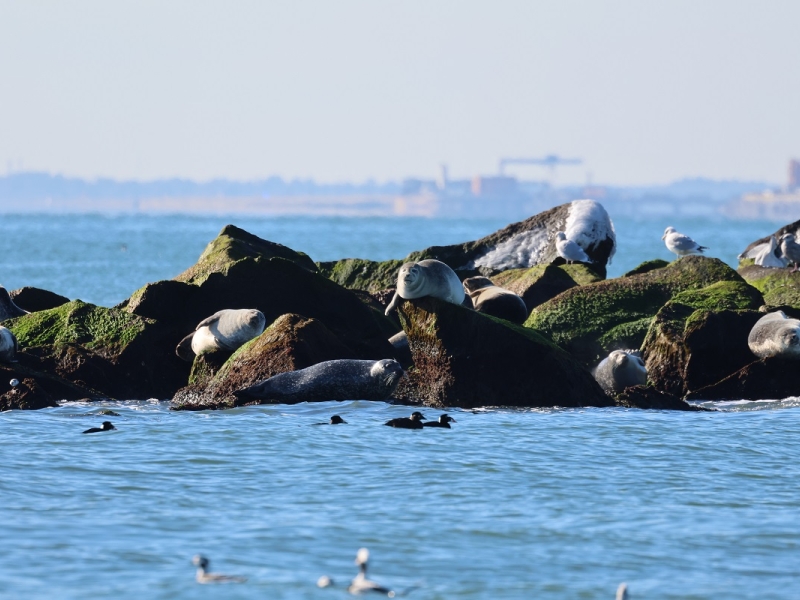
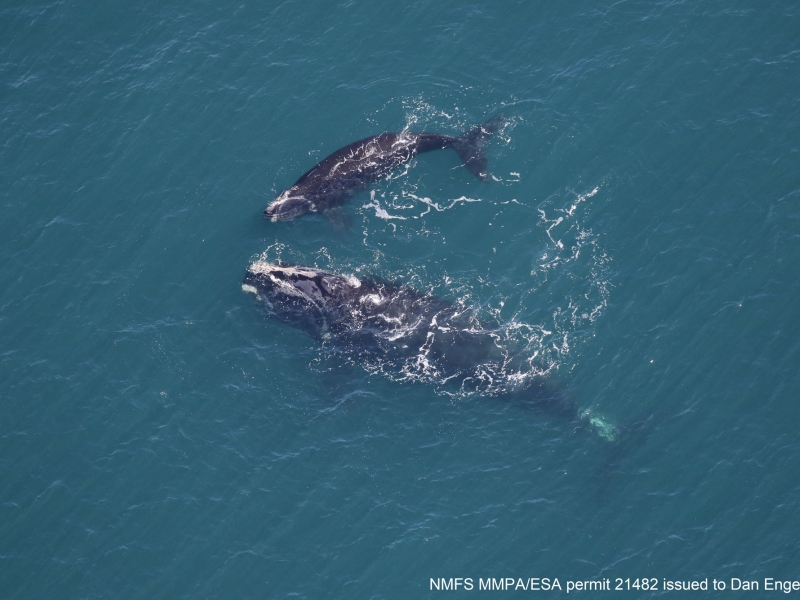
Coming full circle – right whale mom returns with calf
March 15, 2023
Previously CATS tagged Right whale "Smoke" is sighted again in VA with a calf.
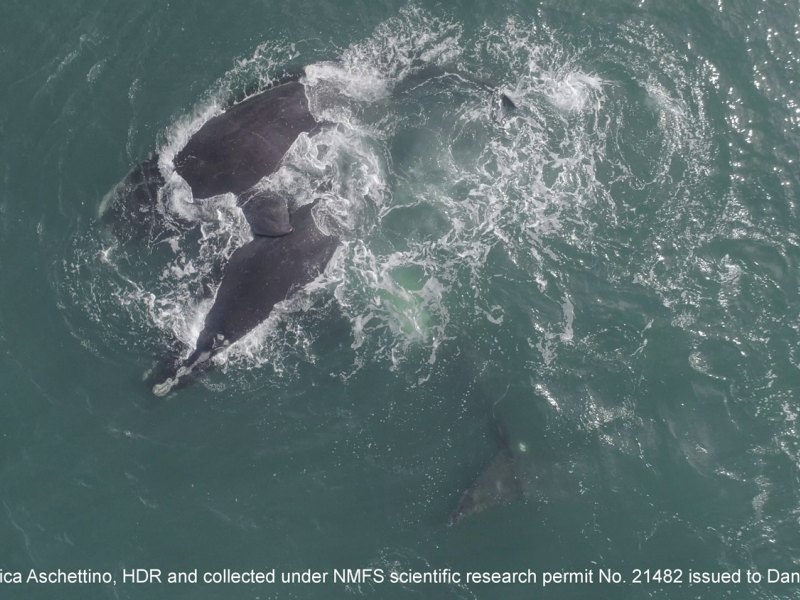
Right Whale Party in the Mid-Atlantic
February 4, 2023
A Surface Active Group of North Atlantic right whales off the coast of Virginia.
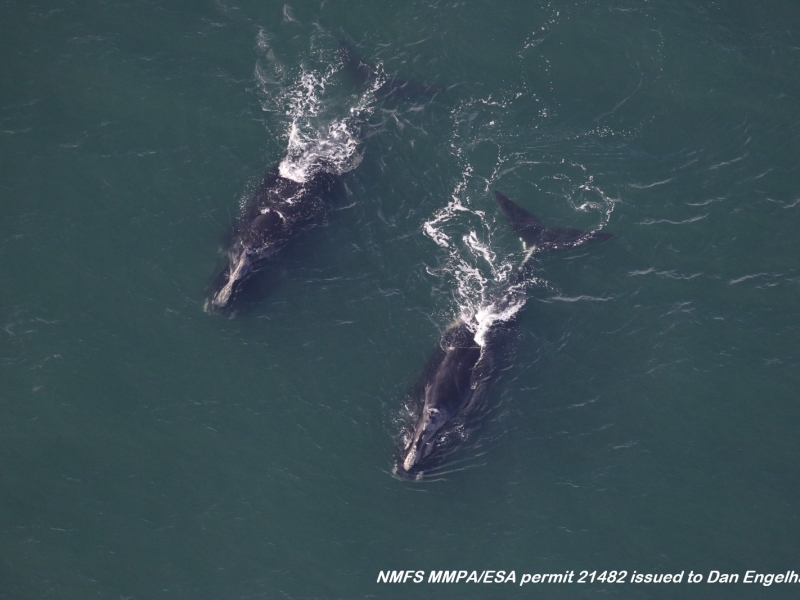
Right whales are on the move!
November 23, 2022
Two female right whales were sighted off Virginia during their southbound migration.
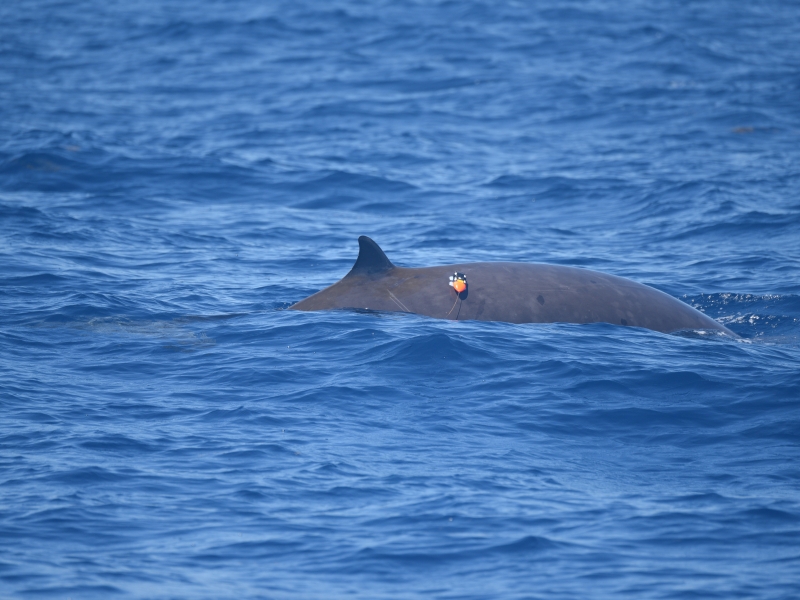
Atlantic BRS – 2022 CEE with the USS Farragut
August 26, 2022
A controlled exposure success story using a Navy ship.
August 2022 Kaua‘i Field Project
August 18, 2022
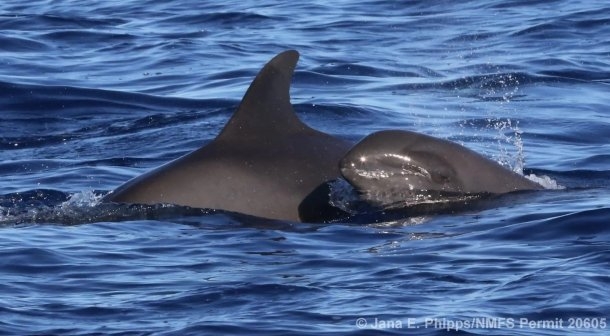
Cascadia Research Collective began an 8-10 day field project off Kaua’i starting on August 16th. This project is timed to occur prior to a Submarine Command Course (SCC). Their primary goal is to deploy LIMPET satellite tags on one or more species of odontocete cetaceans prior to the SCC, to be able to examine their behavior before, during, and after the SCC. This approach has been very successful in the past as a way of examining how different species respond to Navy training activities including mid-frequency active sonar.
NARW tagged off VA Beach!
March 2, 2022
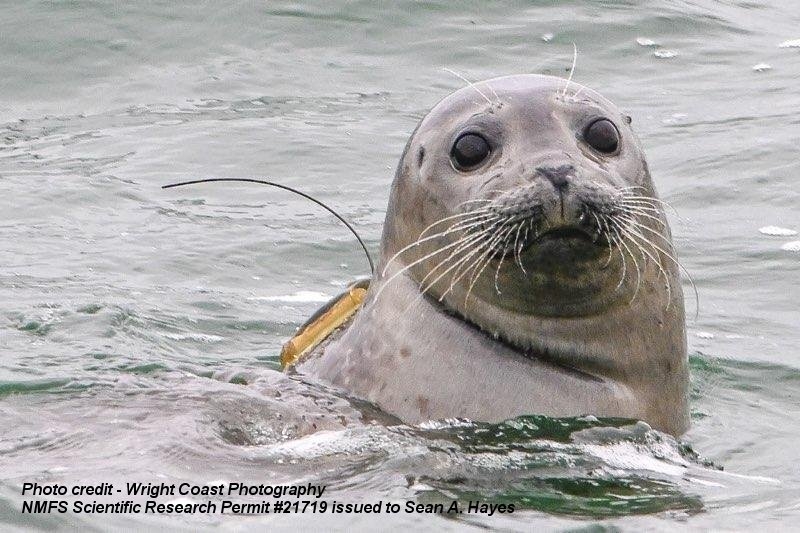
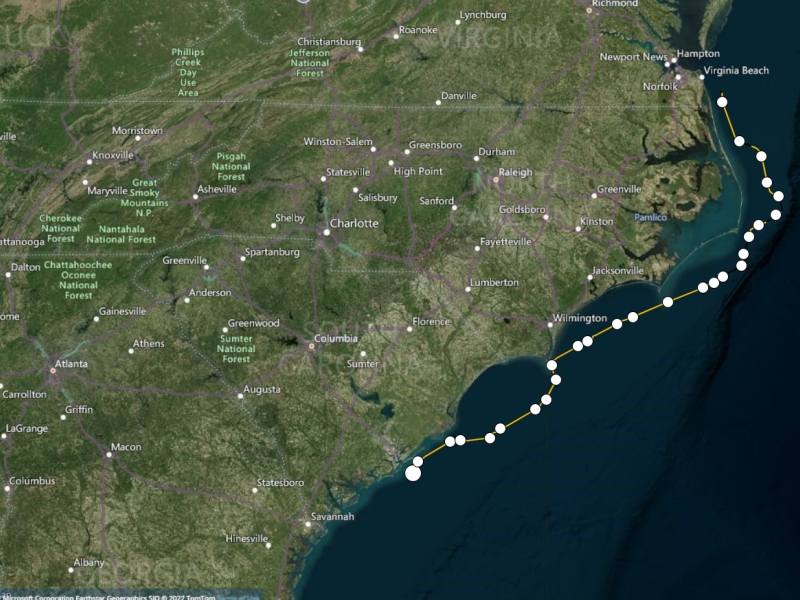
A yearling right whale was tagged off Virginia.
Atlantic Behavioral Response Study kicks off 2021 field season
July 13, 2021
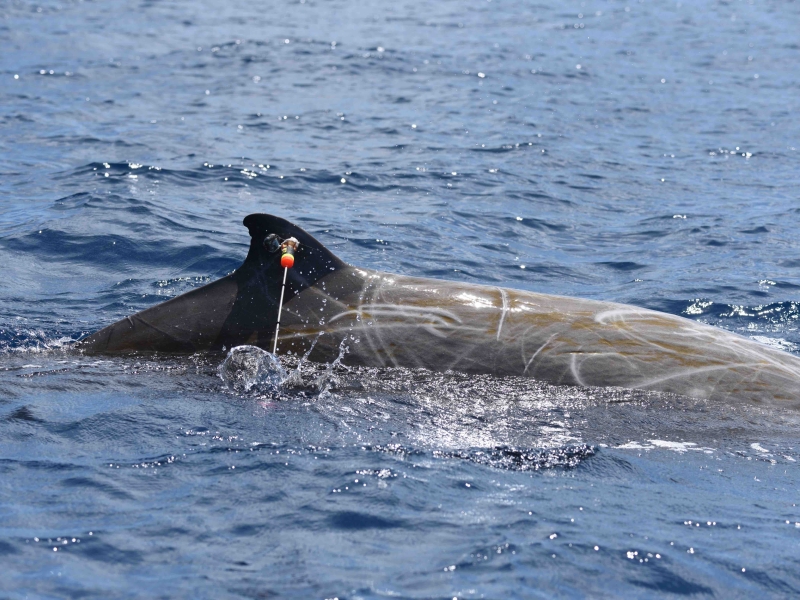
The Atlantic Behavioral Response Study kicked off the 2021 field season last week by deploying the first round of satellite-linked telemetry tags on Cuvier's beaked whales.
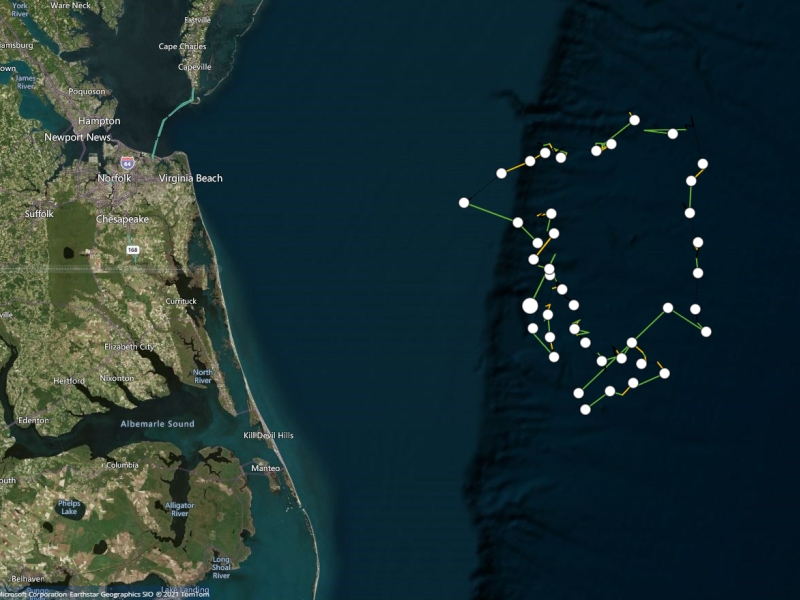
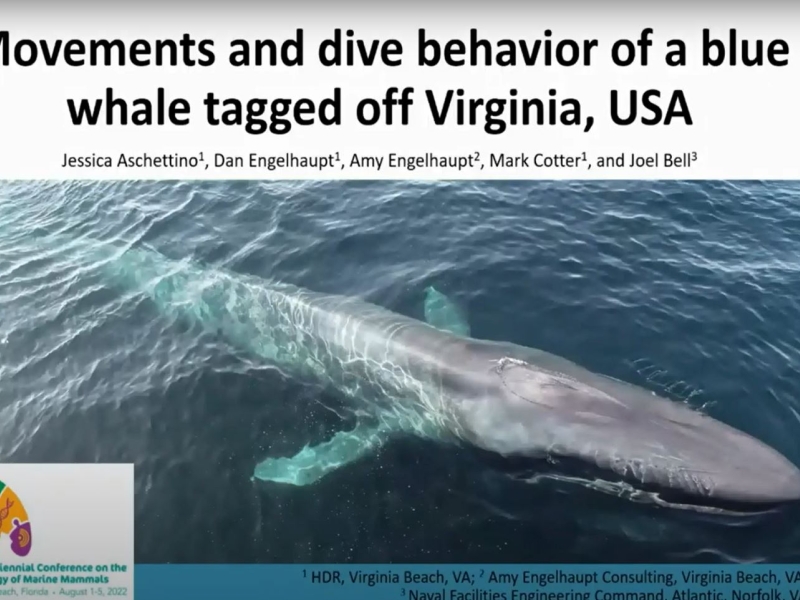
Blue whale tagged off the coast of Virginia
April 26, 2021
Details on the first blue whale tagged in the region.
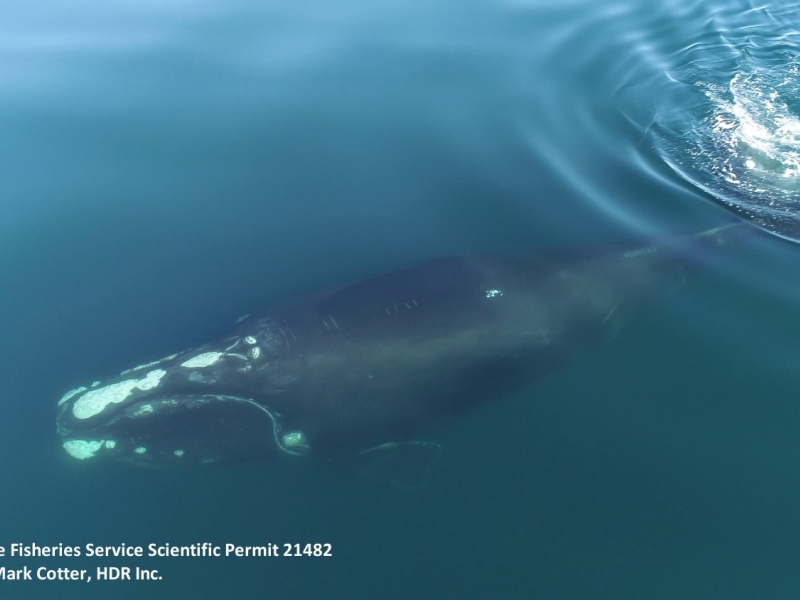
Tracking an endangered North Atlantic right whale
March 15, 2021
A yearling right whale was tagged off the coast of VA and tracked for 12 days.
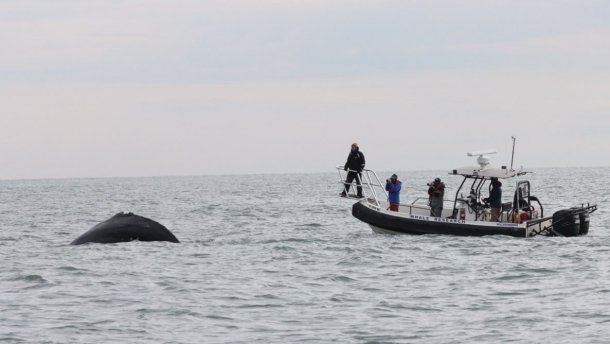
Entangled humpback whale
January 8, 2021
Our team assisted with the disentanglement efforts of a young humpback whale.
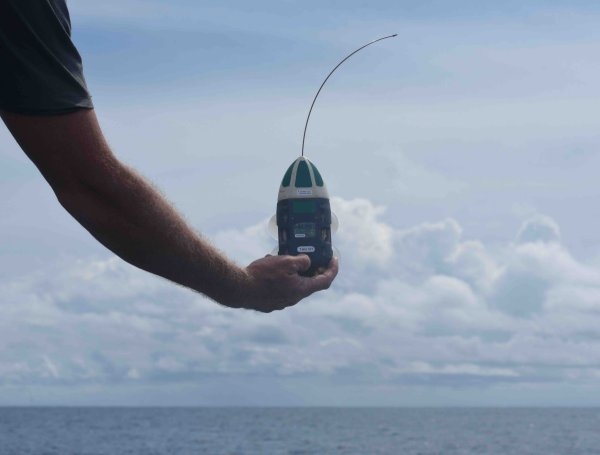
Atlantic BRS - Multi-scale CEE Success!
August 15, 2019
The first CEE while two different tag types were deployed.
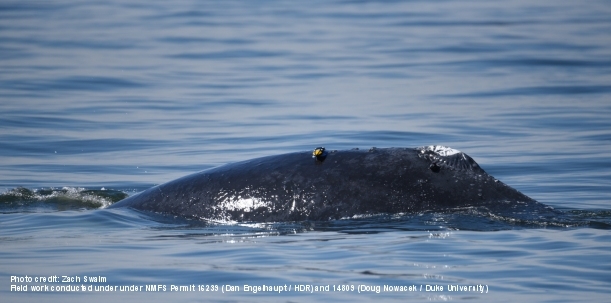
One whale tagged twice.
March 8, 2019
D-tag and limpet tag on a humpback whale.
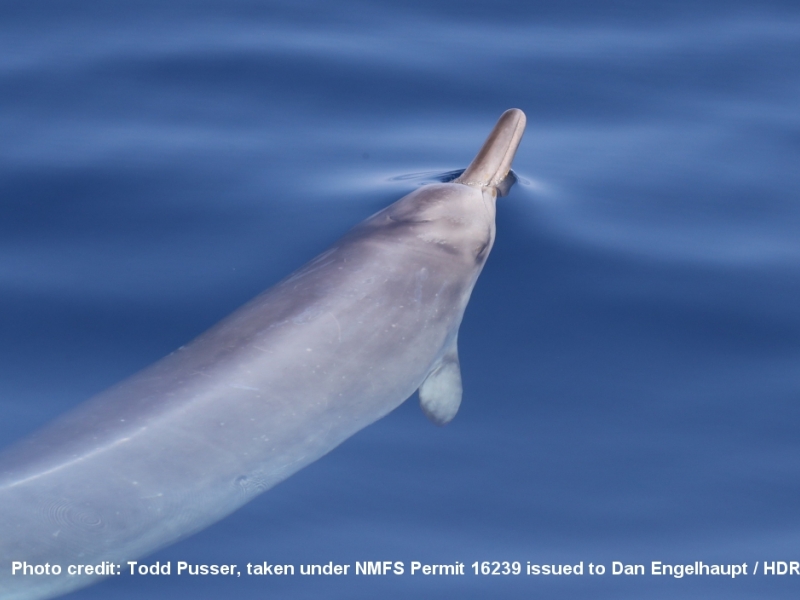
Sowerby's beaked whale tagged offshore of Virginia
September 12, 2018
A rarely seen beaked whale was tracked offshore.
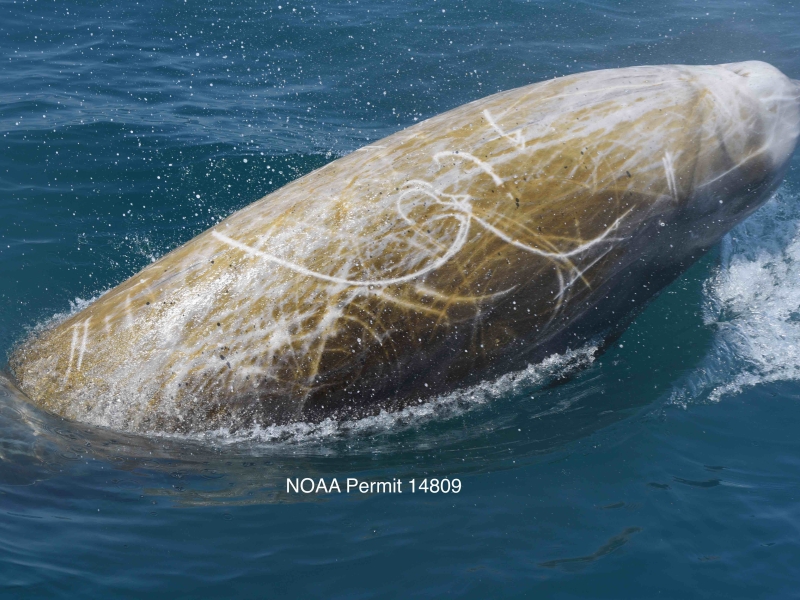
Atlantic BRS 2018 Field Work is Underway
May 18, 2018
The 2nd year of Atlantic BRS has begun.
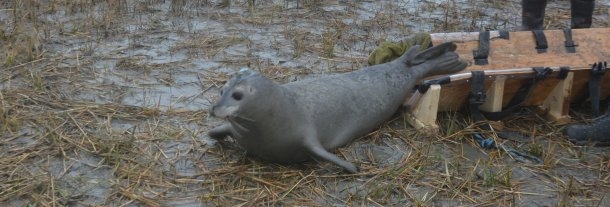
Seal Tagging Team Win!
February 6, 2018
Successful seal tag deployment on the Eastern Shore of VA.
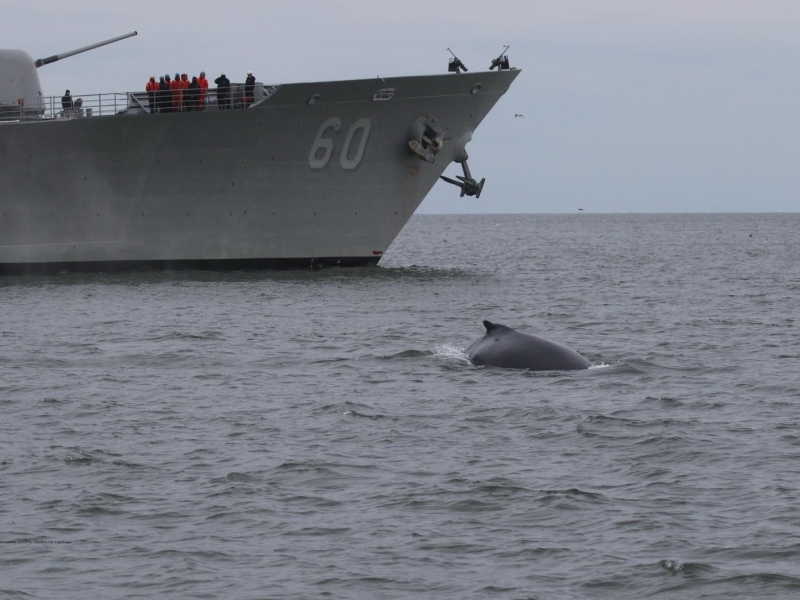
Repeat tagging customers to humpback monitoring project
January 30, 2018
Some interesting notes on site fidelity in Humpack whales.
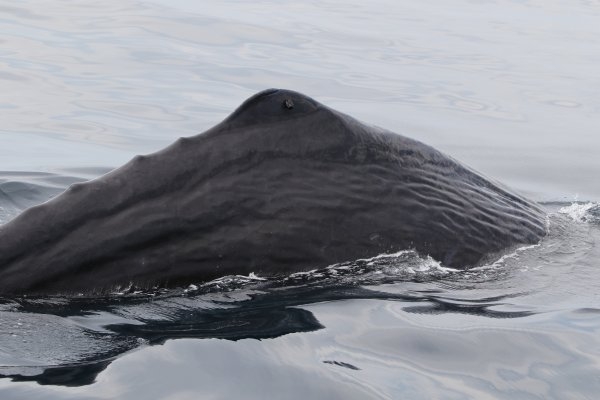
Sperm whales tagged off Virginia Beach
August 25, 2017
Several groups of sperm whales were sighted offshore of VA.
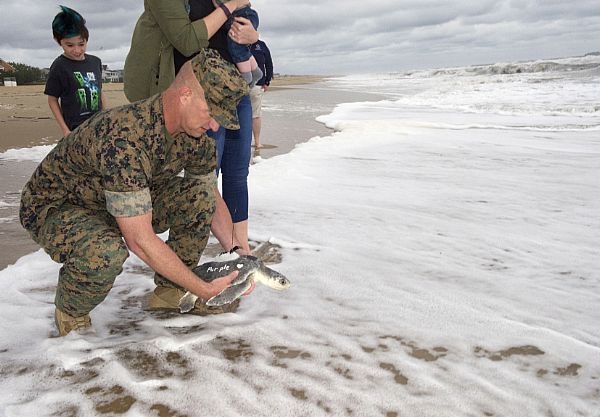
"Purple Heart" sea turtle released back into the ocean
June 12, 2017
Rescued sea turtle is tagged and released by a retired Marine.
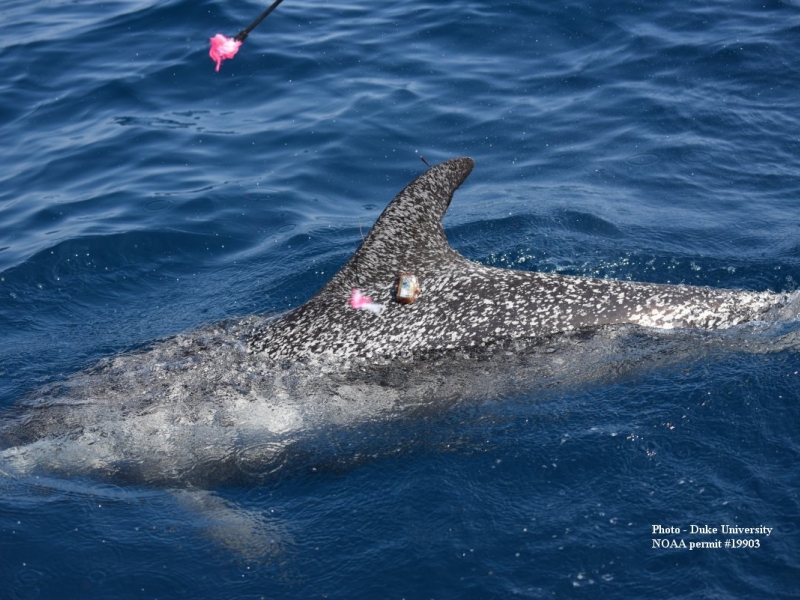
Bonus tagging in JAX
June 15, 2016
Odontocete tagging in Florida.
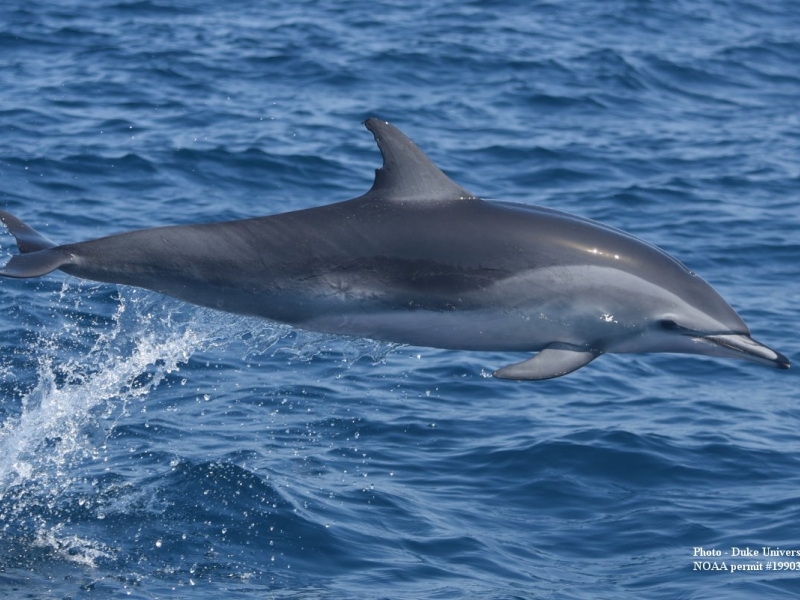
Banner day tagging odontocetes at Hatteras!
June 1, 2016
A busy field day in NC.
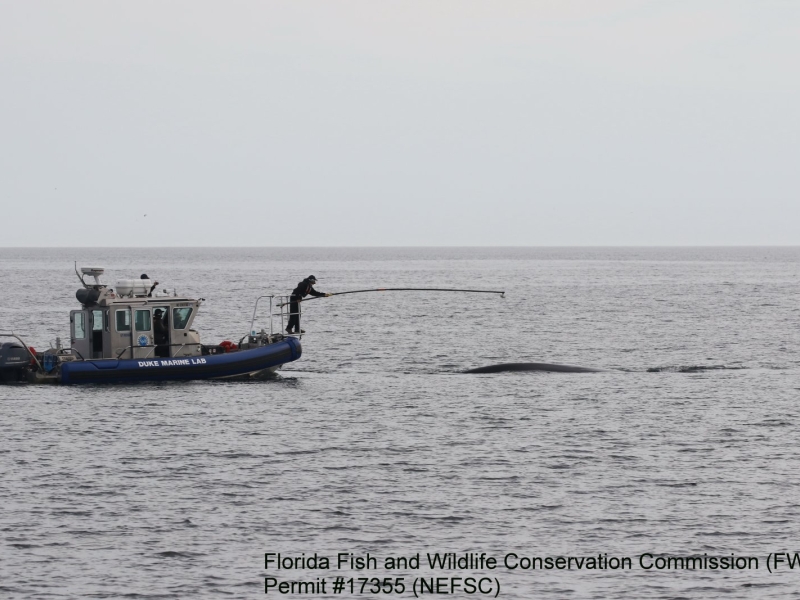
Tagging North Atlantic Right Whales
May 9, 2016
Southeast US tagging project has successful season.
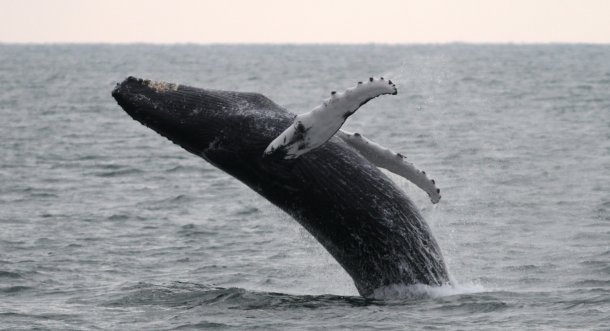
Tagging Atlantic Humpbacks
January 8, 2016
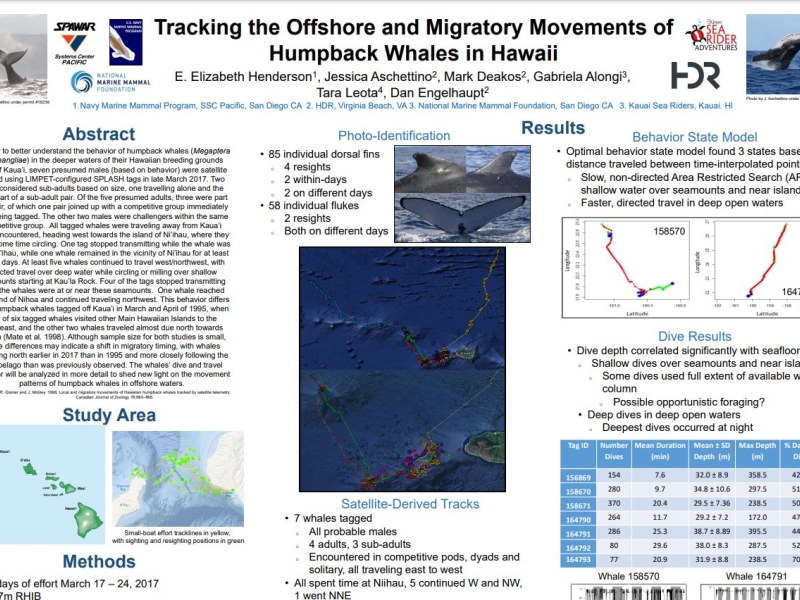
Year two of our Chesapeake Bay humpback whale project has begun!
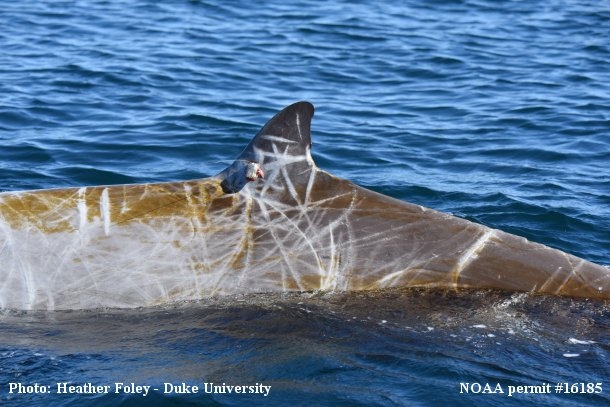
Hatteras tagging wraps up for 2015
November 10, 2015
The finale of a successful field season.
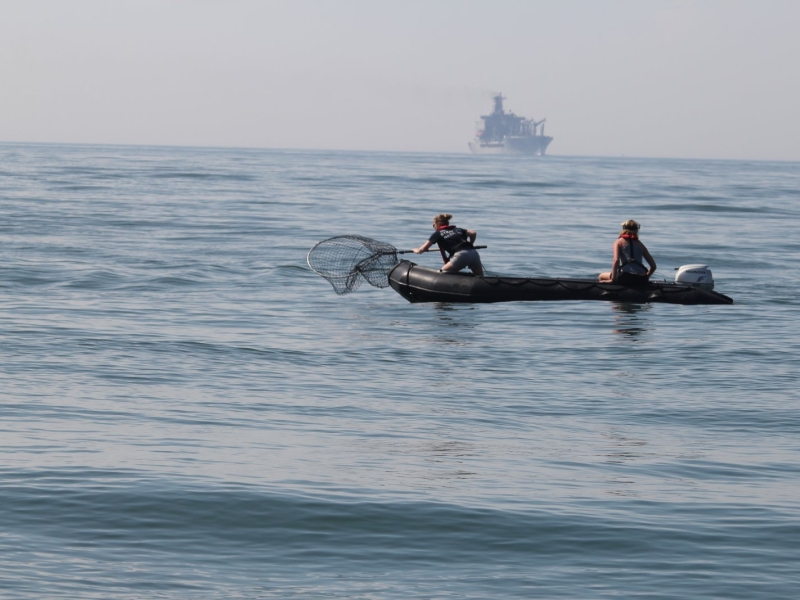
Turtle Tagging Season Has Begun!
May 18, 2015
Tagging loggerhead and Kemp's ridley sea turtles off Virginia.
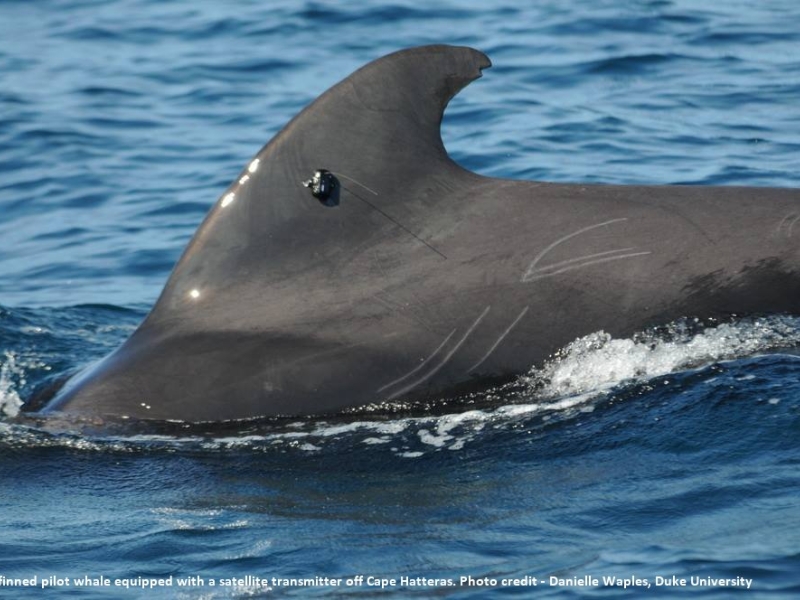
Tagging Deep Diving Odontocetes Off Cape Hatteras - Part 3
September 26, 2014
Details on the 3rd field session for the year.
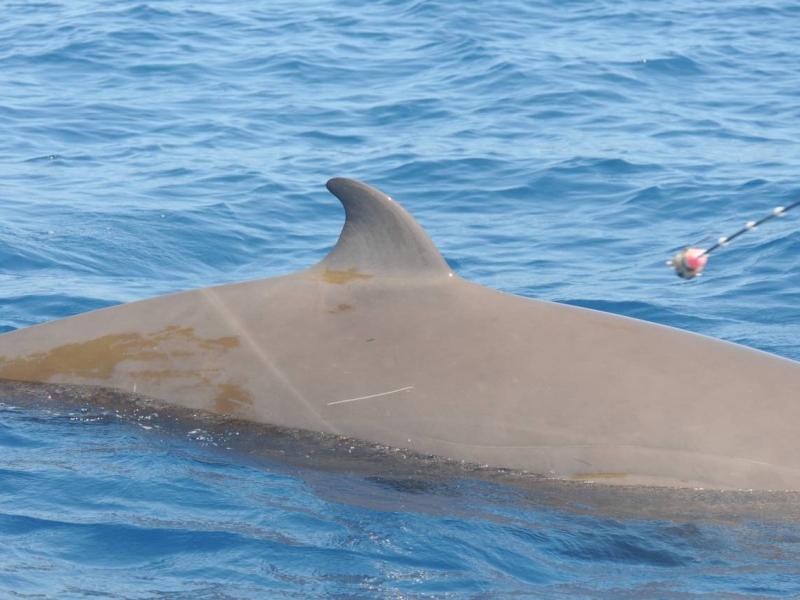
Tagging Whales Off Cape Hatteras
May 21, 2014
Learning about the movements of odontocetes.
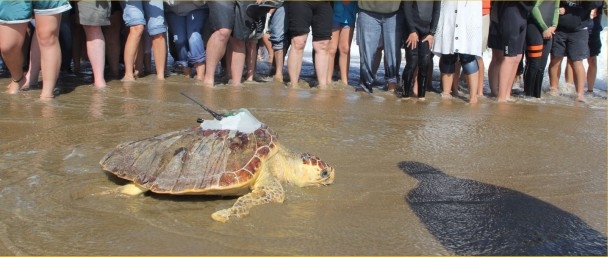
Sea Turtle Rehabilitation and Release
November 26, 2013
Tagging rescued sea turtles.
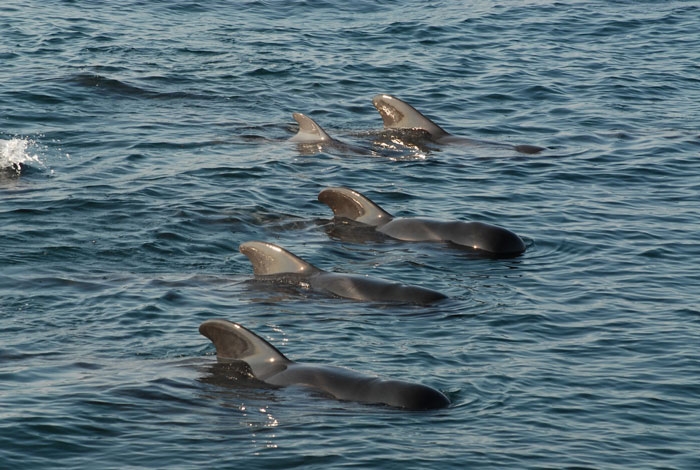
Cape Hatteras Field Work Update
October 28, 2013
Calm days at sea off NC.
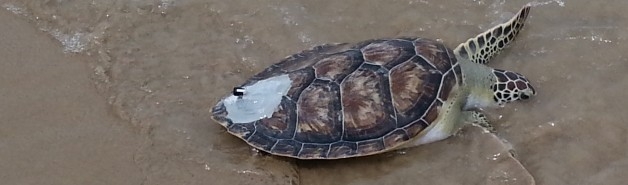
Atlantic sea turtle tagging project is underway!
July 17, 2013
The start of a new turtle project.
Beaked whale distribution and seasonality in Southern California