Happy Whale Humpback Happenings
June 22, 2026
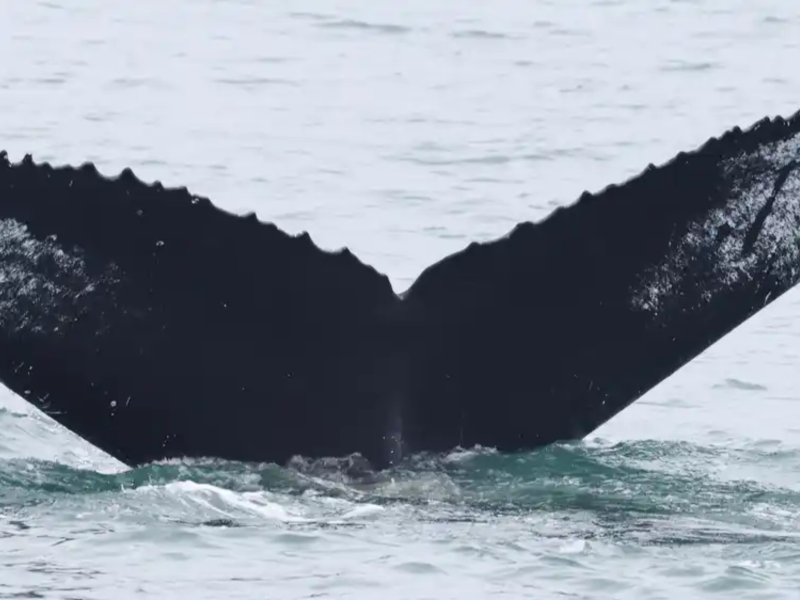
A few interesting matches have come out of our Mid-Atlantic Humpback Whale Catalog efforts and partnership with Happy Whale!
2024-2025 Large Whale Season Summary
March 24, 2025
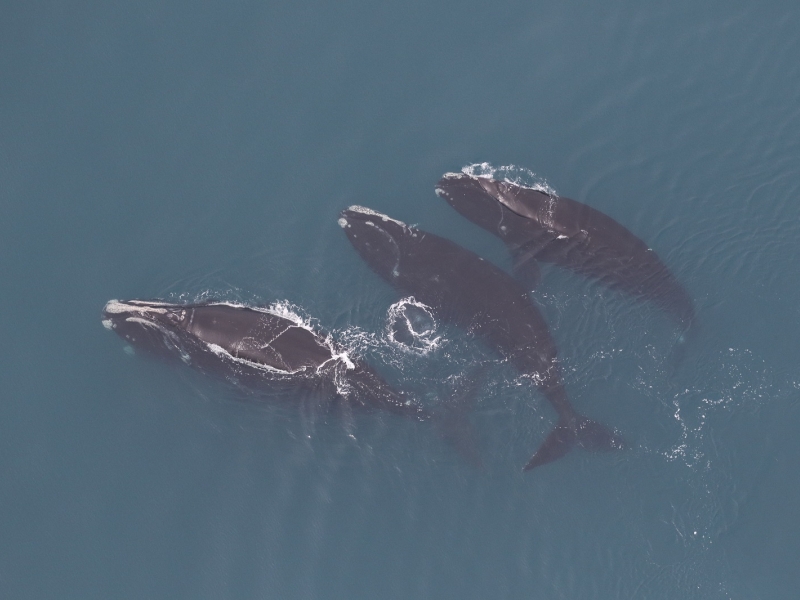
We have two separate efforts focusing on cetaceans off the coast of Virginia. The first is our Offshore (Outer Continental Shelf) Cetacean Study, which focuses primarily on deep diving odontocetes like sperm whales. The second effort is our Nearshore and Mid-Shelf Baleen Whale Monitoring Project.
Whales of Summer
June 10, 2024
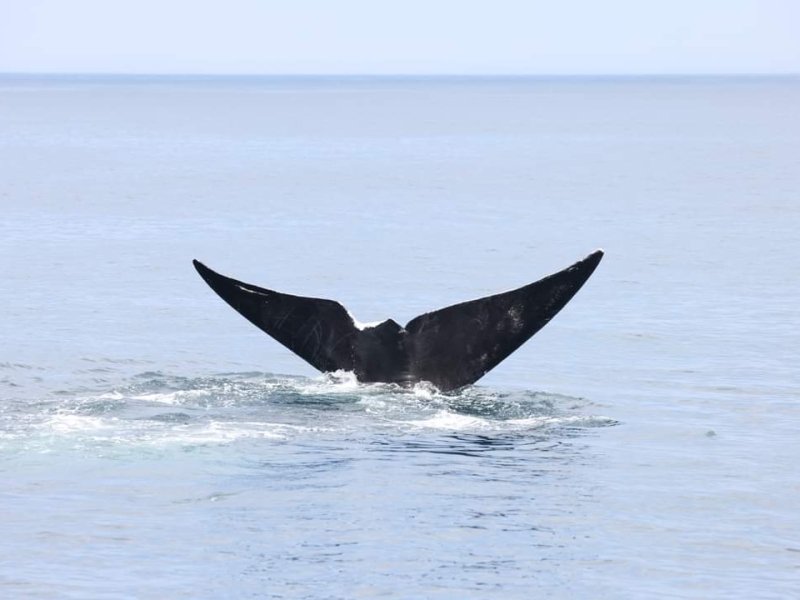
In the mid-Atlantic, baleen whale sightings typically occur during the colder months, with peak activity in December and January. Sightings of humpback and right whales usually decrease by late March through April. While occasional baleen whale sightings, particularly of fin whales, happen during warmer months, large groups are uncommon as summer approaches. Pelagic surveys during this time often focus on odontocetes like sperm whales and beaked whales.
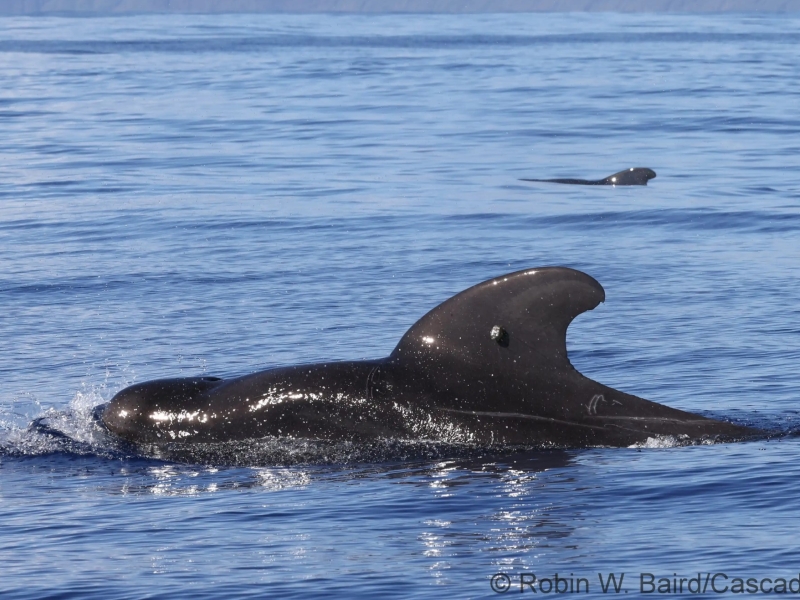
Kauai' Field Work Updates
February 16, 2024
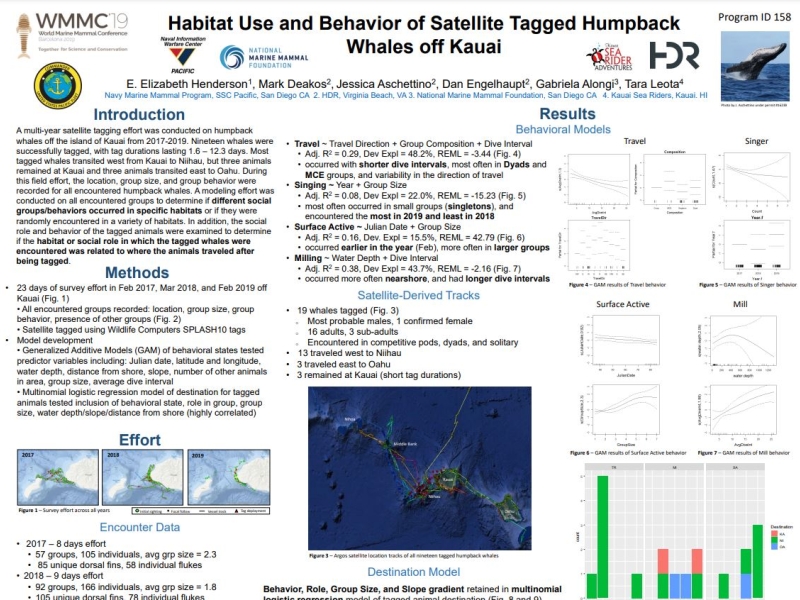
Scientists from Cascadia Research Collective are leading a ~9-day field project off Kaua’i that started on February 11th.
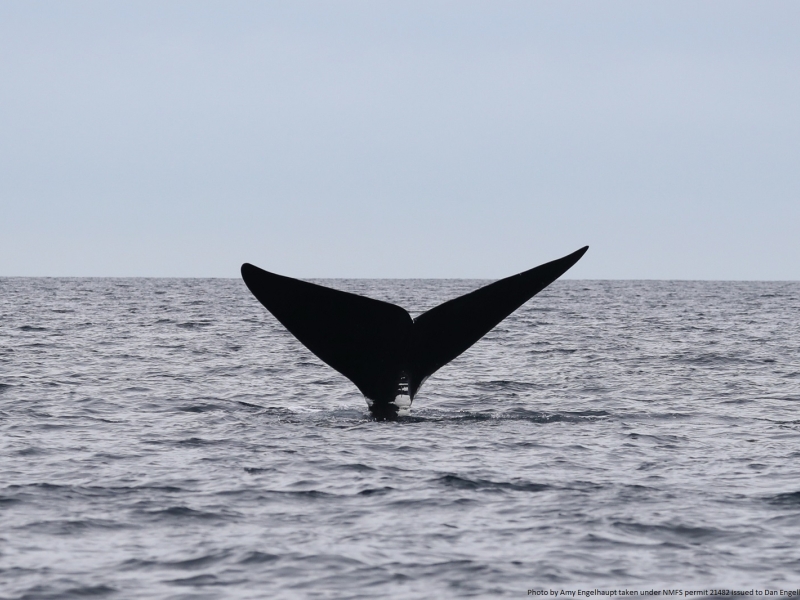
Large Whale Action in the Mid-Atlantic
January 30, 2024
After a relatively slow start to the 2023-2024 large whale season, things are picking up here in the Mid-Atlantic. Last week was the busiest we’ve had so far this season for several of our projects as well as adjacent colleagues.
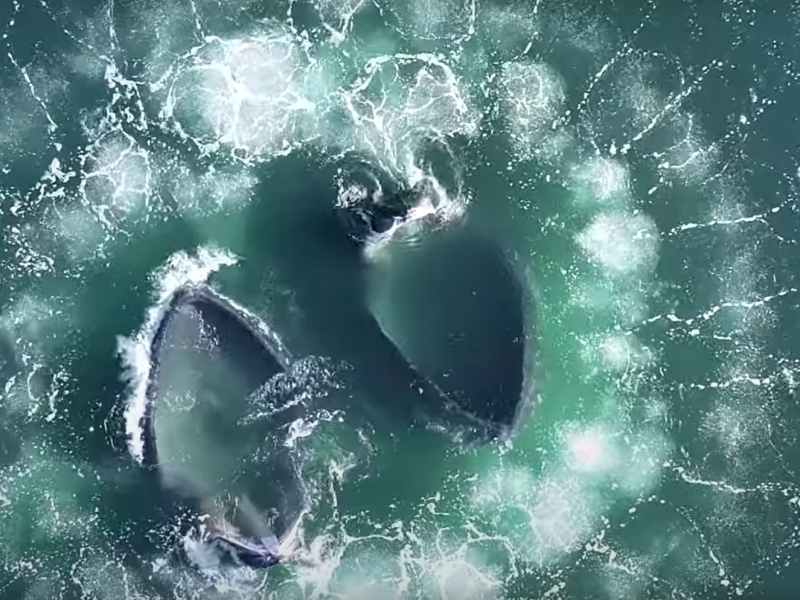
Using drones to study whales from a new perspective
November 21, 2023
Small unmanned aircraft systems (sUAS) or “drones” are increasingly being used to study marine mammals from a different perspective.
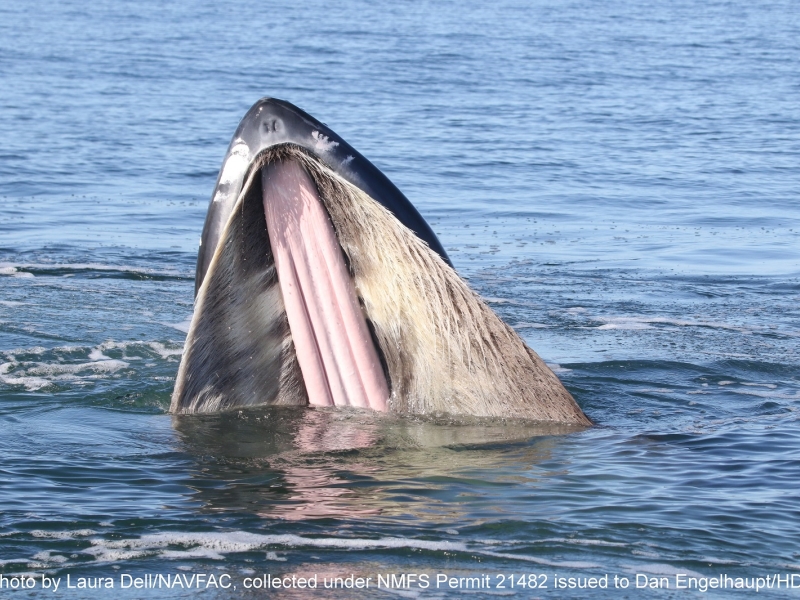
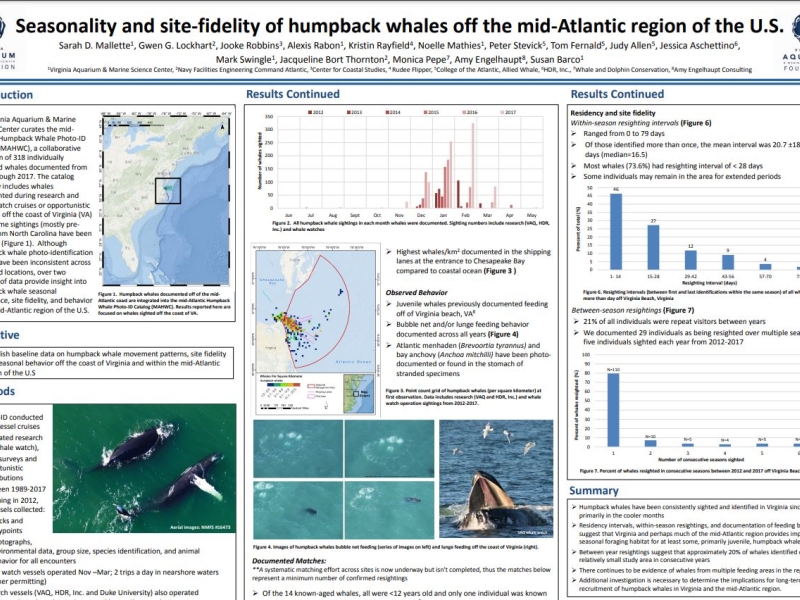
Humpbacks - New visitors and familiar friends in the Mid-Atlantic
November 20, 2023
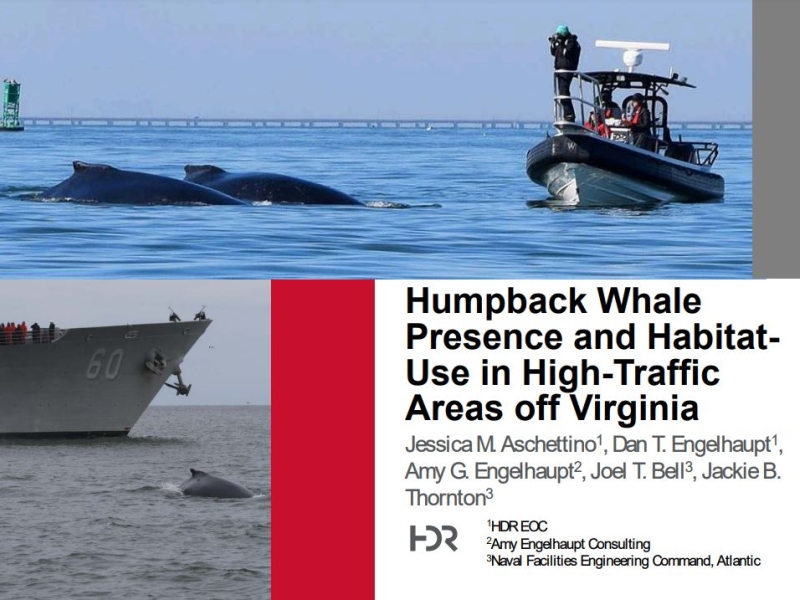
On 16 November 2023, the weather lined up perfectly for HDR Inc. to go out in their small boat for some large whale survey work under the Mid-Atlantic Nearshore and Mid-shelf Baleen Whale Monitoring Project.
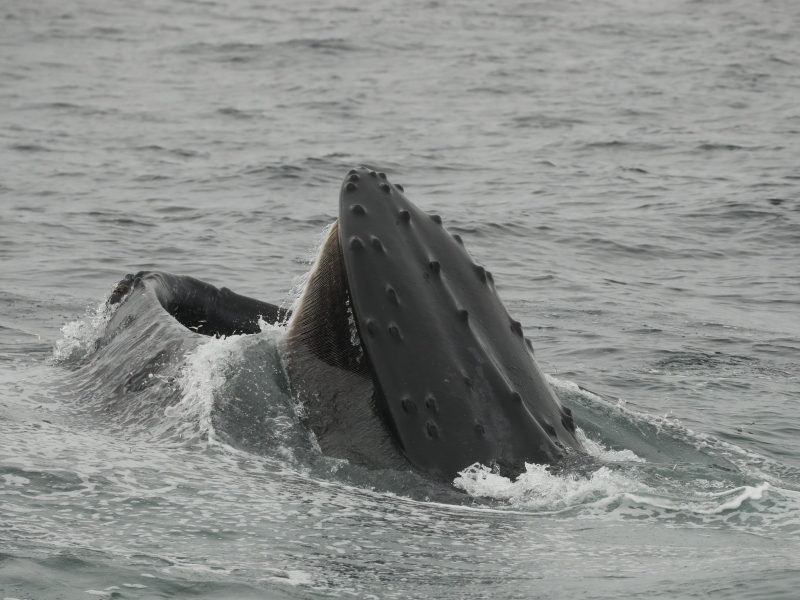
Drone footage of humpback whale bubble-net feeding off the coast of Virginia
February 18, 2021
Humpback whale "Tobin" bubblenet feeding off VA.
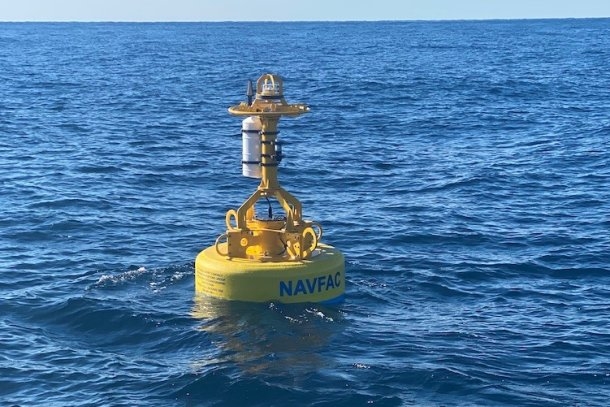
New acoustic monitoring buoy helps researchers study and protect North Atlantic Right Whales
January 19, 2021
A new buoy to listen for protected whales.
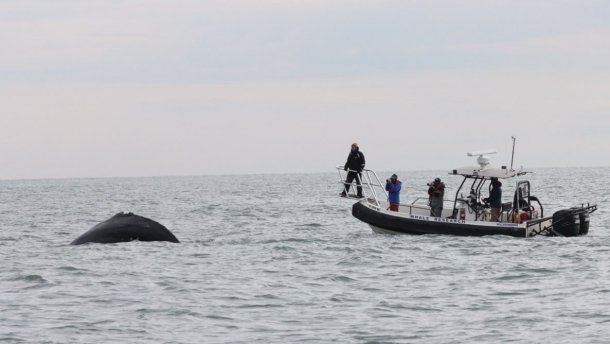
Entangled humpback whale
January 8, 2021
Our team assisted with the disentanglement efforts of a young humpback whale.
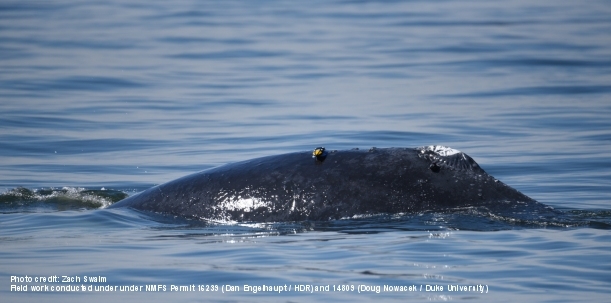
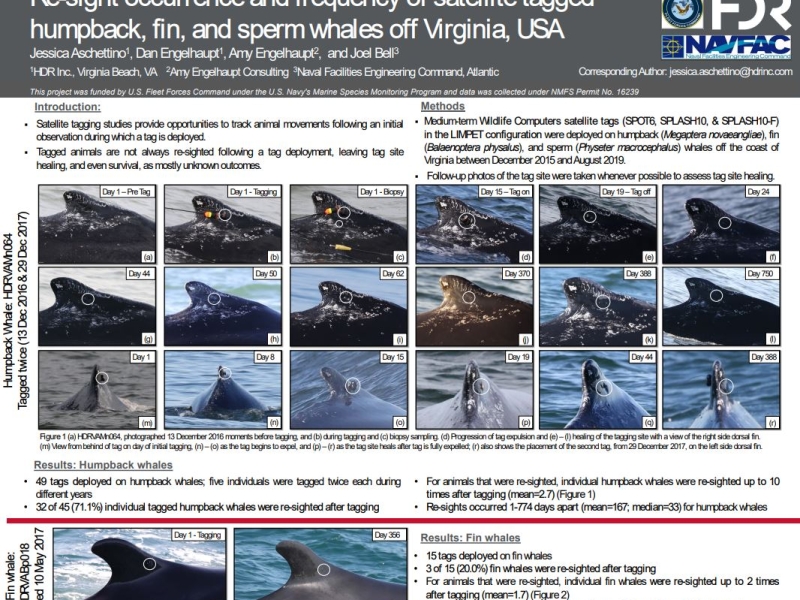
One whale tagged twice.
March 8, 2019
D-tag and limpet tag on a humpback whale.
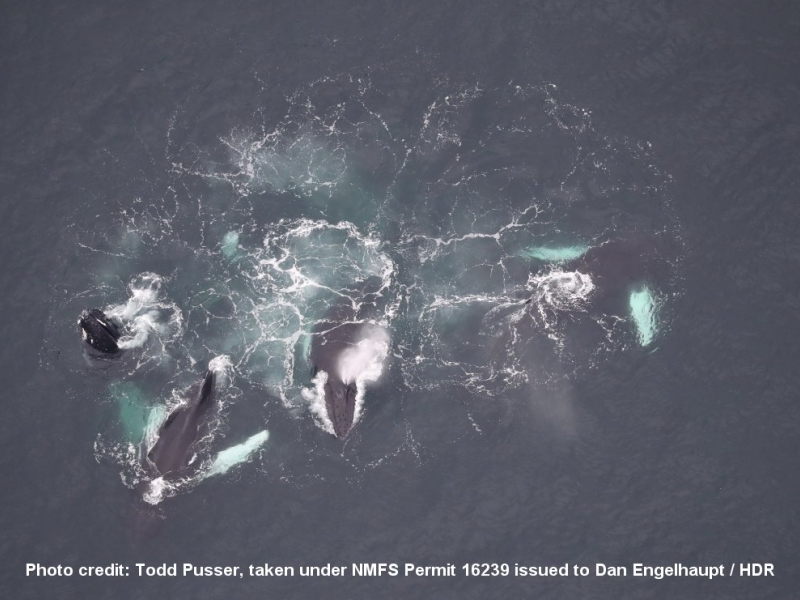
Blue whales and sei whales and right whales - OH MY!!!
April 18, 2018
A spring aggregation of endangered whales offshore.
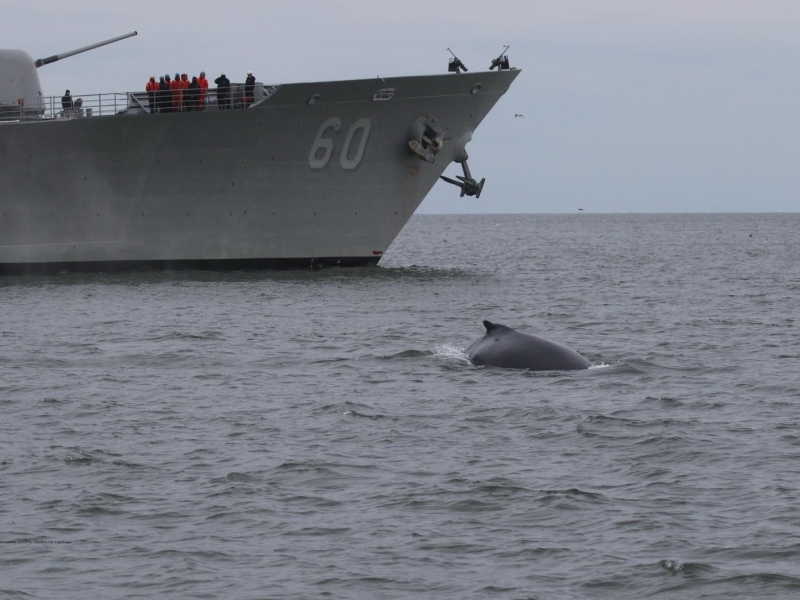
Repeat tagging customers to humpback monitoring project
January 30, 2018
Some interesting notes on site fidelity in Humpack whales.
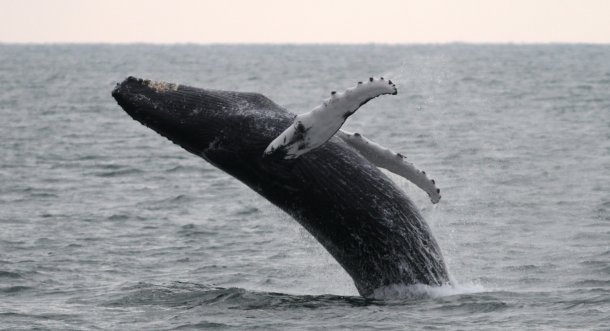
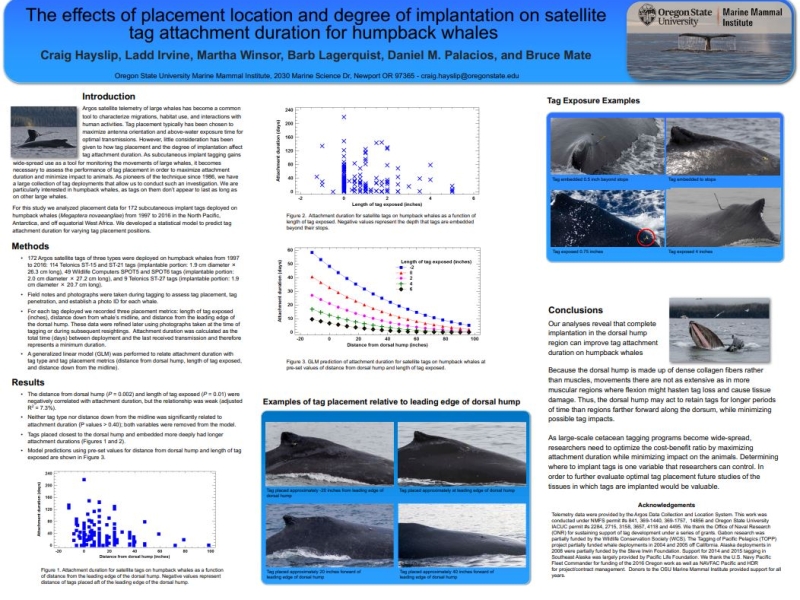
Tagging Atlantic Humpbacks
January 8, 2016
Year two of our Chesapeake Bay humpback whale project has begun!
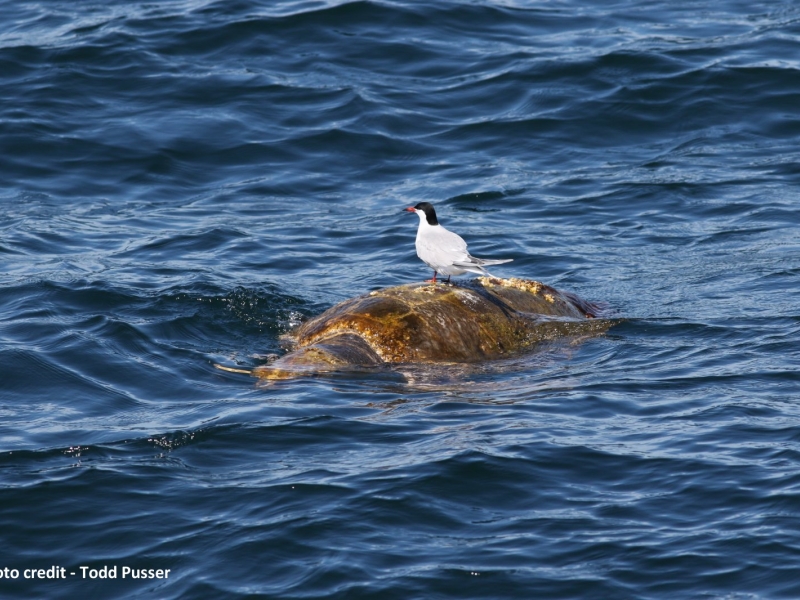
Great Day for a Mid-Atlantic Offshore Survey
April 20, 2015
Pelagic cetaceans and sea turtle sightings.
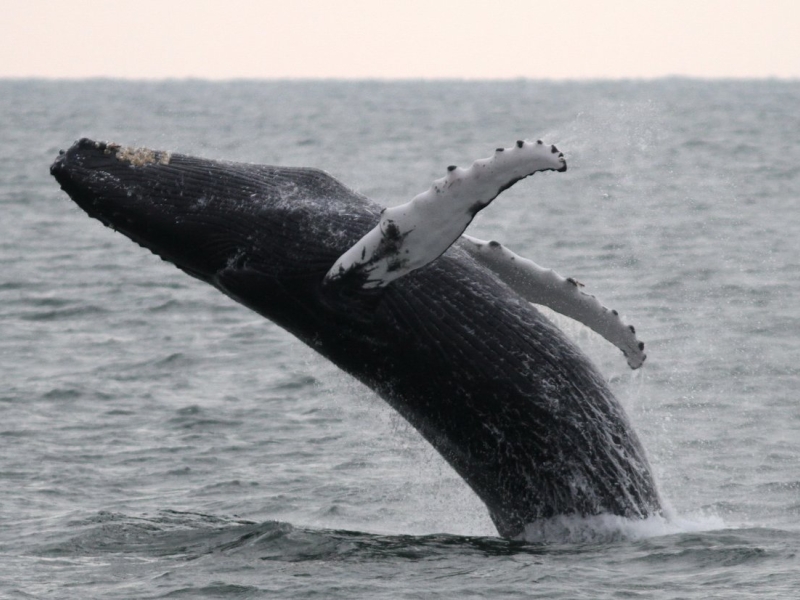
Humpbacks Have Arrived!
December 30, 2014
It's winter in Virginia and that means whales!
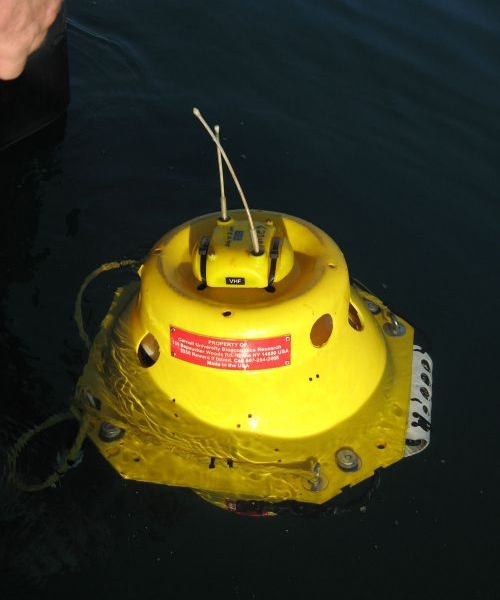
Passive acoustic monitoring for right whales off Cape Hatteras
October 21, 2013
MARUs off NC
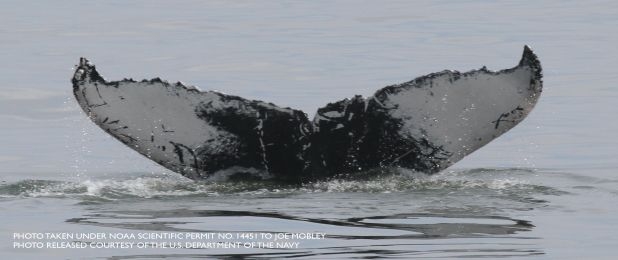
Spinnaker sighted off Virginia Beach
September 25, 2013
A well known whale makes a visit.
Current
Visual Survey and Tagging of Hawaiian Odontocetes
Project Objectives
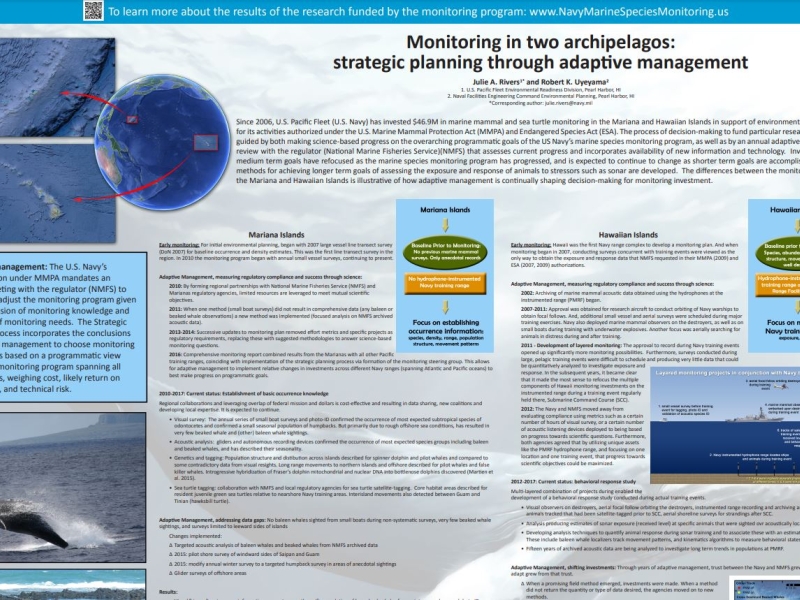
(1) define the spatial movement and habitat use patterns of species that are exposed to mid-frequency active (MFA) sonar (2) determine how these patterns influence exposure and potential responses
Complete
Pacific Islands Marine Mammal Stranding Diseases
Project Objectives
Determine cause of death when cetaceans strand to ensure accurate public understanding of stranding cause, with focus on infectious diseases
Complete
Historical Data Analysis for Humpback Whales in the Mariana Islands
Project Objectives
Determine if humpback whales were present in archival acoustic recordings from 2009-2010 nearshore to Pagan and Maug
Current
Gulf of Alaska Acoustic Moorings and Analysis
Project Objectives
Conduct systematic line transect survey for marine mammals for density estimates; conduct survey to determine ecotype identity of killer whales; analyze existing and newly collected data for seasonal occurrence, abundance, and density of cetacean
Complete
Guam Shore Based Visual Surveys
Project Objectives
Shore-based marine mammal surveys
Complete
Accelerometry Tag Development
Project Objectives
Increase capacity and develop training for marine mammal monitoring in Hawaii utilizing non-invasive triaxial accelerometry biologging tags to quantify fine-scale behavioral and energetic responses of protected species to potential anthropogenic disturbance
Current
Passive Acoustic Monitoring for Mid-Atlantic Baleen Whales
Project Objectives
Monitor large whale occurrence in the Mid-Atlantic
Complete
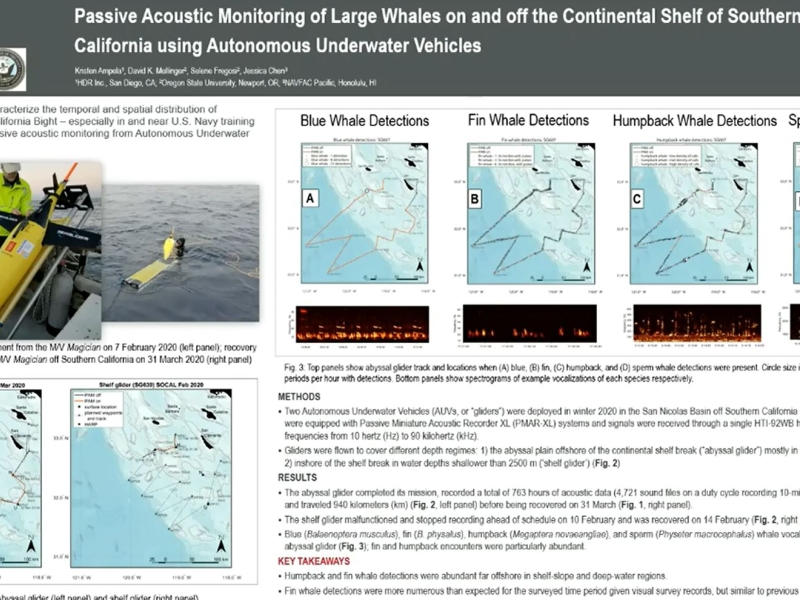
Passive Acoustic Monitoring of Marine Mammals Using Gliders in Marianas
Project Objectives
Identify acoustically distinct species of beaked whales, odontocetes, and baleen whales that occur in the Mariana Islands; develop a better understanding of marine mammal distribution, habitat use, and abundance
Complete
Pilot study for shore based humpback surveys in Saipan
Project Objectives
Humpback whale nearshore distribution in nearshore Saipan waters
Complete
Pilot survey for humpback whales at Farallon de Medinilla
Project Objectives
The goal of the visual surveys is to collect individually-identifying information from humpback whales present near and around Farallon de Medinilla (FDM)
Complete
Small vessel visual surveys in the Mariana Islands Range Complex
Project Objectives
Identify species of beaked whales, odontocetes, and baleen whales that occur in the Mariana Islands; Monitor marine mammal and sea turtle presence, distribution, and diversity in nearshore waters during key seasons (summer and winter); Develop a better understanding of marine mammal distribution, movement patterns, habitat use, population structure, and abundance; Develop reference library of visually-validated acoustic recordings of marine mammals.
Complete
Aerial Surveys of Marine Mammals Conducted in the Inland Puget Sound Waters of Washington, summer 2013 – winter 2016
Project Objectives
1) Conduct aerial surveys during four seasonal periods within the inland Puget Sound Survey Area to assess potential differences in seasonal distribution, numbers, and behavioral state patterns of marine mammals; 2) Collect data to estimate densities of marine mammals in the inland Puget Sound waters for species with sufficient sightings; 3) Estimate abundance for each marine mammal species seen an adequate number of times; 4) Document the distribution and habitat use of each species observed; 5) Document and describe behaviors seen without performing focal follows.
Current
Estimation of Received Levels of MFAS and Behavioral Response of Marine Mammals at PMRF
Project Objectives
Further our understanding of the Monitoring Questions: 1) What is the occurrence and estimated received levels of MFAS on 'blackfish', humpback, minke, sperm and Blainville's beaked whales within the PMRF instrumented range? and 2) What, if any, are the short term behavioral responses of 'blackfish,' humpback, minke, sperm and Blainville's beaked whales when exposed to MFAS/explosions at different levels/conditions at PMRF?
Complete
Passive Acoustic Monitoring of Marine Mammals in the Gulf of Alaska
Project Objectives
Determine the spatial distribution and occurrence of beaked whales, other odontocetes, and baleen whales in offshore areas using bottom-mounted passive acoustic recorders and deep-diving autonomous gliders
Complete
Occurrence, Distribution, and Density of Marine Mammals Near Naval Station Norfolk and Virginia Beach
Project Objectives
Assess occurrence, seasonality, and abundance of Tursiops in the coastal waters of Hampton Roads military installations
Complete
Mid-Atlantic Humpback Whale Catalog
Project Objectives
Establish a centralized collaborative humpback whale photo-id catalog for the mid-Atlantic and southeast regions to support management and environmental planning
Complete
Mid-Atlantic Humpback Whale Monitoring
Project Objectives
Assess occurrence, habitat use, and baseline behavior of humpback whales in the mid-Atlantic region
Complete
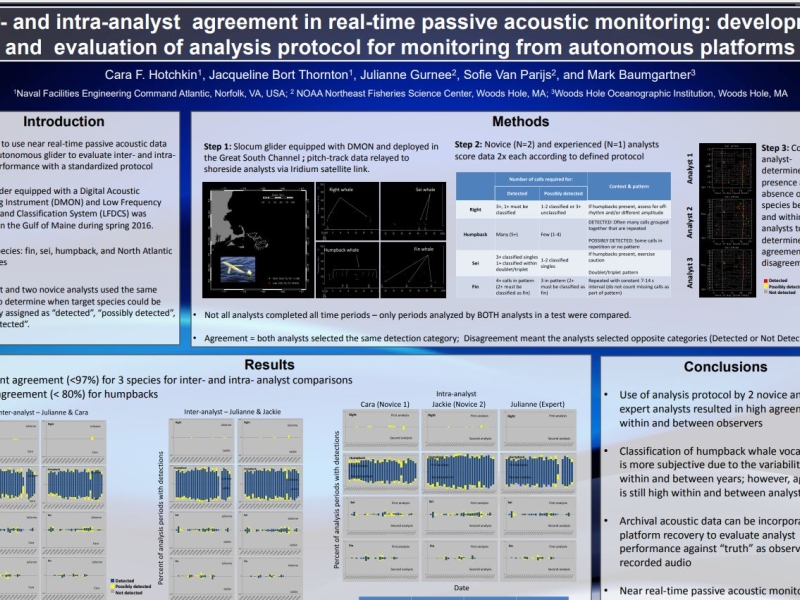
Autonomous Real-Time Passive Acoustic Monitoring of Baleen Whales for Mitigating Interactions with Naval Activities
Project Objectives
Demonstrate near real-time passive acoustic detection and classification hardware/software systems
Complete
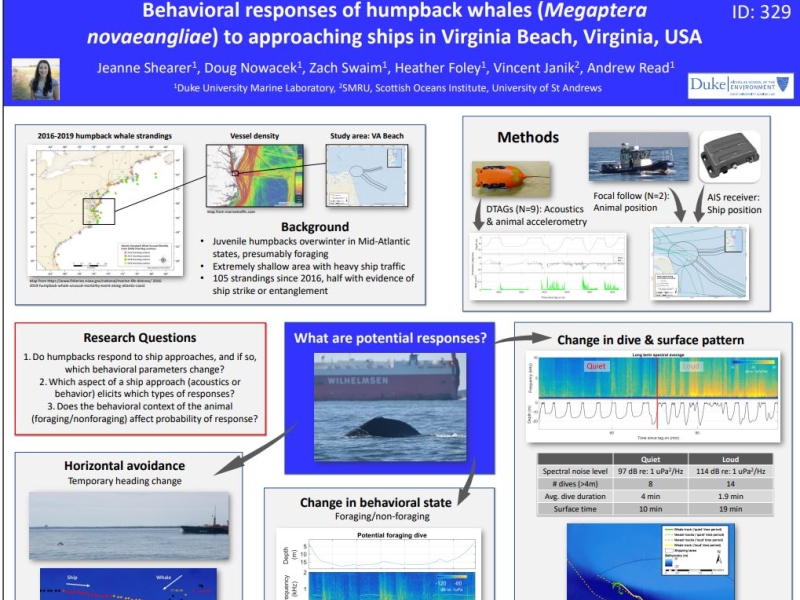
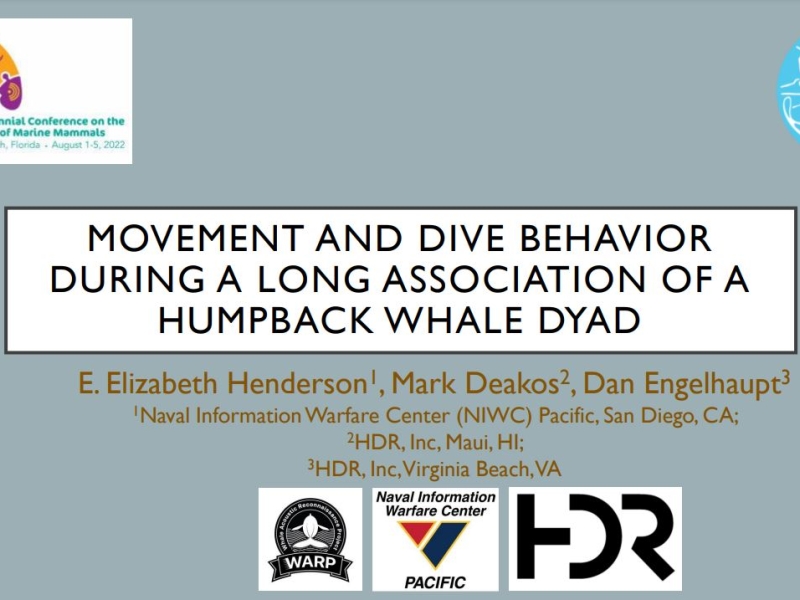
Behavioral Response of Humpback Whales to Vessel Traffic
Project Objectives
Understand the behavioral response of humpback whales to approaching vessels in the shipping channels at the mouth of the Chesapeake Bay.
Complete
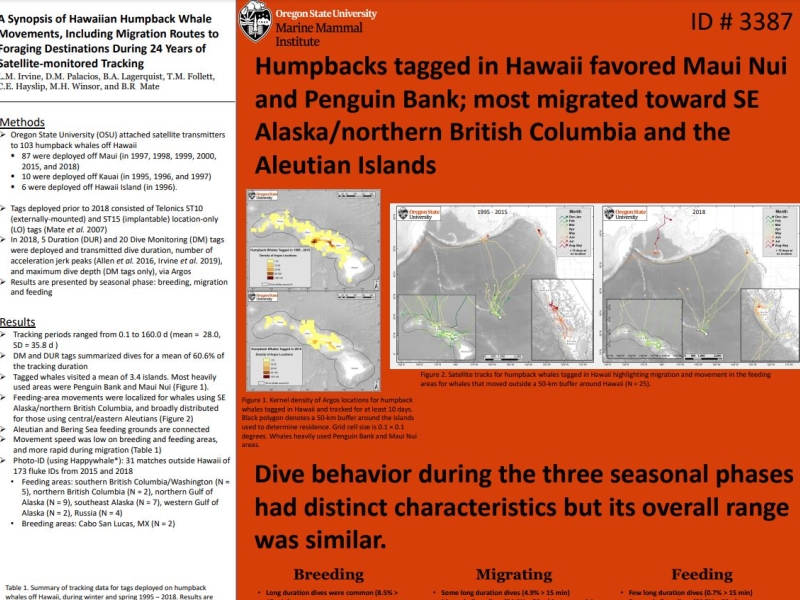
North Pacific Humpback Whale Tagging
Project Objectives
Determine the occurrence, movement patterns, and residency patterns of multiple humpback whale Distinct Population Segments within Pacific Ocean Navy Range Complexes
Current
Pacific Islands Comprehensive Stranding Investigations
Project Objectives
Conduct comprehensive investigations of stranded marine mammals throughout the Pacific Islands with emphasis on the Hawaiian and Mariana Island chains. This includes conducting necropsies of stranded animals, collecting and archiving samples, conducting disease screening, genetic testing, and analysis of historical data. The objective is to examine stranding patterns and causes of death for marine mammals in the Pacific Islands.
Current
Marine Mammal Sightings During CalCOFI Cruises
Project Objectives
Determine what species and populations of marine mammals are present in Southern California and estimate the abundance and density across seasons
Current
Long Term Acoustic Monitoring of Marine Mammals Utilizing the Instrumented Range at Pacific Missile Range Facility (PMRF)
Project Objectives
Improve understanding of the long term trends in occurrence of marine mammals (e.g., minke, humpback, fin, Bryde's, Blainville's) on the PMRF range. Examine what, if any, acoustic and physical behavioral responses occur to Navy activities.
Complete
Acoustic and Visual Survey for Cetaceans in Behm Canal and Southern Clarence Strait, Alaska
Project Objectives
Conduct visual line-transect surveys and passive acoustic monitoring for cetaceans, and other marine mammals, to determine species occurrence, and to estimate density within Navy’s testing range. Acoustic monitoring devices will be deployed during the vessel based survey, and long-term passive acoustic hydrophones will be monitored for year-round detection of rare and/or cryptic cetacean species.
Current
Pacific Marine Assessment Program for Protected Species (PACMAPPS) survey
Project Objectives
Identify species of beaked whales, odontocetes, and baleen whales that occur in the surveyed areas; Monitor marine mammal and sea turtle presence, distribution, and diversity in offshore waters; Develop a better understanding of marine mammal distribution, movement patterns, habitat use, population structure, and abundance; Develop reference library of visually-validated acoustic recordings of marine mammals.
Current
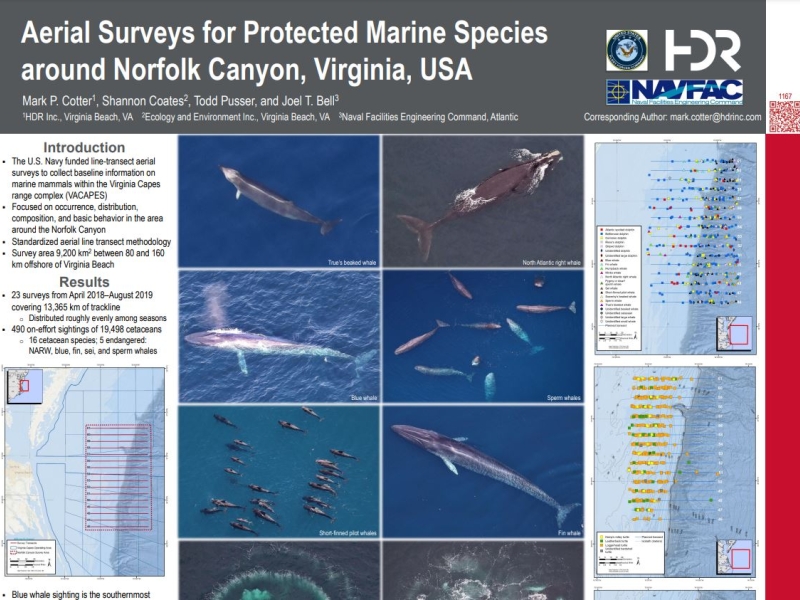
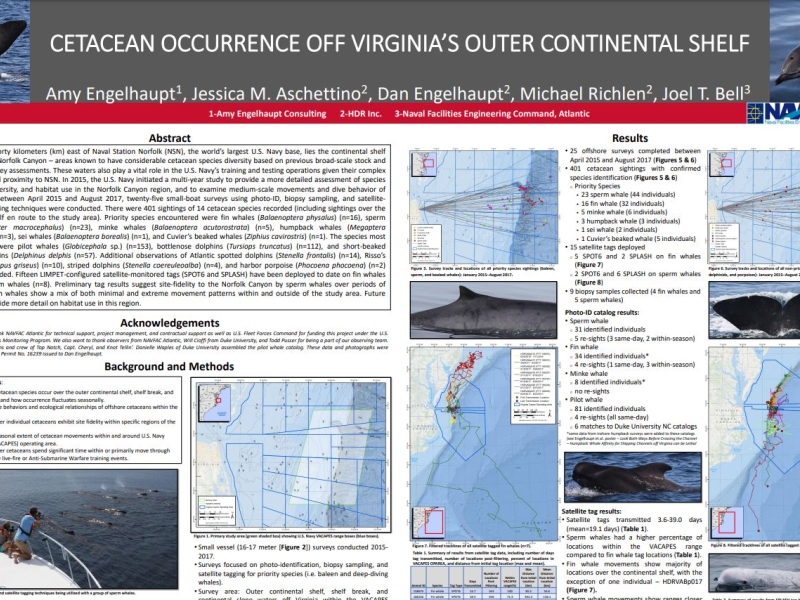
Mid-Atlantic Offshore Cetacean Study
Project Objectives
Assess occurrence, habitat use, and baseline behavior of cetaceans in the offshore and continental shelf break region of the VACAPES OPAREA
Current
Mid-Atlantic Nearshore & Mid-shelf Baleen Whale Monitoring
Project Objectives
Assess occurrence, habitat use, and baseline behavior of baleen whales in the mid-Atlantic region
More details
Collapse details
Date Published:
Filesize:
- June 1, 2022
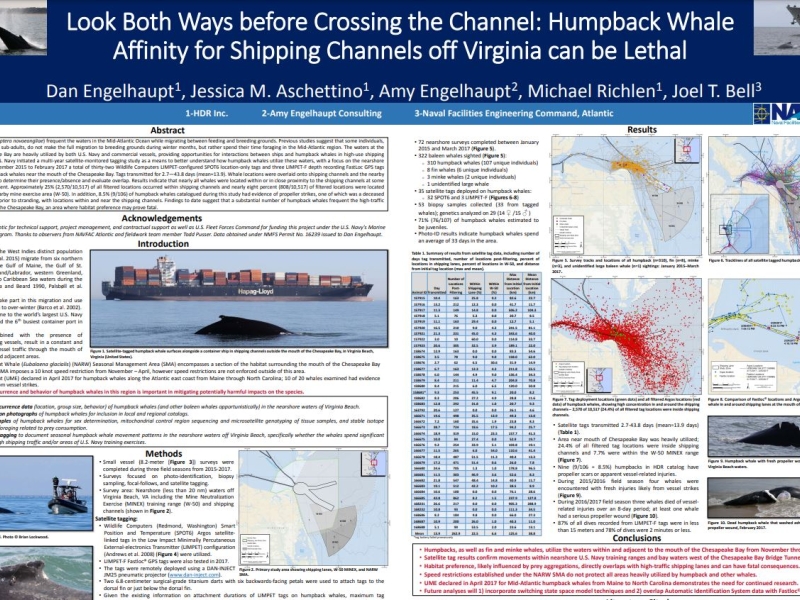
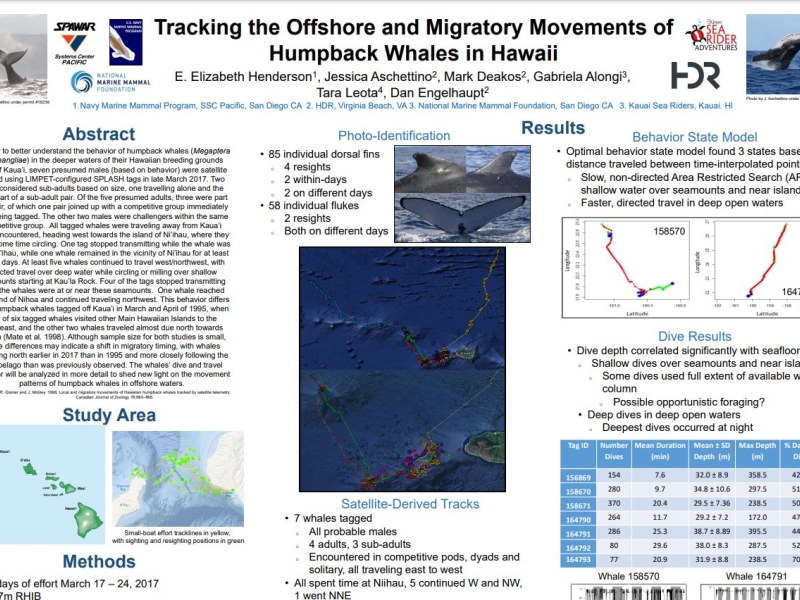
Primary objectives of this project have included the following: Collect baseline occurrence data (location, sex, group size, behavior) of humpback whales (and other species of baleen whales, opportunistically), Obtain identification photographs of humpback whales for inclusion in regional and local catalogs, Collect biopsy samples of humpback whales for sex determination, mitochondrial control region sequencing and microsatellite genotyping of tissue samples, and stable isotope analysis to assess foraging related to prey consumption • Conduct satellite tagging to document seasonal humpback whale movement patterns in the nearshore waters off Virginia Beach, specifically whether the whales spend significant time in areas of high shipping traffic and/or areas of U.S. Navy training exercises
- 9,540.30 KB
More details
Collapse details
Date Published:
Filesize:
- May 1, 2025
A total of 23 nearshore and mid-shelf vessel surveys were completed during the 2023/24 field season. In total, 43 baleen whale sightings, including 33 sightings of humpback whales (Megaptera novaeangliae) composed of 43 individuals, 6 sightings of North Atlantic right whales (Eubalaena glacialis) composed of 9 individuals (1 deceased), 3 sightings of minke whales (Balaenoptera acutorostrata) composed of 3 individuals, and 1 sighting of a fin whale (Balaenoptera physalus) composed of 1 individual occurred during the 2023/24 field season.
- 3,198.45 KB
More details
Collapse details
Date Published:
Filesize:
- July 7, 2026
A total of 22 nearshore and mid-shelf vessel surveys were completed during the 2024/25 field season. In total, 60 baleen whale sightings, including 40 sightings of humpback whales (Megaptera novaeangliae) totaling 59 individuals, 10 sightings of North Atlantic right whales (NARWs; Eubalaena glacialis) totaling 22 individuals, 7 sightings of fin whales (Balaenoptera physalus) totaling 14 individuals, and 3 sightings of individual minke whales (Balaenoptera acutorostrata), occurred during the 2024/25 field season. A total of 24 aerial surveys were flown during the 2024/25 field season in association with this effort and the Offshore Cetacean Study (OCS) (A. Engelhaupt et al. 2026); see Ozog and Engelhaupt 2026 for additional details regarding the aerial surveys. Baleen whale sightings from the aerial surveys included humpback (n=45), NARWs (n=8), fin (n=11), and minke (n=3) whales (Ozog and Engelhaupt 2026). During the OCS surveys, baleen whale sightings included fin whales (n=12), humpback whales (n=7), a blue whale (Balaenoptera musculus; n=1), a minke whale (n=1), and an NARW (n=1) (A. Engelhaupt et al. 2026). Across this project and the OCS effort, satellite-linked telemetry tags were deployed on one humpback whale, one fin whale, and one NARW. Customized Animal Tracking Solution tags were deployed on two NARWs and two humpback whales. One biopsy sample was collected from the satellite-tagged humpback whale.
- 9,528.24 KB
More details
Collapse details
Date Published:
Filesize:
- February 1, 2024
Since January 2015, HDR Inc. has been monitoring humpback whales (Megaptera novaeangliae) to assess their occurrence, habitat use, and behavior within and near United States (U.S.) Navy training and testing areas off Virginia via the Mid-Atlantic Humpback Whale Monitoring Project.
- 4,043.06 KB
More details
Collapse details
Date Published:
Filesize:
- July 1, 2023
Since January 2015, HDR Inc. has been monitoring humpback whales (Megaptera novaeangliae) to assess their occurrence, habitat use, and behavior within and near United States (U.S.) Navy training and testing areas off Virginia via the Mid-Atlantic Humpback Whale Monitoring Project.
- 8,609.08 KB
Comparison of blue and fin whale behavior, headings, and group characteristics in the Southern California Bight during summer and fall 2008-2010.
19th Biennial Conference on the Biology of Marine Mammals .
More details
Collapse details
Date Published:
Filesize:
- November 27, 2011
Baseline undisturbed behavior and social patterns of blue (Balaenoptera musculus) and fin whales (B. physalus) are not well described and are needed to identify and understand potential effects of anthropogenic activities. Behavioral data for blue and fin whales were collected during line-transect and focal-follow effort. Initially observed behavior state, heading, and minimum and maximum interindividual dispersal distance were recorded during line-transect sampling. Focal groups were circled for 10-60+ minutes and videotaped from outside Snell’s sound cone to avoid disturbance. During 24,736 km of survey effort, 51 fin whale sightings (85 individuals) and 49 blue whalesightings (81 individuals) were seen. Over 7 hours of video was collected for16 blue and 15 fin focal follows. During the summer seasons, blues (n=48) were seen more commonly than fins (n=35); in fall, fins (n=16) were seen significantly more frequently than blues (n=1). Mean group size was 1.7 whales for both species. Initially observed blue behavior was usually travel (85%) or mill (11%). Observed fin whale behavior was also mostly travel (90%), mill (4%), or surface-active travel (4%). Both species were seen socializing in fall but not summer; foraging was observed in summer through fall. Mean initial dispersal for blues and fins was 9.1 and 14.2 body lengths, respectively. In summer, blues were most frequently (26%) seen headed S; in fall (n=2), they were headed only inshore (E). In summer, fin whales were most commonly headed SSW (26%) or WNW (26%); in fall, they were headed mostly NE (38%) or WSW (38%). Dive/respiration/behavioral event rates were also collected. Both species may directly compete for food based on observations of inter-specific maneuvering for a bait ball. Data represent the most extensive record of systematic undisturbed behavior on these species in SOCAL and include social interactions not previously documented in this region.
- 146.36 KB
Comparison of blue and fin whale behavior and group characteristics in the Southern California Bight (SCB) 2008-2012.
27th Conference of the European Cetacean Society .
More details
Collapse details
Date Published:
Filesize:
- April 8, 2013
Baseline undisturbed behavior and social patterns of blue (Balaenoptera musculus) and fin whales (B. physalus) are not well described and are needed to identify and understand potential effects of anthropogenic activities in the SCB. In 2008-2012, 72,467 km of aerial line transect and focal-follow effort was conducted in the SCB. Initially observed location, group size, behavior state, heading, and minimum and maximum inter-individual dispersal distance were recorded. Focal groups were circled for 10-60+ minutes and videotaped from outside the plane’s sound cone to avoid disturbance. A total of 122 fin whale sightings (208 individuals) and 65 blue whale sightings (104 individuals) were made. Behavior, occurrence and distribution were related to season, location, bathymetry, and time of day. Blue whales were seen only from summer-fall and concentrated primarily close to shore (
- 3,180.74 KB
Comparison of Blue and Fin Whale Behavior, Headings and Group Characteristics in the Southern California Bight during Summer and Fall 2008-2010.
10th Annual Pathways Student Research Symposium, Galveston, TX .
More details
Collapse details
Date Published:
Filesize:
- November 9, 2011
Baseline undisturbed behavior/social patterns of blue/fin whales are not well described and are needed to identify and understand potential effects of anthropogenic activities. Behavioral data were collected during aerial effort. Initially observed behavior state, heading, minimum/maximum inter-individual dispersal distance were recorded during line-transect sampling. During the summer seasons, blues were seen more than fins; in fall, fins were seen more. Initially observed blue behavior was usually travel or mill. Observed fin behavior was mostly travel, mill, or surface-active travel. Both species were seen socializing in fall but not summer; foraging was observed in summer through fall. In summer, blues were seen headed S; in fall, headed inshore. In summer, fins were headed SSW or WNW; in fall, they were headed NE or WSW. Data represent the most extensive record of systematic undisturbed behavior on these species in SOCAL and include social interactions not previously documented in this region.
- 238.87 KB
Comparison of blue and fin whale behavior, headings and group characteristics in the Southern California Bight during Summer and Fall 2008-2010.
Southern California Marine Mammal Workshop 2012 .
More details
Collapse details
Date Published:
Filesize:
- February 3, 2012
Baseline undisturbed behavior and social patterns of blue (Ba/aenoptera musculus) and fin whales (8. physa/us) are not well described and are needed to identify and understand potential effects of anthropogenic activities. Behavioral data for blue and fin whales were collected during aerial survey line-transect and focal-follow effort. Initially-observed behavior state, group size, heading, and minimum and maximum inter-individual dispersal distance were recorded during line-transect sampling and / or subsequent verification circling by the aircraft. Focal groups were circled for 3- 60+ minutes and videotaped from outside Snell's sound cone to avoid disturbance. During 24,736 km of survey effort, 51 fin whale sightings (86 individuals) and 49 blue whale sightings (84 individuals) were seen . Over 7 hours of video was collected for 16 blue and 15 fin focal follows. During the summer, blues (n=48) were seen more commonly than fins (n=35); in fall, fins (n=16) were seen much more frequently than blues (n= 1 ). Mean group size was 1. 7 whales for both species. Initially observed blue behavior was usually travel (85%) or mill (11%). Observed fin whale behavior was also mostly travel (87%), mill (6%), or surface-active travel (3%). Both species were seen socializing (e.g., touching) in fall but not summer; foraging was observed in summer through fall. Mean initial dispersal for blues and fins was 8 and 16 body lengths, respectively. In summer, blues were most frequently (26%) seen headed S; in fall (n=2), they were headed only inshore (E). In summer, fin whales were most commonly headed SSW (26%) or WNW (26%); in fall, they were headed mostly NE (38%) or WSW (38%). Both species directly compete for food based on observations of inter-specific maneuvering for a bait ball. Data represent the most extensive record of systematic undisturbed behavior on these species in SOCAL and include social interactions not previously documented in this region. Dive / respiration / behavioral event rates were also collected and are currently being analyzed. Bacon, C., M.A. Smultea, B. Wursig, K. Lomac-MacNair, and J. Black.
- 1,075.32 KB
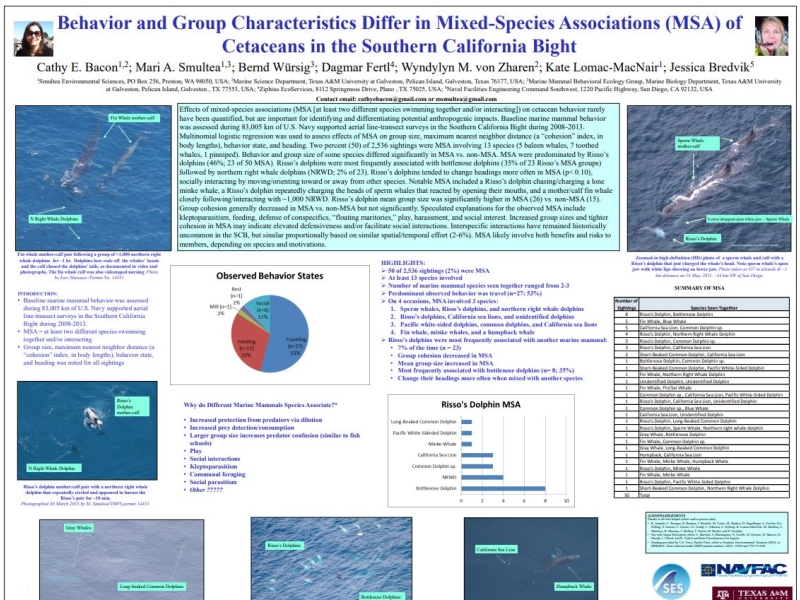
Behavior and group characteristics differ in mixed-species associations (MSA) of cetaceans in the Southern California Bight.
Southern California Marine Mammal Workshop 2014 .
More details
Collapse details
Date Published:
Filesize:
- January 31, 2014
Effects of mixed-species associations (MSA [at least two different species swimming together and / or inte racting]) on cetacean behavior rarely have been quantified, but are important for identifying and differentiating potential anthropogenic impacts . Baseline marine mammal behavior was assessed during 83 ,005 km of U.S. Navy supported aerial line-transect surveys in the Southern California Bight during 2008-2013.
- 1,649.75 KB
Behavior and group characteristics differ in mixed-species associations of cetaceans in the Southern California Bight.
20th Biennial Conference on the Biology of Marine Mammals .
More details
Collapse details
Date Published:
Filesize:
- December 9, 2013
Effects of mixed-species associations (MSA [at least two differentspecies swimming together and/or interacting]) on cetacean behavior rarely have been quantified, but are important for identifying and differentiating potential anthropogenic impacts. Baseline marine mammal behavior was assessed during 77,390 km of U.S. Navy supported aerial line-transect surveys in the Southern California Bight during 2008-2013. Multinomial logistic regression was used to assess effects of MSA on group size, maximum nearest neighbor distance (a “cohesion” index, in body lengths), behavior state, and heading. Two percent (43) of 2,330 sightings were MSA involving 13 species (5 baleen whales, 7 toothed whales, 1 pinniped). Behavior and group size of some species differed significantly in MSA vs. non-MSA. MSA were predominated by Risso’s dolphins (44%; 19 of 43 MSA). Risso’s dolphins were most frequently associated with bottlenose dolphins (37% of 19 Risso’s MSA groups) followed by northern right whale dolphins (NRWD; 3% of 19). Risso’s dolphins tended to change headings more often in MSA (p
- 1,649.75 KB
Longitudinal comparisons of digital photography of marine mammals from aircraft and shore.
20th Biennial Conference on the Biology of Marine Mammals .
More details
Collapse details
Date Published:
Filesize:
- December 9, 2013
Rapid progress and affordability of photographic technology with increasing improvements in image resolution have facilitated advancements in efficiency and alternative approaches in data collection for marine mammals. We report these recent improvements by comparing marine mammal photographs taken during 2008-2013 aerial surveys of 16 marine mammal species in the Southern California Bight, shorebased studies of bottlenose dolphins (Tursiops truncatus) in Galveston Bay, Texas (2011-2013), and gray whales (Eschrichtius robustus) off Sakhalin Island, Russia (20042010). Various Canon and Nikon high-definition cameras ranging from 8.2-36.3 MP resolution and 70-1600 mm lenses with image stabilization were used during the studies. Results of these photographic comparisons demonstrate the evolution of digital photography advancements with the successful capture of individuals, as well as detailed information for behavioral ecology studies. For example, (1) individual identification of marine mammal species from aircraft not previously reported (Risso’s dolphins (Grampus griseus), killer whales (Orcinus orca), and blue and fin whales (Balaenoptera musculus and B. physalus)), (2) shore-based individual identification of bottlenose dolphins up to 500 m and of gray whales up to 2 km from shore, (3) instantaneous differentiation/confirmation of short-beaked vs. long-beaked common dolphins (Delphinus delphis and D. capensis) from 1,500-ft altitude with a 36 MP camera, (4) reduced proportion of “unidentified” dolphin and whale species, and (5) potential tracking of the behavior, social associations and durations, and relative position within the group of some individually identified delphinids and other species not previously studied in this manner. High- definition digital photography reduces costs and acquisition/processing time from earlier “tried and true” analog photography. This facilitates, advances, and compliments the efficacy of data collection for population and behavioral ecology studies on marine mammals, most recently allowing capture of individual identification images at distances of up to 2 km away.
- 1,436.95 KB
More details
Collapse details
Date Published:
Filesize:
- November 1, 2016
DDG P Atlantic Aug 2016
- 575.97 KB
More details
Collapse details
Date Published:
Filesize:
- November 1, 2017
DDG Q Atlantic Aug 2017
- 1,275.28 KB
More details
Collapse details
Date Published:
Filesize:
- August 1, 2014
CG C Atlantic Aug 2014
- 796.17 KB
Biologically Important Areas II for cetaceans within U.S. and adjacent waters - West Coast Region.
Frontiers in Marine Science. 2024.
11:1283231.
More details
Collapse details
Date Published:
Publication:Ocean:Species:
- March 11, 2024
Here we update U.S. West Coast Biologically Important Areas (BIAs) that were published in 2015 using new data and approaches. Additionally, BIAs were delineated for two species that were not delineated in the 2015 BIAs: fin whales and Southern Resident killer whales (SRKW). While harbor porpoise BIAs remained the same, substantial changes were made for other species including identifying both larger overall areas (parent BIAs) and smaller core areas (child BIAs). For blue, fin, and humpback whales we identified, delineated, and scored BIAs using the overlap between the distribution and relative density from three data sources, leveraging the strengths and weaknesses of these approaches: 1) habitat density models based on Southwest Fisheries Science Center (SWFSC) line-transect data from systematic ship surveys conducted through 2018, 2) satellite tag data from deployments conducted by three research groups, and 3) sightings of feeding behavior from non-systematic effort mostly associated with small-boat surveys for photo-identification conducted by Cascadia Research Collective. While the previous BIAs were based solely on a more subjective assignment from only the small boat sightings, here we incorporate the other two data sources and use a more rigorous, quantitative approach to identify higher density areas and integrate the data types. This resulted in larger, better-supported, objective BIAs compared to the previous effort. Our methods are also more consistent with the delineation of BIAs in other regions. For SRKWs, the parent BIA was based on a modification of the Critical Habitat boundaries defined by the National Oceanographic and Atmospheric Administration (NOAA) and the Department of Fisheries and Oceans (DFO) Canada; a core BIA highlighting areas of intensified use was identified using both NOAA’s Critical Habitat and kernel density analyses of satellite tag data. Gray whale BIAs were re-evaluated for the migratory corridor of Eastern North Pacific gray whales, for Pacific Coast Feeding Group feeding areas, and for gray whales that feed regularly in Puget Sound.
More details
Collapse details
Date Published:
Filesize:
- February 1, 2014
Cetacean distribution, density and abundance in the Southern California Bight were assessed through visual and acoustic surveys during five California Cooperative Oceanic Fisheries Investigations (CalCOFI) cruises from August 2012-November 2013. Visual monitoring incorporated standard line-transect protocol during all daylight transits while acoustic monitoring employed a towed hydrophone array during transits and sonobuoys at oceanographic sampling stations. Visual effort included 584 observation hours covering 10,900 kilometers yielding 565 sightings of 15 identified cetacean species.
- 4,333.04 KB
Protected species monitoring in Onslow Bay, NC: January – December 2010.
SEAMAMMS (Southeast and Mid-Atlantic Marine Mammal Symposium) .
More details
Collapse details
Date Published:
Filesize:
- April 11, 2011
A protected species monitoring program was initiated in 2007 when the US Navy identified Onslow Bay, NC as a potential site for an Undersea Warfare Training Range. To estimate marine mammal density, distribution and seasonality, traditional visual line transect surveys from both aerial and vessel platforms have been augmented with passive acoustic monitoring techniques. In 2010, 20 aerial (10,939 km of trackline) and 14 vessel (958 km of trackline) survey days were completed. In order of decreasing frequency Tursiops truncatus, Stenella frontalis, Grampus griseus, Globicephala macrorhynchus, Delphinus delphis, and Balaenoptera physalus were sighted. T. truncatus and S. frontalis comprised most sightings in both aerial (85%) and vessel (100%) surveys. Approximately 1,000 digital images were taken for species and individual identification during vessel‐based surveys. To date, six T. truncatus and one S. frontalis have been re‐sighted across seasons and years, suggesting some degree of residency in the study area. Passive acoustic monitoring techniques include towing a four‐element hydrophone array during vessel surveys and deploying High‐frequency Acoustic Recording Packages (HARPs) on the sea floor. Analysis of towed array recordings suggests that visual surveys detect approximately half of the dolphin groups that were acoustically detected. Hundreds of vocal detections are present in the HARP data, which will provide insights into of diel and seasonal patterns of marine mammal vocalization. This project, now in its fourth year, is providing a valuable long‐term window into abundance and residency patterns of cetaceans in offshore waters of North Carolina.
- 129.32 KB
More details
Collapse details
Date Published:
Filesize:
- July 8, 2026
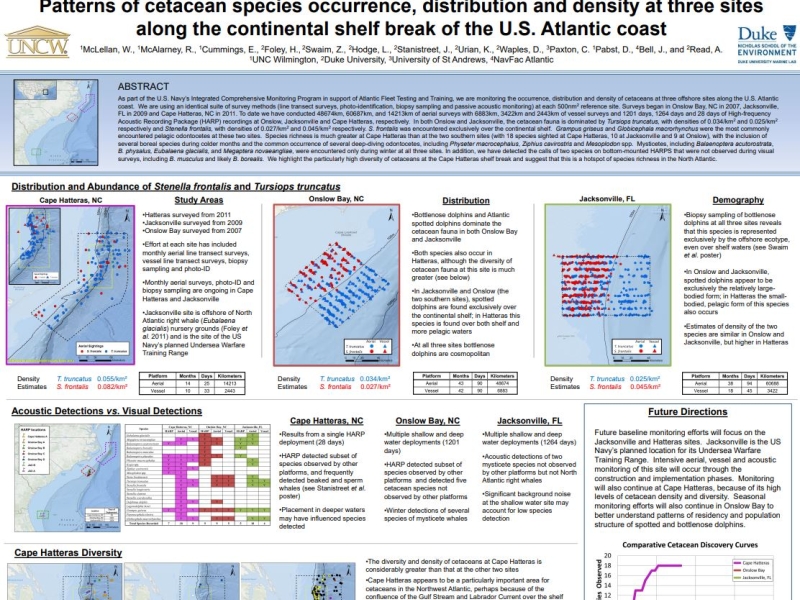
Over 25 species of cetaceans utilize the shelf break regions of the US eastern seaboard, including several endangered species. Understanding patterns in species distribution, and the anthropogenic and environmental drivers that may impact their distribution, are critical for appropriate management of marine habitats. To better understand patterns in species distribution and vocal activity, NOAA’s Northeast Fisheries Science Center (NEFSC) and Scripps Institution of Oceanography (SIO) collaboratively deployed long-term high-frequency acoustic recording packages (HARPs) at eight sites along the western North Atlantic shelf break. This work was conducted from 2015-2021, with financial support from the Bureau of Ocean Energy Management (BOEM). Likewise, the U.S. Navy has been monitoring the shelf break region at 3 to 4 sites since 2007. Together these combined efforts bring the total to 11 recording sites spanning the U.S. eastern seaboard, from New England to Florida. This project focuses on analyses of the datasets collected from 2015-2021, with the inclusion of older (pre-2015) datasets where relevant. The focus of our efforts in 2025 have been to make substantial progress in the review of various detector classifications.
- 750.20 KB
More details
Collapse details
Date Published:
Filesize:
- February 1, 2014
Passive acoustic monitoring was conducted within the Navy’s Cherry Point OPAREA during August – December 2011 and July – October 2012 for a total of 105 and 81 days respectively. This site is located approximately 100 miles from the North Carolina coastline on the shelf break. The 2011 deployment was at a water depth of 952 m and the 2012 deployment was at a water depth of 914 m. Acoustic data collected at this site provide information on the presence of marine mammals and anthropogenic sound sources. High-frequency Acoustic Recording Packages (HARPs) recorded sounds between 10 Hz and 100 kHz with recording cycles of 5 minutes every 10 minutes. The data were divided into three frequency bands and data were analyzed by scans of long-term spectral averages and spectrograms. Four baleen whale species were recorded: blue, fin, minke, and sei whales. The detections of their calls were made between late August and early December 2011. Blue whale calls were the only baleen whale call type detected in the 2012 deployment. No Bryde’s, humpback, or North Atlantic right whale calls were detected in either deployment. Several different toothed whale species were recorded: Blainville’s, Cuvier’s, and Gervais’ beaked whales, killer whales, pygmy or dwarf sperm whales (Kogia spp.), Risso’s dolphins, sperm whales, and unidentified odontocetes. All species except killer whales were recorded in 2011 and 2012. Killer whales were detected only in 2011. Ship noise was the most common anthropogenic sound in both deployments. MFA was noted during both deployments. A total of 391 pings were detected in 2011 with a maximum peak-to-peak received level of 156 dB re 1 μPa. In 2012, a total of 492 pings were detected with a maximum peak-to-peak received level of 167 dB re 1 μPa. Few echosounder pings over a variety of frequencies (4-80 kHz) were detected during both deployments. Explosions were detected in both deployments, though they were more prevalent in 2011 than 2012. High noise levels, possibly caused by instrument strumming and fluid flow at the sensor, occurred intermittently in both deployments and likely decreased the detection range for low-frequency sounds. This strumming was most prevalent in 2012.
- 13,075.42 KB
More details
Collapse details
Date Published:
Filesize:
- July 7, 2026
The Rice’s whale (Balaenoptera ricei; formerly Gulf of Mexico Bryde's whale) is estimated to have a population size of 51 individuals in U.S. waters (Garrison et al., 2020), and was listed as endangered under the ESA in 2019 (84 Federal Register 15446, 87 Federal Register 8981). The majority of modern sightings occur within waters between the 100 and 400 meter isobaths within an area near the De Soto Canyon off northwestern Florida (Rosel et al., 2021; Soldevilla et al., 2017), an area defined as the Rice’s whale core distribution area (Rosel & Garrison, 2022). Occurrence patterns from long-term passive acoustic monitoring (PAM) over the 2010–2024 period and from summer and fall visual surveys during 2018 and 2019 indicate that the whales are found year-round within the core distribution area, but also suggest there may be seasonal movements throughout, and potentially out of, this area. High densities of anthropogenic activities occur throughout the Gulf of America (formerly Gulf of Mexico, hereafter GOA), including oil and gas exploration and extraction, fisheries, shipping, and military activities. Many of these activities, including U.S. Navy readiness activities, and Eglin Air Force Base activities, overlap with the whales’ core distribution area. Understanding seasonal distribution and density of Rice’s whales throughout this area will improve understanding of potential impact of human activities, improve the accuracy and precision of impact assessments, and assist in developing effective mitigation measures as needed. To improve management of human-based activities in the core distribution area of these endangered whales, the SEFSC deployed a sparse array of 17 PAM units concurrent with one long-term High-frequency Acoustic Recording Package (HARP) from May 2021 to March 2023. The PAM moorings were deployed in two lines of nine units each to nearly completely cover the core distribution area over a nearly 2-year period to improve understanding of seasonal and interannual distribution, movement patterns, and habitat use. The moorings used SoundTrap ST500 or ST600 STDs, calibrated long-term recorders capable of continuously recording underwater sound in the 20 Hertz to 48 kHz frequency range, including Rice’s whale calls and ambient noise, for up to 6 months. Additionally, the study leveraged a long-term HARP deployed by the SEFSC, Scripps Institution of Oceanography, and collaborators, at the De Soto Canyon site in the Rice’s whale core distribution area over the August 2020 to July 2025 period. At this site, they have continuously recorded ambient noise and other acoustic events in the 10 Hertz to 100 kHz frequency range since 2010 to monitor the impacts of the Deepwater Horizon oil spill and subsequent restoration activities on cetaceans. Analyses from the combined DC HARP and sparse array of SoundTrap deployments over the 2021-2023 period suggested Rice’s whale detections occurred at all PAM stations throughout the entire year, with detections occurring more commonly on the inshore line compared to the offshore line, and suggested call detections increased to the south in winter and to the north in summer. Additional data collection was recommended to determine whether these patterns were consistent over longer periods, as needed to understand seasonal distribution and density of Rice’s whales. To meet this need, a new 3-year project is being conducted from June 2025 to June 2028 that includes redeploying the PAM array for at least one more year, and conducting analyses of Rice’s whale spatiotemporal occurrence across the new (2025-2026) and historic (2021-2023) datasets. The project objectives include 1) characterizing spatiotemporal distribution of calling Rice’s whales throughout the CDA over three years to understand interannual variation in year-round occurrence patterns; 2) evaluating whether intra-annual habitat use patterns represent consistent seasonal cycles over time; and 3) evaluating longer-term trends in occurrence of calling Rice’s whales as needed for monitoring population recovery. Results from 2021-2023 will be combined with the current effort to yield the three full years of broad coverage passive acoustic data collection. The project is off to a successful start. In June 2025, 17 SoundTrap ST600 STD recorders were deployed at the same study sites from the 2021-2023 period, along with the De Soto Canyon HARP. In January 2026, all 17 SoundTrap recorders were successfully retrieved. Upon initial inspection, acoustic recordings from each instrument were of high quality, yielding a total of 3,524 instrument-days of recording effort. The instruments recorded for a median of 6.9 months each, with most recordings ending in late December or early January. All 17 SoundTrap recorders were serviced and redeployed for another 6-month deployment. They will be retrieved, along with the HARP, in June 2026. Data analyses, including Rice’s whale call detection, localization, and call density estimation will begin in fall 2026.
- 1,348.75 KB
More details
Collapse details
Date Published:
Filesize:
- May 1, 2014
CG B HRC Feb 2014
- 1,918.58 KB
More details
Collapse details
Date Published:
Filesize:
- September 7, 2024
In the Pacific, the Marine Mammal Monitoring on Navy Ranges (M3R) program maintains systems that continuously run algorithms to detect, classify and localize marine mammals year-round on the U.S. Navy’s deep-water Southern California Antisubmarine Warfare Range (SOAR) in Southern California and the Pacific Missile Range Facility (PMRF) off Kaua‘i, Hawai‘i. Long-term archive data collected on these ranges allow for numerous types of studies on species inhabiting the ranges, including the monitoring of abundance, behavioral responses to naval activities, and habitat usage. They also provide the opportunity to study ambient sound levels and soundscapes.
- 8,141.88 KB
Vocalization behaviors of minke whales in relation to sonar in the planned Undersea Warfare Training Range off Jacksonville, Florida.
Journal of the Acoustical Society of America. 2013.
134(5, part 2)
More details
Collapse details
Date Published:
Filesize:
- November 1, 2013
Nine Marine Autonomous Recording Units (MARU’s) were deployed in a rectangular array at a site coinciding with the United States (U.S.) Navy’s planned Undersea Warfare Training Range (USWTR) approximately 60150 km offshore Jacksonville, FL (13 September to 8 October and 3 December to 8 January, 2009–2010) at shallow, mid-depth, and deep sites (45, 183, 305 m). Data were reviewed in detail using TRITON (Wiggins, 2007). Event logs were created for each day at every site. Custom-written MATLAB scripts were used to calculate the probability of minke whale vocalization events occurring in the presence and in the absence of mid-frequency sonar. Minke whale vocalization events were completely absent in the fall deployment period, but occurred almost continuously during the winter deployment, indicating a strong seasonal pattern of occurrence. Minke whale vocalizations were detected most frequently at deep-water sites, and only at low levels (
- 42.46 KB
Vocalization behaviors of minke whales in relation to sonar in the planned Undersea Warfare Training Range off Jacksonville, FL.
20th Biennial Conference on the Biology of Marine Mammals .
More details
Collapse details
Date Published:
Filesize:
- December 9, 2013
Autonomous acoustic recorders are effective for investigating the distribution, occurrence, and acoustic behaviors of a variety of marine mammals in remote and deep-water locations. Nine Marine Autonomous Recording Units (MARU’s) were deployed in a rectangular array at a site coinciding with the United States (U.S.) Navy’s planned Undersea Warfare Training Range (USWTR) approximately 60-150 kilometers offshore Jacksonville, FL. All 9 units were deployed for 26 days in fall (13 September to 8 October) and 37 days in winter (3 December to 8 January) 2009-2010 at shallow, mid-depth, and deep sites (45, 183, 305 meters). The timing of the deployments allowed recordings of cetacean vocalizations and sonar activity to be made before, during, and after two U.S. Navy training exercises. The goal of this study was to characterize minke whale vocal activity in relation to U.S. Navy mid-frequency sonar signals. Data were reviewed in detail using the MATLAB program Triton (Wiggins 2007). Event logs were created for each day at every site. Custom-written MATLAB scripts were used to calculate the probability of minke whale vocalization events occurring in the presence and in the absence of mid-frequency sonar. Minke whale vocalization events were completely absent in the fall deployment period, but occurred almost continuously during the winter deployment, indicating a strong seasonal pattern of occurrence. Minke whale vocalizations were detected most frequently at deep-water sites, but only at low levels (
- 212.40 KB
More details
Collapse details
Date Published:
Filesize:
- June 1, 2022
The United States (U.S.) Navy routinely conducts training and testing activities in the Virginia Capes (VACAPES) Operating Area (OPAREA) off the mid-Atlantic and Southeast U.S. The region encompassing the deeper waters of the continental shelf, shelf break, and continental slope has been recognized as an important habitat for multiple species of cetaceans. Kenney and Winn (1986) showed that the shelf edge from Cape Hatteras to Georges Bank was the second most intensively used cetacean habitat off the northeastern U.S. based on 3 years of surveys conducted by the Cetacean and Turtle Assessment Program (CETAP 1982). This progress report includes all offshore monitoring activities conducted in 2021. The goals of this effort focus on addressing fundamental information gaps related to marine mammal occurrence, exposure, and response as identified by the U.S. Navy’s Integrated Comprehensive Monitoring Program (DoN 2010) and recommendations provided by a Scientific Advisory Group review (DoN 2011).
- 4,758.82 KB
More details
Collapse details
Date Published:
Filesize:
- July 8, 2026
This progress report summarizes offshore monitoring activities conducted between September 2024 and August 2025. The overarching objectives of the OCS remain focused on addressing key information gaps related to cetacean occurrence, exposure, and response within the conceptual framework for the U.S Navy Marine Species Monitoring Program.
- 5,333.11 KB
More details
Collapse details
Date Published:
Filesize:
- August 3, 2010
DDG B Atlantic June 2010
- 352.36 KB
More details
Collapse details
Date Published:
Filesize:
- February 1, 2011
CG A HRC Nov 2010
- 514.02 KB
More details
Collapse details
Date Published:
Filesize:
- August 1, 2010
FFG-A Hawaii Range Complex FEB 2010
- 2,197.92 KB
More details
Collapse details
Date Published:
Filesize:
- August 2, 2010
DDG A Atlantic March 2010
- 341.28 KB
More details
Collapse details
Date Published:
Filesize:
- June 1, 2011
DDG D HRC Feb 2011
- 972.33 KB
Occurrence and distribution of marine mammals in a proposed Undersea Warfare Training Range off Jacksonville, FL.
19th Biennial Conference on the Biology of Marine Mammals .
More details
Collapse details
Date Published:
Filesize:
- November 27, 2011
The U.S. Navy has proposed establishing an Undersea Warfare Training Range (USWTR) in an area between 60 and 150 km off the coast of Jacksonville, Florida. To establish baseline information on the occurrence and distribution of marine mammals in this area we conducted aerial and shipboard line-transect surveys and a passive acoustic monitoring program. Here we report the results of aerial and shipboard line-transect surveys conducted between January 2009 and April 2011. During this period, we flew 42,895 km of aerial tracklines and recorded 477 sightings of ten cetacean species (n=5,736 individuals). Tursiops truncatus was encountered most commonly (202 sightings, n=1,699), followed by Stenella frontalis (184 sightings, n=3,213). Other species observed during aerial surveys include Grampus griseus (n=350), Globicephala macrorhynchus (n=174), Steno acutorostrata (n=13), Eubalaena bredanensis (n=118),Balaenoptera glacialis (n=3), Physeter macrocephalus (n=2), Kogia spp. (n=1), and Megaptera novaeangliae (n=1). In 35 vessel surveys totaling 2,486 km we encountered three cetacean species in 77 sightings (n=576). S. frontalis and T. truncatus were observed most often, followed by G. griseus (n=351, 160, and 43, respectively). T. truncatus was observed throughout the entire survey area, but S. frontalis and S. bredanensis were seen exclusively on the continental shelf. All E. glacialis sightings, including a rare observation of an offshore birth, occurred on the western edge of the survey area. All other species were detected only in pelagic waters. Stenella frontalis, T. truncatus, and G. griseus were observed throughout the year (12, 11, and 9 calendar months, respectively); G. macrorhynchus and S. bredanensis were detected from April to October, and all mysticete species were seen only between December and March. This monitoring program, combining a variety of survey modalities, is providing a rich picture of the cetacean fauna in these poorly studied offshore waters.
- 147.41 KB
Protected Species Monitoring in the Proposed Undersea Warfare Training Range Offshore of Jacksonville, FL .
SEAMAMMS (Southeast and Mid-Atlantic Marine Mammal Symposium). .
More details
Collapse details
Date Published:
Filesize:
- March 22, 2013
A multi-institutional marine protected species monitoring program involving aerial, vessel and acoustic surveillance techniques was implemented at the proposed Undersea Warfare Training Range (USWTR) offshore of Jacksonville, Florida in January 2009. Visual surveys, in conjunction with acoustic sampling methods, have been conducted to investigate cetacean and sea turtle occurrence, distribution and abundance. Through December 2012 a total of 722 aerial tracklines (60687 km) were flown, resulting in 641 cetacean sightings, encompassing 8079 individuals. Tursiops truncatus and Stenella frontalis were the most frequently encountered, followed by Grampus griseus, Globicephala macrorhynchus, Balaenoptera acutorostrata, Steno bredanensis, Eubalaena glacialis, Megaptera novaeangliae, Physeter macrocephalus, and Kogia spp. Cetaceans were encountered 126 times during the 3403 km of vessel surveys, totaling 950 individuals. Sightings consisted of S. frontalis, T. truncatus, G. macrorhynchus, and G. griseus. Across all visual platforms, T. truncatus were encountered throughout the range, whereas S. frontalis, S. bredanensis, and E. glacialis were recorded exclusively in shelf waters. All other species were detected only in pelagic waters. The towed passive acoustic array was deployed during 21 vessel surveys, generating 24.2 hours of recordings, detecting all four sighted species. High frequency acoustic recording packages (HARPs) were deployed at two sites in the study area for long‐term passive acoustic monitoring. The HARP data have been analyzed for diel, seasonal, and interannual trends in cetacean occurrence. Surveys are scheduled to continue in order to asses long‐term habitat usage patterns in the USWTR.
- 399.45 KB
Distribution and Abundance Estimates for Cetaceans in the Waters off Guam and the Commonwealth of the Northern Mariana Islands.
Pacific Science. 2011.
63(3):321-343
More details
Collapse details
Date Published:
Publication:Ocean:Region:Species:Methods:
- March 1, 2011
Cetacean distribution and abundance are reported from the first systematic line-transect visual survey in the waters of Guam and the Commonwealth of the Northern Mariana Islands (CNMI). The survey was conducted during January – April 2007 following standard line-transect protocols. Trackline coverage (11,033 km) was dominated by high sea states (88.2%); however, 13 cetacean species were recorded. The sperm whale (Physeter macrocephalus) was the most frequently encountered whale, followed by Bryde’s and sei whales (Balaenoptera edeni and B. borealis, respectively). Occurrence of the sei whale is unique, because the species had not been confirmed to occur south of 20° N. The pantropical spotted dolphin (Stenella attenuata) was the most frequently sighted delphinid, followed by the striped dolphin (Stenella coeruleoalba) and false killer whale (Pseudorca crassidens). Humpback whales (Megaptera novaeangliae) were acoustically detected and later seen off Saipan. Numerous cetacean sightings were associated with steep bathymetric features including the West Mariana Ridge, the Mariana Ridge, and the Mariana Trench. Abundance estimates were based on 80 on-effort sightings for 12 species. Species were pooled into three separate groups for estimating detection probabilities: Balaenoptera spp., blackf ish (medium-size odontocetes), and small dolphins. A separate detection function was generated for the sperm whale. Precision of abundance estimates are very low for all species due to low sighting rates and high sea states; however, these abundance estimates serve as the best scientific data available for the area and establish vital baseline information for future research efforts.
More details
Collapse details
Date Published:
Filesize:
- August 4, 2010
DDG C SOCAL July 2010
- 1,184.62 KB
Exploring the biodiversity of cetacean communities along the western North Atlantic Ocean shelf-break.
Royal Society. 2025.
12 (7): 241658
More details
Collapse details
Date Published:
- July 1, 2025
More details
Collapse details
Date Published:
Filesize:
- July 1, 2025
Beaked whales (Family Ziphiidae; Order Cetacea) are the least well-described group of marine mammals because they conduct very long deep dives, spend little time on the surface where they display cryptic behavior, and are difficult to identify due to the similarity between species. Beaked whales are also known to be susceptible to high-energy sound sources in the ocean (e.g. seismic research, sonars used by military activities).
- 1,136.54 KB
More details
Collapse details
Date Published:
Filesize:
- February 1, 2018
Marine mammal surveys, initiated as part of the CalCOFI cruises in 2004, were continued during 2016-2017. Visual monitoring incorporated standard line-transect survey protocol which includes two experienced observers scanning for marine mammals during transits between CalCOFI stations.
- 1,472.91 KB
More details
Collapse details
Date Published:
Filesize:
- January 1, 2013
A High-frequency Acoustic Recording Package (HARP; Wiggins and Hildebrand 2007) was deployed between March and October 2012 in the Cape Hatteras survey area at Site A in approximately 950 m. This HARP sampled continuously at 200 kHz and recorded for 28 days between 15 March 2012 and 11 April 2012. Long-Term Spectral Averages (LTSAs) were created for two frequency bands (10 Hz – 1000 Hz and 1 kHz – 100 kHz) and scanned for marine mammal vocalizations. Calls of fin whales, minke whales, beaked whales, Kogia spp., Risso’s dolphins, sperm whales, and unidentified delphinids were detected in the data.
- 370.58 KB
More details
Collapse details
Date Published:
Filesize:
- January 1, 2014
A High-frequency Acoustic Recording Package (HARP; Wiggins and Hildebrand 2007) was deployed between May and November 2008 in Onslow Bay at Site B in 232 m. This HARP sampled at 200 kHz for 5 minutes of every 10 minutes and recorded for 103 days between 30 May 2008 and 10 September 2008. Long-Term Spectral Averages (LTSAs) were created for two frequency bands (10 Hz – 1000 Hz and 1 kHz – 100 kHz) and scanned for marine mammal vocalizations. Vocalizations of blue whales, Kogia spp., Risso’s dolphins, sperm whales, and unidentified delphinids were detected in the data.
- 1,109.07 KB
More details
Collapse details
Date Published:
Filesize:
- January 1, 2014
A High-frequency Acoustic Recording Package (HARP; Wiggins and Hildebrand 2007) was deployed between July 2010 and February 2011 in Onslow Bay at Site D in 338 m. This HARP sampled at 200 kHz for 5 minutes of every 10 minutes and recorded for 210 days between 30 July 2010 and 24 February 2011. Long-Term Spectral Averages (LTSAs) were created for two frequency bands (10 Hz – 1000 Hz and 1 kHz – 100 kHz) and scanned for marine mammal vocalizations. Calls of blue whales, fin whales, minke whales, possible sei whales, Kogia spp., Risso’s dolphins, sperm whales, and unidentified odontocetes were detected in the data.
- 3,241.19 KB
More details
Collapse details
Date Published:
Filesize:
- January 1, 2014
A High-frequency Acoustic Recording Package (HARP; Wiggins and Hildebrand 2007) was deployed between August 2011 and July 2012 in Onslow Bay at Site E in 952 m. This HARP sampled at 200 kHz for 5 minutes of every 10 minutes and recorded for 105 days between 19 August 2011 and 1 December 2011. Long-Term Spectral Averages (LTSAs) were created for three frequency bands (10 Hz – 1000 Hz, 500 Hz – 5000 Hz, and 1 kHz – 100 kHz) and scanned for marine mammal vocalizations. Calls of blue whales, fin whales, minke whales, possible sei whales, an unidentified beaked whale species, Blainville’s beaked whales, Cuvier’s beaked whales, Gervais’ beaked whales, killer whales, Kogia spp., Risso’s dolphins, sperm whales, and unidentified delphinids were detected in the data.
- 1,903.07 KB
More details
Collapse details
Date Published:
Filesize:
- January 1, 2014
A High-frequency Acoustic Recording Package (HARP; Wiggins and Hildebrand 2007) was deployed between July and October 2012 in Onslow Bay at Site E in 914 m. This HARP sampled at 200 kHz for 5 minutes of every 10 minutes and recorded for 81 days between 14 July 2012 and 2 October 2012. Long-Term Spectral Averages (LTSAs) were created for three frequency bands (10 Hz – 1000 Hz, 500 Hz – 5000 Hz, and 1 kHz – 100 kHz) and scanned for marine mammal vocalizations. Calls of blue whales, Blainville’s beaked whales, Cuvier’s beaked whales, Gervais’ beaked whales, Kogia spp., Risso’s dolphins, sperm whales, and unidentified delphinids were detected in the data.
- 1,321.32 KB
More details
Collapse details
Date Published:
Filesize:
- May 4, 2015
A High-frequency Acoustic Recording Package (HARP; Wiggins and Hildebrand 2007) was deployed between September 2009 and February 2010 in Jacksonville, FL, at Site A in 83 m. This HARP sampled at 200 kHz for 5 minutes of every 15 minutes and recorded for 91 days between 16 September 2009 and 15 December 2009, at which point the hydrophone was damaged possibly from an animal bite. Long-Term Spectral Averages (LTSAs) were created for three frequency bands (10 Hz – 1000 Hz, 500 Hz – 10 kHz, and 1 kHz – 100 kHz) and scanned for marine mammal vocalizations and mid-frequency active sonar. Vocalizations of minke whales, Risso’s dolphins, sperm whales, and unidentified delphinids were detected in the data.
- 923.56 KB
More details
Collapse details
Date Published:
Filesize:
- January 1, 2014
This report forms part of a multi-institutional monitoring project intended to provide information on the species composition, population identity, density and baseline behavior of marine mammals and sea turtles present in Navy range complexes along the Atlantic coast. This program began in 2007, with baseline aerial and vessel surveys and a passive acoustic monitoring program in Onslow Bay, North Carolina and has since expanded to include study areas off Jacksonville, Florida and Cape Hatteras, North Carolina. In Onslow Bay, six years of monitoring have yielded a comprehensive picture of the density, distribution and abundance of marine mammals and sea turtles and provided new insights into residency patterns among pelagic delphinid cetaceans in this region. More than four years of monitoring in Jacksonville have provided similar information on the density and distribution of marine mammals and sea turtles in this area. In Cape Hatteras, almost three years of surveys have provided preliminary information on the complex patterns of distribution and diversity of the marine mammals and sea turtles in this highly productive area. The current report builds on this past body of work and describes passive acoustic monitoring activities that occurred at these three sites between January and December 2013.
- 4,410.11 KB
Protected Species Monitoring in the Proposed Undersea Warfare Training Range Offshore of Jacksonville, FL: January – December 2010 .
SEAMAMMS (Southeast and Mid-Atlantic Marine Mammal Symposium) .
More details
Collapse details
Date Published:
Filesize:
- April 1, 2011
A multi-institutional, marine protected species monitoring program, involving aerial, vessel and acoustic surveillance techniques, has been implemented at the proposed Undersea Warfare Training Range (USWTR) offshore of Jacksonville, Florida. This abstract reports on the second year of aerial and vessel visual line-transect and acoustic surveys used to investigate cetacean and sea turtle occurrence, distribution and abundance. During aerial surveys, a total of 269 track‐lines (22,695 km) were completed, the majority of which were flown in low Beaufort Sea State (BSS) conditions (94% in BSS 3 or lower). A total of 3,285 cetaceans were recorded in 286 sightings. Tursiops truncatus and Stenella frontalis were the most frequently encountered, followed by Grampus griseus, Globicephala macrorhynchus, Balaenoptera acutorostrata, Steno bredanensis, Eubalaena glacialis, Megaptera novaeangliae, and Physeter macrocephalus. On March 20, an E. glacialis birth was observed, an event which has only been witnessed once before. Cetaceans were encountered 46 times during the 18.5 days of vessel surveys. Sightings consisted of S. frontalis, T. truncatus, G. macrorhynchus, and G. griseus. The towed passive acoustic array was deployed during 12 vessel surveys, generating a total of 13.75 hrs of recordings including all four sighted species. Two autonomous high frequency acoustic recording packages (HARPs) were deployed in the study region between March 1‐December 31 for long‐ term passive acoustic monitoring. HARP recordings have been recovered from the seafloor and are being analyzed for diel, seasonal, and interannual trends in cetacean occurrence. Surveys are scheduled to continue through 2012 to provide long‐term habitat usage patterns in the USWTR.
- 175.57 KB
Near real-time passive acoustic monitoring of baleen whales from autonomous platforms in the Gulf of Maine.
4th International Conference on the Effects of Noise on Aquatic Life .
More details
Collapse details
Date Published:
- July 10, 2016
- 2,716.21 KB
Rare sightings of Bryde’s whales (Balaenoptera brydei/edeni) in the Southern California Bight.
Southern California Marine Mammal Workshop .
More details
Collapse details
Date Published:
Filesize:
- February 4, 2012
Bryde’s whales (Balaenoptera brydei/edeni) have been considered an anomalous occurrence in the Southern California Bight (SCB). Thus, they typically have been excluded from species lists associated with SCB management documents. In the last 40 years only two visual sightings of Bryde’s whales were documented in California waters, the last one in 1991 (Carretta et al. 2007). This is despite extensive systematic vessel and aerial surveys and presumed recent recordings of Bryde’s whale vocalizations in the SCB. Bryde’s whales are notoriously difficult to differentiate in the field and from fin (B. physalus) and sei whales (B. borealis), given the subtle differences in physical characteristics. Between August 2006 and September 2010, we photo-documented five sightings of five single Bryde’s whales in the SCB. Two of the five sightings occurred in October 2008 and September 2010 during 33,880 km of aerial surveys. The remaining three sightings occurred during small-vessel surveys that included offshore waters: two in June 2006 and one in September 2010. These sightings combined with other reports of presumed vocalizations suggest that Bryde’s whale numbers may be increasing in the SCB. This may be related to global warming, large-scale oceanographic events (e.g., El Niño and La Niña) and resulting changes in prey availability. However, no clear association pattern was evident between ENSO events and our sightings. The recent sightings reported herein indicate that the Bryde’s whale should be considered as a species present in the SCB and photodocumentation is critical to ascertain species.
- 1,555.47 KB
Bryde's whale (Balaenoptera brydei/edeni) sightlngs in the Southern California Bight.
Southern California Marine Mammal Workshop 2012 .
More details
Collapse details
Date Published:
Filesize:
- February 3, 2012
Bryde's whales (Balaenoptera brydeij edem) have been considered an anomalous occurrence in the Southern California Bight (SCB). Thus, they typically have been excluded from species lists associated with SCB management documents. In the last 40 years only two visual sightings of Bryde's whales were documented in California waters, the last one in 1991 (Carretta et al. 2008). This is despite extensive systematic vessel and aerial surveys and presumed recent recordings of Bryde's whale vocalizations in the SCB. Bryde's whales are notoriously difficult to differentiate in the field, both from each other and also from fin (B. physa/us) and sei whales (B. borealis), given the subtle differences in physical characteristics. Between August 2006 and September 2010, we photo-documented five sightings of five single Bryde's whales in the SCB. Two of the five sightings occurred in October 2008 and September 2010 during 33,880 km of aerial surveys. The remaining three sightings occurred during small-vessel surveys that included offshore waters: two in June 2006 and one in September 2010. These sightings combined with other reports of presumed vocalizations suggest that Bryde's whale numbers may be increasing in the SCB. This may be related to global warming, large-scale oceanographic events (e.g., El Nino and La Nina) and resulting changes in prey availability. Recent sightings reported herein indicate that the Bryde's whale should be considered as a species present in the SCB and photo-documentation is critical to ascertain species.
- 1,033.33 KB
More details
Collapse details
Date Published:
Filesize:
- February 1, 2014
Passive acoustic monitoring was conducted at a site in the US Navy’s Jacksonville Range Complex during 9 March – 26 August 2010. The site is located 50 nm east of the Florida coastline on the continental shelf. Acoustic data collected at this site provide information on the presence of marine mammals and naval sonar. High-frequency Acoustic Recording Packages (HARPs) recorded sounds between 10 Hz and 100 kHz with recording duty cycles of 5 minutes every 10 minutes. The data were divided into two frequency bands: (1) low frequencies, between 1 – 1000 Hz, and (2) mid frequencies, between 500 – 5000 Hz. These data were not analyzed for high frequency marine mammal sounds, such as the echolocation clicks of delphinids. Data were analyzed by scans of long-term spectral averages and spectrograms. High ambient noise levels, caused by instrument strumming and fluid flow at the sensor, were prevalent during this deployment and decreased detection ability for low-frequency sounds. Only one species of baleen whale—the humpback whale—was detected. Humpback non-song calls were detected during two days in March 2010. No blue whale, fin whale, Bryde’s whale, minke whale, North Atlantic right whale, or sei whale calls were detected in this deployment. Anthropogenic sound in the form of Mid-Frequency Active Sonar (MFA) was detected throughout this deployment. It was most common in late March 2010.
- 4,037.99 KB
U.S. Navy funded marine mammal monitoring in the Gulf of Alaska 2011-2014.
Alaska Marine Science Symposium 2013 .
More details
Collapse details
Date Published:
Filesize:
- January 21, 2013
The U.S. Navy’s framework for marine mammal monitoring in the Gulf of Alaska will be presented. Regulatory permit drivers, ongoing monitoring and future monitoring through 2015 will be described. Ongoing monitoring in agreement with National Marine Fisheries Service (NMFS) includes deployment of two bottom-mounted highfrequency acoustic recording packages (HARP) from Scripps Institute of Oceanography. These devices were deployed on the shelf (200 m) and slope (1100 m) south of Seward, Alaska, in July of 2011. Data was recovered in May 2012, returned to Scripps for analysis, and the HARPs subsequently redeployed at the same locations for continued recording. Refinements in classification and analysis have benefited greatly from improvements identified from similar Navy-funded monitoring at other locations within the Pacific over the past eight years. A technical report on the Gulf of Alaska HARP analysis including species identification, seasonality, and identification of anthropogenic sounds will be presented by the Navy to NMFS in December 2013, and publically available by early 2013. New monitoring has also begun in 2012. A third Gulf of Alaska HARP was deployed offshore at Pratt Seamount (990 m) in September 2012. This HARP along with the previous two HARPs will have data retrieved in May 2013 for subsequent December 2013 reporting. In addition, the Navy is funding a vesselbased visual line transect survey within the Gulf of Alaska in the spring to summer 2013 time frame. This survey, similar to a Navy-funded one in 2009, will be conducted in association with NMFS to included visual transects, towed and sonobuoy passive acoustics, and where possible marine mammal biopsies and satellite tagging. Results from this survey should be available later in 2013.
- 2,259.34 KB
U.S. Navy Funded Marine Mammal Monitoring Efforts In California 2008-2010.
Southern California Marine Mammal Workshop 2011 .
More details
Collapse details
Date Published:
Filesize:
- January 21, 2011
The U.S. Navy represented by the Pacific Fleet Environmental Directorate, Chief of Naval Operations Environmental Readiness and Energy, Office of Naval Research, and Naval Postgraduate School, fund significant marine mammal monitoring programs within California. The bulk of this effort occurs within the Southern California Bight. In an endeavor coordinated with the U.S. National Marine Fisheries Service (NMFS) to address specific questions, efforts are underway to deploy a variety of research tools as a collection of focused, collaborative studies. Monitoring methods include research elements designed to collect data in support of region-specific monitoring and also contribute to the overall body of marine mammal knowledge. Research elements include visual surveys from airplanes and vessels, passive acoustic monitoring from bottom-mounted systems, photolD, biopsies, and marine mammal tagging. The framework for monitoring and results from August 2008 to August 2010 will be presented. During this period over 35,570 nautical miles of ocean were visually surveyed representing 2,285 hours of effort. There were 2,714 sightings of an estimated 155,375 marine mammals. Over 29,700 hours of passive acoustic recordings were obtained and are undergoing continued analysis. In addition, 24,000 digital photographs were taken of marine mammals, and 18 hours of digital video taken of various marine mammal behaviors. There were also 139 individual tissue biopsies, and 31 satellite tracking tags attached to various species. Continuing efforts in 2011 will employ many of the same techniques used previously. The Navy's annual monitoring reports for 2009 and 2010 are publically available and posted on NMFS' Office of Protected Resources website.
- 795.19 KB
More details
Collapse details
Date Published:
Filesize:
- September 2, 2019
DDG U Atlantic Sept. 2019
- 863.23 KB
More details
Collapse details
Date Published:
Filesize:
- May 1, 2016
DDG O Atlantic March 2016
- 1,053.36 KB
More details
Collapse details
Date Published:
Filesize:
- August 1, 2018
DDG S Atlantic June 2018
- 1,289.75 KB
More details
Collapse details
Date Published:
Filesize:
- April 1, 2019
CG D Atlantic March 2019
- 980.74 KB
More details
Collapse details
Date Published:
Filesize:
- April 1, 2015
DDG M Atlantic April 2015
- 517.39 KB
Bryde’s whale seasonal range expansion and increasing presence in the Southern California Bight from 2000 to 2010.
Deep-Sea Research. 2012.
65:125-132
More details
Collapse details
Date Published:
Publication:Ocean:Region:Species:Methods:
- March 1, 2012
Bryde’s whales (Balaenoptera edeni) are commonly found in tropical and subtropical regions of the Pacific Ocean, but few studies have explored the presence of Bryde’s whales at the boundary of their distribution range. Such studies are increasingly relevant as climate impact models predict the range expansion of warm water species towards the poles in response to ocean warming. Like other baleen whales, Bryde’s whales produce distinct low frequency (o60 Hz) calls, which can be used for long-term acoustic monitoring of whale presence in an area. Autonomous passive acoustic recorders deployed at f ive sites in the Southern California Bight (SCB) were used to investigate the presence of Bryde’s whales in temperate waters from 2000 to 2010. Calling Bryde’s whales were observed in the SCB from summer to early winter, indicating a seasonal poleward range expansion. There was a significant increase in the presence of calling Bryde’s whales in the SCB between 2000 and 2010, but no significant correlation was found between Bryde’s whale presence and local sea surface temperature. Bryde’s whale occurrence is likely driven by prey availability within the California Current ecosystem, which is affected by seasonal and inter-annual changes in climate and oceanographic conditions. Continued monitoring of Bryde’s whales and their prey in the eastern North Pacific is needed to provide a longer time series and determine the full effect of climate variability and ocean warming on the distribution of this species.
Bryde’s whale seasonal range expansion and increasing presence in the Southern California Bight from 2000 to 2010.
Deep-Sea Research. 2012.
65:125-132
More details
Collapse details
Date Published:
Publication:Ocean:Region:Species:Methods:
- April 2, 2012
Bryde’s whales (Balaenoptera edeni) are commonly found in tropical and subtropical regions of the Pacific Ocean, but few studies have explored the presence of Bryde’s whales at the boundary of their distribution range. Such studies are increasingly relevant as climate impact models predict the range expansion of warm water species towards the poles in response to ocean warming. Like other baleen whales, Bryde’s whales produce distinct low frequency (o60 Hz) calls, which can be used for long-term acoustic monitoring of whale presence in an area. Autonomous passive acoustic recorders deployed at f ive sites in the Southern California Bight (SCB) were used to investigate the presence of Bryde’s whales in temperate waters from 2000 to 2010. Calling Bryde’s whales were observed in the SCB from summer to early winter, indicating a seasonal poleward range expansion. There was a significant increase in the presence of calling Bryde’s whales in the SCB between 2000 and 2010, but no significant correlation was found between Bryde’s whale presence and local sea surface temperature. Bryde’s whale occurrence is likely driven by prey availability within the California Current ecosystem, which is affected by seasonal and inter-annual changes in climate and oceanographic conditions. Continued monitoring of Bryde’s whales and their prey in the eastern North Pacific is needed to provide a longer time series and determine the full effect of climate variability and ocean warming on the distribution of this species.
Bryde's whale seasonal range expansion In the eastern North Pacific.
Southern California Marine Mammal Workshop 2012. .
More details
Collapse details
Date Published:
Filesize:
- February 3, 2012
Climate impact models predict the range expansion of warm water species towards the poles in response to ocean warming. Bryde's whales (Ba/aenoptera edem) are commonly found in tropical and subtropical regions of the Pacific Ocean, but few studies have explored the presence of Bryde's whale at the boundaries of their distribution ranges. Like other baleen whales, Bryde's whales produce distinct low frequency (
- 1,033.33 KB
Using passive acoustics to monitor the presence of marine mammals during Naval exercises.
Fifth International Workshop on Detection, Classification, Localization, and Density Estimation of Marine Mammals using Passive Acoustics. .
More details
Collapse details
Date Published:
Filesize:
- August 21, 2011
During 2008 and 2009, we were able to passive acoustically monitor marine mammals in the presence of U.S. Navy anti-submarine warfare training exercises using mid-frequency tactical sonar. The exercises were conducted in the potential sites of the proposed east coast Undersea Warfare Training Range (USWTR). As part of the monitoring effort for these exercises, up to nine bottom-mounted passive acoustic recorders were deployed in Onslow Bay and Jacksonville USWTR sites. The recorders sampled continuously at 32 kHz and 2 kHz for approximate three weeks. We analyzed these acoustic recordings for marine mammal vocalizations and sonar activity using spectrogram correlation detector. The recordings contain hundreds of odontocete vocalizations, including pilot whales (Globicephala sp.) and sperm whales (Physeter macrocephalus), occurring before during and after the sonar events. A review of a subsample of the acoustic data revealed several instances of unidentified odontocetes apparently mimicking sonar signals with frequency modulated whistles of similar frequencies. Ongoing and future efforts will include deploying the recorders at the Jacksonville site in a tighter configuration and synchronizing them in time to localize vocalizations. This effort will provide insight on the proximity and movement of marine mammals in conjunction with Navy exercises occurring in area. These recorders yield important information about the presence and vocal activity of odontocetes during these naval exercises.
- 575.75 KB
Using Passive Acoustics to Monitor the Presence of Marine Mammals during Naval Exercises.
6th International Workshop on Detection, Classification, Localization and Density Estimation of Marine Mammals using Passive Acoustics .
More details
Collapse details
Date Published:
Filesize:
- June 12, 2013
Passive acoustic data collected from Marine Autonomous Recording Units during fall (13 September to 8 October) and winter (3 December to 8 January) 2009-2010 were analyzed for acoustic detections of marine mammals and patterns resulting from these detections. The study site coincided with the United States (U.S.) Navy’s planned Undersea Warfare Training Range (USWTR) located approximately 60-150 kilometers off Jacksonville, Florida. Acoustic data consisted of both 2-kilohertz (kHz) and 32-kHz sample rate recordings. Data were initially reviewed using long-term spectral averages, and then evaluated in greater detail from spectrograms using the MATLAB program Triton (Wiggins 2007). Probability of vocalization event occurrence was calculated for each species relative to sonar events. Species and species groups detected included minke whale, North Atlantic right whale, sei whale, (probable) humpback whale, sperm whale, blackfish, and unidentified delphinids. Results indicated that minke whales were present almost continuously during the winter deployment period. Right whale vocalizations were most concentrated during winter, as expected, but were also detected at deep sites (>300 meters), which was somewhat unexpected. Sperm whales occurred exclusively near the continental shelf break, and showed a strong diel pattern with almost all vocalization events occurring between dawn and dusk. There were less obvious patterns for delphinid vocalization events, perhaps because of the grouping of species. Future efforts will include improving species-specific analysis of delphinids. Blackfish were detected relatively infrequently but were most common at the shallow-water sites. Minke whales showed the strongest relationship between sonar events and vocalizations. The probability of minke whale vocalization events occurring in the presence of sonar activity was much less than in the absence of sonar. The results reported here provide an assessment of marine mammal occurrence and distribution within the U.S. Navy’s planned USWTR and insights on species-specific vocal responses to sonar events.
- 189.95 KB
Using passive acoustics to monitor the presence of marine mammals during naval exercises.
3rd International Conference on The Effects of Noise on Aquatic Life .
More details
Collapse details
Date Published:
Filesize:
- August 11, 2013
September to 8 October) and winter (3 December to 8 January) 2009-2010. These data were analyzed for acoustic detections of marine mammals and navy sonar. Patterns of vocalizations, including seasonal and diel trends and effects of sonar activities were characterized. The study site coincided with the United States (U.S.) Navy’s planned Undersea Warfare Training Range (USWTR) located approximately 60‑150 kilometers off Jacksonville, Florida. The probability of vocalization events were calculated for each species relative to sonar events. Results indicated that minke whales were present almost continuously during the winter deployment period. Right whale vocalization events were most concentrated during winter, as expected, but also were detected at deep sites (>500m), which was somewhat unexpected. Sperm whale vocalization events occurred exclusively near the continental shelf break, and showed a strong diel pattern with almost all vocalization events occurring between dusk and dawn. There were less obvious patterns for delphinid vocalization events, possibly because we were not able to identify detections to species, and thus multiple species were grouped into one generic category. Blackfish were detected relatively infrequently but were most common at the shallow-water sites. Minke whales vocalization events had a strong negative relationship with sonar events when data from all sites were combined. These results provide an assessment of marine mammal occurrence and distribution within the U.S. Navy’s planned USWTR and important insights on species specific vocal responses, or lack of, to sonar events.
- 416.00 KB
More details
Collapse details
Date Published:
Filesize:
- July 1, 2018
Evidence of seasonal use, foraging, and site fidelity from mark‐recapture efforts suggest the midAtlantic may provide important seasonal habitat for mysticetes (Swingle et al. 1993, Barco et al. 2002, Salisbury et al. 2015, Mallette et al. 2016).
- 12,889.24 KB
More details
Collapse details
Date Published:
Filesize:
- October 1, 2017
The survey site includes an approximately 6,500-square-kilometer area off the coast of Virginia extending from the southern portion of the eastern shore of Virginia to the North Carolina/Virginia state border. The aerial survey design was established based upon advisements from the Centre for Research into Ecological and Environmental Modelling (CREEM) at the University of St. Andrews and objectives identified by the U.S. Navy
- 7,464.32 KB
Baleen Whale Occurrence in the Waters Off Virginia and North Carolina, U.S.A. From 2001 to 2019.
Marine Mammal Science. 2026.
42:e70179
More details
Collapse details
Date Published:
Publication:Ocean:Region:Species:Methods:
- June 16, 2026
Eighteen years of visual survey and strandings data were used to describe baleen whale occurrence along the continental shelf of Virginia and North Carolina, U.S.A. This region experiences heavy anthropogenic use, which poses risks for mortality and injury to baleen whales. Between 2001 and 2019, six species of baleen whales were recorded, and whales occurred year-round. The total number of (on-and off-effort) sightings and strandings amounted to 838 whales, including humpback (Megaptera novaeangliae, n = 503), fin (Balaenoptera physalus, n = 197), North Atlantic right (Eubalaena glacialis, NARW, n = 76), common minke (B. acutorostrata, n = 51), sei (B. borealis, n = 10), and blue (B. musculus, n = 1) whales. Spatial modeling and abundance estimates indicated whale density and distribution changed seasonally. The highest densities of all whales combined occurred in winter and spring. Across seasons, average densities were highest in the northern portion of the study area. Ninety percent of NARW sightings were outside the designated Seasonal Management Areas in place for their protection. The stranding record offered a complementary view of species richness and seasonality. This study provides a baseline of baleen whale occurrence in an area experiencing increasing anthropogenic pressures (e.g., ship traffic and offshore wind-energy development).
More details
Collapse details
Date Published:
Filesize:
- March 1, 2022
This report documents Naval Information Warfare Center (NIWC) Pacific marine mammal monitoring efforts in fiscal year (FY) 2021 for Commander, Pacific Fleet (COMPACFLT) at the Pacific Missile Range Facility (PMRF), Kaua‘i, Hawai‘i.
- 8,971.43 KB
More details
Collapse details
Date Published:
Filesize:
- September 1, 2021
This report documents Naval Information Warfare Center Pacific (NIWC Pacific) marine mammal monitoring efforts in fiscal year (FY) 2020 for Commander, Pacific Fleet (COMPACFLT) at the Pacific Missile Range Facility (PMRF), Kauai, Hawaii.
- 5,007.00 KB
More details
Collapse details
Date Published:
Filesize:
- March 20, 2020
This report documents Naval Information Warfare Center Pacific (NIWC Pacific) marine mammal monitoring efforts in fiscal year (FY) 2019 for Commander, Pacific Fleet (COMPACFLT) at the Pacific Missile Range Facility (PMRF), Kauai, Hawaii.
- 8,708.37 KB
More details
Collapse details
Date Published:
Filesize:
- May 3, 2019
This report documents Space and Naval Warfare Systems Center Pacific marine mammal monitoring efforts in FY18 for COMPACFLT at PMRF in Kauai, Hawaii.
- 2,687.96 KB
More details
Collapse details
Date Published:
Filesize:
- July 31, 2018
This report documents Space and Naval Warfare Systems Center Pacific (SSC Pacific) marine mammal monitoring efforts in FY17 for Commander, Pacific Fleet (COMPACFLT) at the Pacific Missile Range Facility (PMRF), Kauai, Hawaii.
- 4,775.66 KB
More details
Collapse details
Date Published:
Filesize:
- January 3, 2016
This report documents Space and Naval Warfare Systems Center Pacific (SSC Pacific) marine mammal monitoring efforts in FY15 for COMPACFLT at the Pacific Missile Range Facility (PMRF), Kauai, Hawaii, including during U.S. Navy mid-frequency active sonar (MFAS) training.
- 4,024.84 KB
More details
Collapse details
Date Published:
Filesize:
- July 1, 2025
This report documents the Naval Information Warfare Center (NIWC) Pacific Whale Acoustic Reconnaissance Project (WARP) Laboratory’s marine mammal monitoring efforts in fiscal year (FY) 2024 for Commander, Pacific Fleet (COMPACFLT) at the Pacific Missile Range Facility (PMRF), Kaua‘i, Hawai‘i.
- 6,328.43 KB
Journal of the Acoustical Society of America. 2016.
140(4, Part 2):3413
More details
Collapse details
Date Published:
Publication:Ocean:Region:Species:Methods:
- January 1, 2016
Opportunistic behavioral responses of baleen whales to disturbances from US Navy mid-frequency active sonar (MFAS) training at the Pacific Missile Range Facility, Kauai, Hawai’i, are being studied utilizing passive acoustic recordings. Automated passive acoustic detection, classification, localization, and tracking analyses of the data have shown a behavioral response in terms of a reduction, or cessation, of minke whale “boing” calling in response to US Navy training during the month of February 2011, 2012, and 2013 over a study area of 3,780 km2. The reduced calling is expressed as reduced minimum densities in the study area by utilizing acoustically localized individual whale counts. In February 2011, the density before sonar training was 3.64 whales while the density during sonar training was 0.69 whales (95% confidence intervals of 3.31-4.01 and 0.27- 1.8 whales, respectively). Individual ship-whale encounters have been observed to show cessation of calling from ship approaches without MFAS activity as well as ship approaches with MFAS. Sound Pressure Levels and Cumulative Sound Exposure Levels animals are exposed to are being estimated for evaluation of dose-response relationships. Tracking individual whales allows investigation of kinematics coupled with acoustic call details to establish baseline behaviors for comparison with observations during US Navy training.
Information on baleen whales derived from localized calling individuals at the Pacific Missile Range Facility, Hawaii.
7th International Workshop on Detection, Classification, Localization and Density Estimation of Marine Mammals using Passive Acoustics .
More details
Collapse details
Date Published:
Filesize:
- July 13, 2015
Passive acoustic monitoring automated processes for detection, classification, model-based localization and tracking have been utilized for multiple species of baleen whales using recorded data from 47 off-shore, bottom-mounted broadband hydrophones at the Pacific Missile Range Facility, Kauai, Hawaii. Automatically detected baleen whales calls’ start times are compared with model-based localizations start times for determining locations where calls were emitted. Kinematic tracks are generated from localizations when multiple parameters exceed thresholds. The kinematic tracks support the notion of a single individual being tracked when call types, intervals, swim speeds and behaviors match what is known for a species. Localization and tracking capabilities increase knowledge of the species monitored by providing: density estimates based upon counts of animals which call, which are more informative than density of calls, directly measured cue rates of animals which call, species utilization of the various habitats being monitored, and different behavioral states of animals can be inferred. Information derived from kinematic tracks such as swim speeds and animal headings lead to basic behavioral observations such as ‘traveling’ (animals moving through the area at fairly constant headings and speeds) and ‘milling’ (where animals remain in the area for long periods of time with many heading and speed changes). Examples are provided for rarely sighted, but acoustically localized and tracked, minke (Balaenoptera acutorostrata) and Bryde’s (Balaenoptera brydei) whales. Behavioral responses of localized minke whales to Navy training have shown lower densities of calling animals in the area during Navy training compared to other periods of time.
- 897.81 KB
More details
Collapse details
Date Published:
Filesize:
- October 1, 2018
OSU conducted a 4-year (2014–2017) tagging and tracking study on eastern North Pacific blue whales and fin whales to determine their movement patterns, occurrence, and residence times within U.S. Navy training and testing areas, as well as NMFS-identified BIAs. Tracking periods ranged from 0.6 to 283.8 d. Blue whale locations ranged from the northern tip of Vancouver Island, British Columbia, to very close to the equator, while fin whales were from Haida Gwaii, British Columbia, to the northern coast of Baja California, Mexico.
- 15,319.91 KB
More details
Collapse details
Date Published:
Filesize:
- August 1, 2017
This report details the results of three years (2014-2016) of tracking data for blue and fin whales (Balaenoptera musculus and B. physalus, respecitvely) tagged in southern California waters, as well as one season of tracking data for humpback whales (Megaptera novaeangliae) tagged off the Oregon coast. T
- 37,464.48 KB
More details
Collapse details
Date Published:
Filesize:
- January 15, 2016
In 2015 Oregon State University’s Marine Mammal Institute (OSU/MMI) conducted a second year of tagging operations in support of the United States (U.S.) Navy’s marine mammal studies in the offshore waters of the Southern California Range Complex (SOCAL) portion of the Hawaii-Southern California Training and Testing Study Area as well as the existing Northwest Training Range Complex (NWTRC), Naval Undersea Warfare Center Keyport Range Complex (together known as the Northwest Training and Testing Study Area). The focus of these studies is to address key science objectives the Navy has committed to complete as part of regulatory requirements promulgated from the National Marine Fisheries Service.
- 3,727.83 KB
More details
Collapse details
Date Published:
Filesize:
- July 25, 2016
A 2-year tagging and tracking study was conducted on eastern North Pacific blue whales (Balaenoptera musculus) and fin whales (Balaenoptera physalus) to determine their movement patterns, occurrence, and residence times within Navy training and testing areas along the U.S. West Coast.
- 13,112.42 KB
More details
Collapse details
Date Published:
Filesize:
- July 31, 2015
Twenty-four blue whales [20 location-only tags, 4 Advanced Dive Behavior (ADB) tags] and six fin whales (3 locationonly tags, 3 ADB tags) were tagged in August 2014 between Mugu Canyon, west of Malibu, and San Diego. CA .There was a great deal of individual variation in the tracks of both blue and fin whales, with blue whale locations extending from the northern tip of Vancouver Island in British Columbia to the Costa Rica Dome area off Central America, and those of fin whales extending from southern Oregon to central Baja California
- 11,172.92 KB
A summary of visual marine mammal monitoring and baseline surveys in the U.S. Navy's Pacific operating areas of Hawaii, Southern California, Gulf of Alaska and the Marianas Islands 2006-2009..
18th Biennial Conference on the Biology of Marine Mammals .
More details
Collapse details
Date Published:
- October 12, 2009
- 73.43 KB
More details
Collapse details
Date Published:
Filesize:
- January 1, 2014
This report forms part of a multi-institutional monitoring project intended to provide information on the species composition, population identity, density and baseline behavior of marine mammals and sea turtles present in Navy range complexes along the Atlantic coast. This program began in 2007, with baseline aerial and vessel surveys and a passive acoustic monitoring program in Onslow Bay, North Carolina and has since expanded to include study areas off Jacksonville, Florida and Cape Hatteras, North Carolina. In Onslow Bay, six years of monitoring have yielded a comprehensive picture of the density, distribution and abundance of marine mammals and sea turtles and provided new insights into residency patterns among pelagic delphinid cetaceans in this region. More than four years of monitoring in Jacksonville have provided similar information on the density and distribution of marine mammals and sea turtles in this area. In Cape Hatteras, almost three years of surveys have provided preliminary information on the complex patterns of distribution and diversity of the marine mammals and sea turtles in this highly productive area. The current report builds on this past body of work and describes monitoring activities that occurred between January and December 2013.
- 10,899.34 KB
Cetacean species diversity observed during four years of survey effort in Onslow Bay, NC, USA.
19th Biennial Conference on the Biology of Marine Mammals .
More details
Collapse details
Date Published:
Filesize:
- November 27, 2011
From June 2007 to April 2011, dedicated aerial and vessel surveys were conducted in a 1,713 km² area in Onslow Bay, NC, identified as a site alternative for a US Naval sonar training range. The site straddles the shelf-break and incorporates shallow, shelf and deeper, pelagic waters. The surveys were designed to investigate occurrence, density, and distribution of protected marine species. Sixty-seven complete aerial surveys covering 48,674 km, and 67 single track-line vessel surveys covering 5,642 km, were conducted. Tursiops truncatus, the most frequently encountered species, was recorded during every calendar month and observed throughout the range. This species displayed two distinct color patterns; dolphins east of the continental shelf break exhibited a white peduncle and were sighted in larger groups, while animals on the shelf were more uniform in color and were sighted in smaller groups. Stenella frontalis, the second most commonly encountered species, was sighted in 10 of 12 calendar months, and had a distribution restricted to inshore continental shelf waters. Globicephala macrorhynchus, Grampus griseus and Steno bredanensis occurred less frequently and were commonly encountered in summer. Only these five species were recorded during the first 33 months of effort. In the subsequent 14 months four additional species, Delphinus delphis, Balaenoptera physalus, Balaenoptera acutorostrata and Megaptera novaeangliae were observed in winter and spring months. The appearance of two “colder” water species, D. delphis and B. physalus, on the same day raises questions about oceanographic features that influence conditions inside the survey area. Variation in Gulf Stream position, and the presence of warm and/or cold core eddies, likely influences cetacean presence at this site in winter months. On-going efforts will be aimed at establishing the relationship between cetacean occurrence and local oceanographic conditions within this site
- 445.59 KB
Resource Selection Function Analyses: Assessing habitat use relative to behavior and resource characteristics/availability for five common marine mammal species in the Southern California Bight.
20th Biennial Conference on the Biology of Marine Mammals .
More details
Collapse details
Date Published:
Filesize:
- December 9, 2013
In 2008-2012, fifteen aerial surveys of systematic line-transects were conducted in the Southern California Bight to monitor and obtain baseline data on occurrence, distribution, density, abundance and behavior of marine mammals. Site characteristics at marine mammal locations were analyzed by estimating Resource Selection Functions (RSF) which quantified and described baseline habitat use as a precursor to assessing potential changes in these patterns relative to anthropogenic activities, including Navy exercises. For RSF analyses, characteristics at marine mammal locations were contrasted to characteristics at 35,167 randomly selected “available” locations in the study area. RSFs were estimated via the use-availability approach and predicted probability of species occurrence at all locations in the study area as a function of seven covariate habitat variables. Models for five species (n= 60 fin and 40 gray whale groups, 135 Risso’s and 31 bottlenose dolphin groups, 157 California sea lion groups) were fit for three behavior states (mill, rest/slow travel, medium/fast travel) and all behavior combined to document behavior and habitat associations. Species differed in habitat use and corresponding habitat associations. For example, medium-fast traveling fin whales were significantly associated with deep water over relatively flat basins/plateaus (p=0.0017). Fin whales also had significantly higher probability of using the San Nicolas Basin (p=0.0517). For Risso’s dolphins, rest/slow travel was associated with deeper water (i.e., steep ridges) (p=0.0803). These patterns suggest fast movement across basins and rest/slow travel over ridges. The RSF approach has been successfully implemented for terrestrial systems, quantitatively documenting changes in habitat-use patterns in response to human activities. Results herein illustrate successful application of RSF to pelagic marine mammals, quantitatively considering the role of behavior in habitat selection. Data provide an important 5-year baseline for little-known species to compare potential future changes in habitat selection patterns, assisting in conservation/management decisions in a relatively high anthropogenic use area.
- 1,368.72 KB
Right Whale News. 2012.
20:5-6
More details
Collapse details
Date Published:
Publication:Ocean:Region:Species:Methods:
- April 1, 2012
In response to permit requirements, the Navy has funded a series of surveys to be conducted off the US Atlantic coast to monitor protected species distribution. One of these survey efforts off Jacksonville, Florida, has recently finished three years of effort. The surveys have been conducted on a monthly basis year round since 2009 and include aerial, vessel and acoustic monitoring. Surveys will continue at the JAX site on a regular monthly basis. There have also been protected species monitoring surveys of a site off Onslow Bay, North Carolina, which were expanded in 2011, the protected species monitoring surveys were expanded to include a large region off the Outer Banks of North Carolina. These surveys are designed to assess seasonal distribution of marine mammals, specifically deep diving pilot and beaked whales off the continental shelf break. All visual monitoring sightings have been loaded onto the OBIS SEAMAP website and can be found at http://seamap.env.duke.edu/ . Enter a species or location of interest when in the website to see plots of sighting locations. Or, if specifically interested in the Jacksonville surveys, you can go to the ―Browse Datasets‖ tab and draw down to University of North Carolina Wilmington and view the USWTR JAX data sets.
Patterns of cetacean species occurrence, distribution and density at three sites along the continental shelf break of the U.S. Atlantic coast.
20th Biennial Conference on the Biology of Marine Mammals .
More details
Collapse details
Date Published:
Filesize:
- December 9, 2013
As part of the U.S. Navy’s Atlantic Fleet Testing and Training program, we are monitoring the occurrence, distribution and density of cetaceans at three offshore sites along the U.S. Atlantic coast. We are using an identical suite of survey methods (line transect surveys, photo-identification, biopsy sampling and passive acoustic monitoring) at each 500nm2 reference site. Surveys began in Onslow Bay, NC in 2007, Jacksonville, FL in 2009 and Cape Hatteras, NC in 2011. To date we have conducted 48674km, 60687km, and 14213km of aerial surveys with 6883km, 3403km and 2443km of vessel surveys and 1201 days, 1264 days and 28 days of High frequency Acoustic Recording Package (HARP) recordings at Onslow, Jacksonville and Cape Hatteras, respectively. In both Onslow and Jacksonville, the cetacean fauna is dominated by Tursiops truncatus, with densities of 0.034/km2 and 0.025/km2 respectively and Stenella frontalis, with densities of 0.027/km2 and 0.045/km2 respectively. S. frontalis was encountered exclusively over the continental shelf. Grampus griseus and Globicephala macrorhynchus were the most commonly encountered pelagic odontocetes at these two sites. Species richness is much greater at Cape Hatteras than at the two southern sites (with 18 species sighted at Cape Hatteras, 10 at Jacksonville and 9 at Onslow), with the inclusion of several boreal species during colder months and the common occurrence of several deep-diving odontocetes, including Physeter macrocephalus, Ziphius cavirostris and Mesoplodon spp. Mysticetes, including Balaenoptera acutorostrata, B. physalus, Eubalaena glacialis, and Megaptera novaeangliae, were encountered only during winter at all three sites. In addition, we have detected the calls of two species on bottom-mounted HARPS that were not observed during visual surveys, including B. musculus and likely B. borealis. We highlight the particularly high diversity of cetaceans at the Cape Hatteras shelf break and suggest that this is a hotspot of species richness in the North Atlantic.
- 2,695.32 KB
Mid-Atlantic aerial surveys for marine mammals, sea turtles and other large marine vertebrates 1998-2012.
Mid-Atlantic Wildlife Surveys, Modeling, and Data Workshop (DOE Wind and Water Power Program Workshop) .
More details
Collapse details
Date Published:
- July 25, 2012
- 2,839.72 KB
More details
Collapse details
Date Published:
Publication:Ocean:Region:Species:Methods:
- April 1, 2026
Anthropogenic noise may significantly impact exposed marine mammals. This work studied the vocalization response of endangered blue whales to anthropogenic noise sources in the mid-frequency range using passive acoustic monitoring in the Southern California Bight. Blue whales were less likely to produce calls when mid-frequency active sonar was present. This reduction was more pronounced when the sonar source was closer to the animal, at higher sound levels. The animals were equally likely to stop calling at any time of day, showing no diel pattern in their sensitivity to sonar. Conversely, the likelihood of whales emitting calls increased when ship sounds were nearby. Whales did not show a differential response to ship noise as a function of the time of the day either. These results demonstrate that anthropogenic noise, even at frequencies well above the blue whales’ sound production range, has a strong probability of eliciting changes in vocal behavior. The long-term implications of disruption in call production to blue whale foraging and other behaviors are currently not well understood.
Results of aerial surveys conducted in conjunction with US navy training events off southern California Oct/Nov 2008.
18th Biennial Conference on the Biology of Marine Mammals .
More details
Collapse details
Date Published:
- October 12, 2009
- 71.14 KB
Got Milk? Aircraft Observations Provide Rare Glimpses into Whale Calf Nursing and Back Riding.
Southern California Marine Mammal Workshop 2012. .
More details
Collapse details
Date Published:
Filesize:
- February 3, 2012
Nursing behavior by large cetaceans in situ is not well described. During -30,000 km of aerial surveys off Southern California to monitor marine mammals relative to U.S. Navy military training activities (2008-2011 ), nursing behaviors were documented for three species: Eastern Pacific gray whale (Eschrichtius robustus), fin whale (Ba/aenoptera physa/us) and killer whale (Orcinus orca). Photographs, video, notes and audio recordings were used to analyze mother-calf interactions. Back riding occurred in gray and fin whales, as described for bowhead whale (Ba/aena mysticetus) mother-calf pairs by Wursig et al. (1999). During slow sub-surface travel, a fin whale calf swam alongside mother's peduncle area, touching her head-first for short (
- 1,020.09 KB
Cetacean occurrence from passive acoustic monitoring in Guam and the Mariana Islands, 2011-2012.
21st Biennial Conference on the Biology of Marine Mammals .
More details
Collapse details
Date Published:
Filesize:
- December 13, 2015
To understand cetacean occurrence in Guam and the Commonwealth of the Northern Mariana Islands, the United States Navy initiated long-term passive acoustic monitoring in 2011. Data were recorded in September 2011 - January 2012 and April - September 2012 by ecological acoustic recorders (EARs) deployed at two sites off Guam, one at Saipan, and one at Tinian, at depths of 750 - 950 meters. Manual and/or automated analyses were conducted to detect sounds from dolphins, sperm whales, baleen whales, beaked whales, and mid-frequency active sonar (MFAS). Dolphin and sperm whale presence were greatest at the north Guam EAR compared to other sites. Dolphins were more prevalent in spring and summer than in autumn and winter, whereas the reverse was true for sperm whales. Spatial and seasonal patterns varied for dolphin encounters grouped by whistle frequency (above, below, or both above and below 10 kHz), indicating spatiotemporal differences in species assemblages. Humpback whale song was detected at Saipan in December 2011 and April 2012. Three unidentified baleen whale calls were detected in October-November 2011 at the north Guam EAR, and no other baleen whale calls were detected. Beaked whale clicks were automatically detected in
- 91.69 KB
More details
Collapse details
Date Published:
Filesize:
- July 2, 2012
FFG B Atlantic July 2019
- 370.24 KB
Aerial and vessel surveys of the undersea warfare training range site alternative in Onslow Bay, NC, USA.
18th Biennial Conference on the Biology of Marine Mammals .
More details
Collapse details
Date Published:
- October 12, 2009
- 65.66 KB
Protected species monitoring in the proposed Under Sea Warfare Training Range Off-Shore of Jacksonville, FL: January - December 2009.
Southeast and Mid-Atlantic Marine Mammal Symposium .
More details
Collapse details
Date Published:
Filesize:
- March 26, 2010
A multi-institutional, marine protected species monitoring program, involving aerial, vessel and acoustic surveillance techniques, has been implemented at the proposed Under Sea Warfare Training Range (USWTR) offshore of Jacksonville, Florida. Here we report on aerial and vessel visual line-transect and acoustic towed array surveys conducted between January – December 2009 to investigate cetacean and sea turtle species occurrence, distribution and abundance at the USTWR site. Ten 87 km track-lines spaced 6.5 km apart transect the 1295 km2 USWTR box, which is located between 60 and 150 km offshore. Aerial surveys were flown in a Cessna Skymaster at an altitude of 300m and 185 km/h. A total of 155 track-lines (13,485 km) were surveyed, the majority flown in low Beaufort Sea State (BSS) conditions (92 % in BSS 3 or lower) to maximize sighting conditions. A total of 1,622 cetaceans were recorded in 130 separate sightings. Stenella frontalis were most frequently encountered, followed by Tursiops truncatus, unidentified delphinids, Grampus griseus, Balaenoptera acutorostrata, Kogia spp. and Steno bredanensis. T. truncatus were encountered throughout the range whereas S. frontalis and S. bredanensis were recorded exclusively in shallow, shelf waters, and G. griseus, B. acutorostrata, and Kogia spp. were found offshore of the shelf break. Between July and October, 11 vessel surveys were conducted on a 12m Duffy. There were 24 cetacean sightings while on-effort. Sightings consisted of S. frontalis, T. truncatus, and G. griseus in order of abundance. Furthermore, two off-effort groups of Globicephala macrorhynchus were encountered. The towed acoustic array was deployed during nine vessel surveys, generating a total of 10.5 hrs of recordings. Two high frequency acoustic recording packages (HARPs) were also deployed in the study region during this time for long-term acoustic monitoring. Surveys are scheduled to continue through 2010 to provide long-term habitat usage patterns in the USWTR.
- 454.04 KB
Analysis of passive acoustic recordings made during a three month survey of cetaceans off the Northern Mariana Islands in the western North Pacific..
Journal of the Acoustical Society of America 21(4, Part 2):3456. .
More details
Collapse details
Date Published:
Filesize:
- April 1, 2012
Passive acoustic monitoring using was used to complement a line-transect survey of marine mammals for a large (~580,000 km2) study site centered on the Northern Mariana Islands in the western North Pacific. A twoelement towed hydrophone array was used to monitor and record during daylight hours. Sonobuoys were deployed opportunistically on sightings and areas of interest. Extremely poor sighting conditions hindered visual efforts but not the passive acoustics effort. Over 70 days of survey effort was completed from mid-January to April, 2007. Approximately 220 ‘unique acoustic detections’ were made, of which 155 (70%) were preliminarily identified to 14 different species. The most frequent whale detected was the sperm whale (65), followed by minke whales (30) and humpback whales (12), respectively. The first recordings of calls from Sei whales in this region are characterized. Post-processing of minke and sperm whales recordings resulted in approximately 30 and over 70 localizations, respectively. We present the first acoustic-based estimates for minke whales abundance in this region. Numerous unidentified odontocete whistles were analyzed using ROCCA, a semi-automated whistle classification program, with promising results. We provide recommendations for additional analyses and improvements to methods of collecting and post-processing passive acoustic data on marine mammals.
- 42.81 KB
U.S. Navy funded marine mammal monitoring In Southern California 2008-2012.
Southern California Marine Mammal Workshop 2013 .
More details
Collapse details
Date Published:
Filesize:
- February 1, 2013
The U.S. Navy represented by the Pacific Fleet Environmental Readiness Division, Chief of Naval Operations Environmental Readiness and Energy, and Office of Naval Research fund significant marine mammal monitoring programs within Southern California. In an endeavor coordinated with the U.S. National Marine Fisheries Service to address specific questions, efforts are underway to deploy a variety of research tools as a collection of focused, collaborative studies. Monitoring methods include research elements designed to collect data in support of regionspecific monitoring and also contribute to the overall scientific body of marine mammal knowledge. Research elements include visual surveys from airplanes and vessels, passive acoustic monitoring from bottom-mounted systems, photoID, biopsies, and marine mammal tagging. The framework for monitoring and results from August 2008 to August 2012 will be presented. During this period over 76,400 nautical miles of ocean were visually surveyed representing 4,450 hours of effort. There were over 4,660 sightings of an estimated 338,875 marine mammals. Over 45,000 hours of passive acoustic recordings were obtained and are undergoing continued analysis. In addition, 64,693 digital photographs were taken of marine mammals, and 45 hours of digital video taken of various marine mammal behaviors. There were also 241 individual tissue biopsies, and 74 satellite tracking tags attached to various species. Continuing efforts in 2013 will employ many of the same techniques used previously. The Navy’s annual monitoring reports for 2009, 2010, and 2011 are publically available and posted on NMFS’ Office of Protected Resources website as well as a new public Navy monitoring website.
- 324.06 KB
Sights and sounds in the sky: integrated acoustic/visual aerial monitoring of marine mammal behaviors using sonobuoys and videography.
Southern California Marine Mammal Workshop 2013 .
More details
Collapse details
Date Published:
Filesize:
- February 1, 2013
We conducted aerial-based monitoring of marine mammal behaviors off the Southern California Bight for 7 days during the winter and spring of 2012. We integrated visual methods (visual observations and videography) with passive acoustic methods (sonobuoys) to study behaviors of cetacean groups. We processed data in real-time, and post-survey, using custom-developed software (Difar-Matlab and Mysticetus). We deployed 23 sonobuoys (model AN/SSQ-53F) through a belly chute, with only a 9% (n=2) failure rate. Over 16 hours of acoustic data were recorded and analyzed from 23 inflight hours. We acoustically detected and recorded sounds from focal groups of fin whales, gray whales, humpback whales and bottlenose dolphins, using DIFAR sonobuoys, and from Risso’s dolphins using omni-directional sonobuoys. A possible case of Risso’s dolphin call-matching with sonar (e.g. mimicry) was detected. Fin whales were the most commonly encountered species, as they migrated northward through the study area. We recorded high signal-to-noise acoustic signals and videography from five fin whale focal groups. We plotted bearings to sequential fin whale calls with call sources emanating from different directions, indicating counter-calling. During post-processing, we integrated visually estimated animal locations with acoustically determined bearings and/or localizations. Results indicate that fin whales did not call when at the surface. We greatly improved real-time and post-processing capabilities via integration of hardware and upgrades to software. Additional surveys and improvements to the system are planned to increase our understanding of marine mammal behaviors and the effects of anthropogenic activities. [Work sponsored by NAVFAC Southwest Division]
- 324.11 KB
Autonomous recorder based monitoring of marine mammal acoustic behaviors in relation to mid-frequency active sonar and other variables.
20th Biennial Conference on the Biology of Marine Mammals .
More details
Collapse details
Date Published:
Filesize:
- December 9, 2013
Passive acoustic data were collected from nine Marine Autonomous Recording Units (MARUs) deployed in a rectangular array 60-150 km off Jacksonville FL, USA. Units were deployed for 26 days during fall 2009, and 37 days in winter 2009-2010. The study area coincides with the U.S. Navy’s planned Undersea Warfare Training Range (USWTR). Data were manually reviewed using the MATLAB program Triton to create long-term spectral averages (LTSAs) and spectrograms, which were used to log marine mammal vocalization events, man-made noise and mid-frequency active sonar. Patterns and probabilities of vocalization events by species or species groups were characterized and related to sonar activities. Seasonal and diel patterns were qualitatively characterized. Vocalizations were detected for minke whales, North Atlantic right whales, sei whales, humpback whales, sperm whales, the blackfish group, and delphinids. Minke whale vocalization events occurred almost continuously during the winter deployment period but absent in fall. Right whale events occurred mostly during winter at shallow-water sites, but unexpectedly, also were detected at deep-water sites. Sperm whale events occurred exclusively near the continental shelf break, and exhibited a strong diel pattern with almost all vocalizations occurring between dusk and dawn. Less obvious patterns were apparent for delphinid events, probably because identification to the species level was not possible. Minke whale events had a strong negative relationship with sonar events when data from all sites were combined. These results provide an initial assessment of marine mammal occurrence and distribution within the U.S. Navy’s planned USWTR and provide important insights on the presence or absence of species-specific vocal responses to sonar events. Ongoing work includes using automated classification methods to identify delphinid whistles to species, and working with researchers at St. Andrews University to develop robust statistical approaches for analyzing the relationship between mid-frequency active sonar and vocal behaviors of marine mammals
- 208.53 KB
Acoustic Ecology and Behavior of Minke Whales in the Hawaiian and Marianas Islands: Localization, Abundance Estimation, and Characterization of Minke Whale “Boings”.
The Effects of Noise on Aquatic Life. 2012.
149-153
More details
Collapse details
Date Published:
Publication:Ocean:Region:Species:Methods:
- April 2, 2012
Balaenoptera acutorostrata (minke whale) is a small and elusive baleen whale that is rarely sighted in the tropical waters of the North Pacific Ocean. During winter and spring, complex sounds called ”boings” are frequently detected around the Hawaiian Islands and other Pacific island regions (Norris et al. 2009 ; Thompson and Friedl 1982 ) . Although boings were described over 45 years ago (Wenz 1964 ) , they were not attributed to minke whales until very recently (Rankin and Barlow 2005 ) . Sightings of Balaenoptera acutorostrata are uncommon in tropical and subtropical waters; however, boings are frequently detected around the Hawaiian Islands using seafloor hydrophones and from hydrophone arrays towed from research vessels. Even today, very little is known about acoustic behaviors and ecology of Balaenoptera acutorostrata. The long-term objective of this research effort is to improve our understanding of the acoustic ecology and behavior of Balaenoptera acutorostrata in their breeding habitat.
Vocalization behaviors of minke whales and potential new call type off the coast of Jacksonville, FL.
Southern California Marine Mammal Workshop 2013 .
More details
Collapse details
Date Published:
Filesize:
- February 1, 2013
Autonomous recorders are effective tools for investigating the distribution, occurrence, and acoustic behaviors of a variety of marine mammals especially in remote and deepwater locations. Nine Marine Autonomous Recording Units (MARU’s) were deployed in a rectangular array at 9 sites approximately 60-150 kilometers offshore Jacksonville, FL in a location that coincides with the United States (U.S.) Navy’s planned Undersea Warfare Training Range (USWTR). All 9 units were deployed during fall (13 September to 8 October) and again in winter (3 December to 8 January) 2009-2010 for a total of 63 days. The timing of the MARU deployment was intended to allow recordings of marine mammal vocal behaviors and sonar activity to be made before, during, and after the U.S. Navy training exercises. The goal of this study was to analyze the passive acoustic data recorded from MARU’s in order to characterize marine mammal vocal activity in relation to U.S. Navy activities (with an emphasis on extended sonar events). Data were reviewed in detail using the MATLAB program Triton (Wiggins 2007). Event logs were created for each day at every site. Custom-written MATLAB scripts, based on the methods in Melcón et al. (2012), were used to calculate the probability of marine mammal vocalization events occurring in the presence and in the absence of sonar. Results indicated that minke whale vocalization events were completely absent in the fall deployment period, however, they occurred almost continuously during winter deployment period, indicating a strong seasonal occurrence pattern for this species in the study area. Speed-up’ and ‘slow-down’ pulse trains were the predominant vocalizations detected. Also detected was a new call type, which we attributed to minke whales and that, to our knowledge, has not been described before. Results of the probability analysis indicated a strong negative correlation to sonar. Minke whale vocalization events were greatly reduced or completely ceased during most days with concurrent sonar events in an approximate 3 day period. Using these data, it was not possible to determine whether animals stopped vocalizing or moved away from the area (or some combination of these possibilities). To our knowledge, changes in acoustic behaviors of minke whales in relation to sonar have not been reported before. Additional research is needed to determine the effects and relationship of sonar on these whales.
- 323.71 KB
Monitoring of marine mammal occurrence and acoustic behaviors in relation to mid-frequency active sonar using autonomous recorders deployed off the undersea warfare training range, Florida.
166th Meeting: Acoustical Society of America .
More details
Collapse details
Date Published:
Filesize:
- December 3, 2013
Passive acoustic data were collected from nine Marine Autonomous Recording Units (MARUs) deployed 60–150 km in an area that coincides with the U.S. Navy’s planned Undersea Warfare Training Range (USWTR) off Jacksonville FL. MARUs were deployed for 26 days during fall 2009, and 37 days in winter 2009–2010. Data were manually reviewed for marine mammal vocalization events, man-made noise, and mid-frequency active sonar events, which were logged using TRITON software. Seasonal and diel patterns were characterized qualitatively. Patterns and probabilities of vocalization events by species, or species groups, were related to sonar events. Vocalizations were detected for minke whales, North Atlantic right whales, sei whales, humpback whales, sperm whales, the blackfish group, and delphinids. Minke whale pulse-trains occurred almost continuously during the winter deployment but were absent in fall. Right whale events occurred mostly during winter at shallow-water sites but unexpectedly were also detected at deep-water sites. Sperm whale events occurred exclusively near the continental shelf break and exhibited a strong diel pattern. Minke whale events had a strong negative relationship with sonar events. These results provide an initial assessment of marine mammal occurrence within the Navy’s planned USWTR and provide new information on vocalization events in relation to sonar.
- 53.27 KB
More details
Collapse details
Date Published:
Filesize:
- March 22, 2022
Final Report on HDR Task Order 002/1000300001856
- 4,090.19 KB
Passive Acoustic Contributions to Stock Assessment in the Cetacean Research Program.
NMFS-PIFSC External Program Review of Protected Species Science .
More details
Collapse details
Date Published:
Filesize:
- July 27, 2015
Passive acoustic techniques are a proven tool for cetacean monitoring • Sounds travels further through water than light, such that most cetacean species use sound for foraging, communication, and navigation • Poor sea conditions reduce visual detection, but have less impact on acoustic detection • Autonomous systems provide for remote, long-term, mobile or stationary monitoring • Today there is wide-spread use and development of highly capable systems to monitor species distribution, movements, habitat, abundance, and the impacts of ocean noise.
- 6,394.27 KB
More details
Collapse details
Date Published:
Filesize:
- January 1, 2019
DDG R HRC Feb 2018
- 716.30 KB
More details
Collapse details
Date Published:
Filesize:
- July 8, 2026
Both the Mid-Atlantic Nearshore and Mid-Shelf Baleen Whale Monitoring Project and Offshore Cetacean Study aim to provide baseline occurrence and ecological information to the U.S. Navy regarding how marine mammals use the VACAPES OPAREA. These projects aim to answer questions regarding the baseline ecology, behavior, movement patterns, and site fidelity of marine mammals that may be exposed to U.S. Navy training and testing exercises. HDR Inc. researchers use a variety of vessel-based methodologies, including photo-identification (photo-ID), biopsy sampling, drones, satellite-linked telemetry tags, and digital archival tags (Digital Acoustic Recording Tags [DTAGs] and Customized Animal Tracking Solution [CATS] tags). DoN | Mid-Atlantic Marine Mammal Aerial Survey Effort: 2024/25 Annual Progress Report April 2026 | 2 To better assist the vessel team with these efforts and in locating target species, non-systematic aerial surveys were implemented beginning in March 2021 (Aschettino et al. 2023). Aerial survey efforts increased during the 2022/23 and 2023/24 seasons, with 8 (Aschettino et al. 2024b) and 13 (Ozog and Engelhaupt 2025) surveys flown, respectively. While surveys were primarily associated with locating NARWs, some aerial surveys were also flown in tandem with Offshore Cetacean Study field work. This report details the coverage and sightings from aerial surveys flown during the 2024/25 field season in coordination with vessel field work for both projects. See the individual project technical reports for more details on each (Aschettino et al. 2026, Engelhaupt et al. 2026).
- 1,611.88 KB
Cetacean abundance off the North Carolina coast of the USA.
19th Biennial Conference on the Biology of Marine Mammals .
More details
Collapse details
Date Published:
Filesize:
- November 27, 2011
Onslow Bay, North Carolina, USA, has been identified as a potential site for a US Navy Undersea Warfare Training Range (USWTR). This 1,713 km² site, which lies 40-140 km offshore, includes both continental shelf waters and deeper waters off the shelf break. To obtain baseline information on occurrence and density of marine mammals and sea turtles prior to installation of the USWTR, a consortium of academic institutions conducted aerial surveys from September 1998 to October 1999, and synoptic aerial and shipboard line transect surveys from June 2007 to the present. Here we analyze sightings data from September 1998-June 2010. Eight cetacean species/species groups were observed in the site, including Tursiops truncatus, Stenella frontalis, Grampus griseus, Globicephala spp., Delphinus delphis, Steno bredanensis, Balaenoptera physalus, and unidentified beaked whales. Only two species (T. truncatus and S. frontalis) were observed with sufficient frequency to generate density estimates. We obtained estimates of detection probability using distance sampling techniques and then modeled these spatially referenced estimates using generalized additive models. Estimated numbers of T. truncatus varied between 80 (95% CI: 0-430, July 1999) to 560 (70-880, April 2010). Estimated numbers of S. frontalis varied from 0 (0–0, 1998/99) to 6,100 (200-30,300, March 2009). S. frontalis only appeared in the survey region from 2007 onwards. Small sample sizes result in very little power to detect trends in abundance but there was no evidence of a systematic decline for either species over the last ten years and some evidence of an increase in S. frontalis. The abundance of both species fluctuated throughout the year, perhaps in response to sea surface temperature. As a result of this research, Onslow Bay is now one of the most intensely surveyed regions along the US mid-Atlantic coast. Overall, marine mammal diversity and densities are extremely low in this area.
- 164.64 KB
Marine Mammal and Sea Turtle Sightings from Aerial Surveys in the Proposed Undersea Warfare Training Range (USWTR) in Onslow Bay, North Carolina for June - December 2007.
SEAMAMMS (Southeast and Mid-Atlantic Marine Mammal Symposium). 28-30 March 2008. Charleston, South Carolina .
More details
Collapse details
Date Published:
- March 28, 2008
- 102.52 KB
More details
Collapse details
Date Published:
Filesize:
- May 20, 2026
From 2007 to2013,acomprehensive acoustic monitoring effort was conducted within the boundaries of the Onslow Bay study area to study marine mammal presence and ambient noise levels. The objective was to characterize the vocalizations of marine mammal species in the area, identify their seasonal presence patterns, and assess the potential impacts of naval operations on these species. This report presents the findings from the analysis of data collected using High-frequency Acoustic Recording Packages (HARPs; (Wiggins & Hildebrand 2007)), which were strategically deployed within the Onslow Bay study area across a shelf-to-slope gradient.
- 4,896.89 KB
More details
Collapse details
Date Published:
Filesize:
- May 21, 2026
The U.S. Navy’s Jacksonville Range Complex (JAX) is located in the South Atlantic Bight offshore northeastern Florida and southeastern Georgia. From 2009 to 2020, passive acoustic monitoring was conducted using High-frequency Acoustic Recording Packages (HARPs) deployed across a depth gradient spanning the continental shelf and slope. Three sites were located on the shallow shelf (A–C; approximately 40–90 m), and one site was located on the continental slope (D; approximately 730–800 m). These long-term acoustic data provide a comprehensive assessment of marine mammal occurrence and ambient sound conditions across the region.
- 4,704.70 KB
More details
Collapse details
Date Published:
Filesize:
- May 20, 2026
From 2014 to2021, a comprehensive acoustic monitoring effort was conducted within the boundaries of the Virginia Capes Range Complex to study marine mammal presence and ambient noise levels. The objective was to characterize the vocalizations of marine mammal species in the area, identify their seasonal presence patterns, and assess the potential impacts of naval operations on these species. This report presents the findings from the analysis of data collected using six High-frequency Acoustic Recording Packages (HARPs; Wiggins & Hildebrand 2007), which were strategically deployed within the Virginia Capes Range Complex near Norfolk Canyon (Figure 1 & Table 1).
- 4,651.75 KB
More details
Collapse details
Date Published:
Filesize:
- May 20, 2026
From 2012 to 2020, a comprehensive acoustic monitoring effort was conducted within the boundaries of the Virginia Capes Range Complex to study marine mammal presence and ambient noise levels. The objective was to characterize the vocalizations of marine mammal species in the area, identify their seasonal presence patterns, and assess the potential impacts of naval operations on these species. This report presents the findings from the analysis of data collected using 12 High-frequency Acoustic Recording Packages (HARPs; Wiggins & Hildebrand 2007), which were strategically deployed offshore from Cape Hatteras within the southern portion of the Virginia Capes Range Complex (Figure 1 & Table 1).
- 5,094.49 KB
More details
Collapse details
Date Published:
Filesize:
- April 1, 2011
DDG E SOCAL April 2011
- 2,068.88 KB
Navy's Fleet Marine Species Monitoring Program: Revisions and Application In the Southern California Range Complex.
Southern California Marine Mammal Workshop 2012. .
More details
Collapse details
Date Published:
Filesize:
- April 2, 2012
The Navy is implementing systematic improvements to regional marine species monitoring in order to increase the likelihood of achieving top-level goals established by NMFS and the Navy. Top-level monitoring goals are described in an Integrated Comprehensive Monitoring Plan (ICMP) that guides the Navy's monitoring effort. In addition to the framewor.k provided by the ICMP , an independent scientific advisory group (SAG) was initiated in October 2010 to provide scientific recommendations on how the Navy's monitoring program could be more effective, evaluate how current monitoring aligns with the ICMP goals, and further refine regional monitoring recommendations. One of the SAG's recommendations was for the Navy to adopt a framework that conceptualizes the continuum of knowledge about marine species. Depending on the species, knowledge may be basic or it may be detailed and sophisticated. The framework starts with information on occurrence of marine mammals on Navy range complexes, and proceeds through questions of exposure to Navy training activities, potential responses of animals to exposure, and consequences (if any) of any interactions. Applying the conceptual framework and SAG recommendations informs the Navy about the appropriate scientific questions that can be addressed within its range complexes and how to prioritize projects and locations when constrained by funding availability. Additional recommendations from the SAG included defining new regulatory metrics, better transparency in planning and implementation, collaboration among stakeholders, and better Navy-wide integration of regional monitoring plans.
- 991.17 KB
Density surface models for cetaceans along the U.S. East Coast and Gulf of Mexico using multiple platforms and dynamic predictors.
20th Biennial Conference on the Biology of Marine Mammals .
More details
Collapse details
Date Published:
Filesize:
- December 9, 2013
The stresses of human activities such as offshore energy and military sonar demand spatially and temporally explicit advice for minimizing impacts on marine mammals. We present new high-resolution seasonal density maps for 20 species of cetaceans distributed within the United States Exclusive Economic Zone in the north Atlantic and Gulf of Mexico. Using over 1 million linear km of line-transect effort from more than 100 cetacean surveys carried out by U.S. NOAA NMFS and partner organizations from 1991-2012, with approximately 40,000 reported sightings of cetaceans, we constructed density surface models using distance sampling methodology. We utilized transects from both aerial and shipboard surveys and fitted species- and survey-specific detection functions to compensate for differences in detection efficiency. After splitting transects into segments and predicting effective strip width using the detection functions, we pooled the segments and fitted seasonal spatial models for encounter rate and group size using a suite of remotely-sensed and modeled physiographic and oceanographic predictors, including dynamic predictors such as eddy kinetic energy, wind stress curl, and distance to SST fronts. Finally, we predicted density across the U.S. EEZ using remote sensing and ocean model images, to generate seasonal density maps for these 20 species. The results provide a comprehensive and detailed model of cetacean distribution throughout U.S. waters of the north Atlantic and Gulf of Mexico. We will present highlights, covering both methodology and results, and discuss how these models are being used by management agencies in spatial planning exercises. Finally, we will conclude by describing a follow-on project to extend the models to the central north Atlantic, where little survey effort is available.
- 6,547.27 KB
More details
Collapse details
Date Published:
Filesize:
- May 1, 2014
DDG K HRC Jan 2014
- 3,056.93 KB
Long-term trends in ambient and anthropogenic noise in the central and western Pacific Ocean.
Fourth International Conference on the Effects of Noise on Aquatic Life .
More details
Collapse details
Date Published:
Filesize:
- July 10, 2016
Multi-year studies of ambient noise trends are uncommon, yet they can provide information on the level of natural variability in noise to which animals are exposed, as well as an idea of changing noise level trends. To investigate long-term trends in low frequency (
- 2,693.79 KB
Temporal separation of two fin whale call types across the eastern North Pacific.
Marine Biology. 2013.
160:47-57
More details
Collapse details
Date Published:
Publication:Ocean:Region:Species:Methods:
- January 1, 2013
Fin whales (Balaenoptera physalus) produce a variety of low-frequency, short-duration, frequencymodulated calls. The differences in temporal patterns between two fin whale call types are described from long-term passive acoustic data collected intermittently between 2005 and 2011 at three locations across the eastern North Pacific: the Bering Sea, off Southern California, and in Canal de Ballenas in the northern Gulf of California. Fin whale calls were detected at all sites year-round, during all periods with recordings. At all three locations, 40-Hz calls peaked in June, preceding a peak in 20-Hz calls by 3–5 months. Monitoring both call types may provide a more accurate insight into the seasonal presence of fin whales across the eastern North Pacific than can be obtained from a single call type. The 40-Hz call may be associated with a foraging function, and temporal separation between 40- and 20-Hz calls may indicate the separation between predominately feeding behavior and other social interactions.
Bryde’s Whale (Balaenoptera brydei/edeni) Sightings in the Southern California Bight.
Aquatic Mammals. 2012.
38:92-97
More details
Collapse details
Date Published:
- April 4, 2012
Changes in Relative Occurrence of Cetaceans in the Southern California Bight: A Comparison of Recent Aerial Survey Results with Historical Data Sources.
Aquatic Mammals. 2014.
40(1):32-43
More details
Collapse details
Date Published:
Publication:Ocean:Region:Species:Methods:
- August 6, 2014
The relative occurrence of the 16 most common cetacean species in the Southern California Bight (SCB) was compared from the 1950s through 2012 by examining at-sea sighting and stranding data. While systematic survey and population abundance/density data have been available since the 1970s, prior data were collected opportunistically. Comparisons were made through a literature review and using recent results from 15 aerial surveys conducted in the SCB from 2008 through 2012. We attempted to address inconsistency in type of effort across studies by ranking the relative sighting frequency of the most common species based on the most representative study for each period. This comparison revealed changes in the relative occurrence of some species across the approximately 60-y reviewed period. Since the 1950s, common dolphins have remained the most common “species” of cetacean in the SCB. Risso’s dolphin and fin, blue, humpback, and Bryde’s whales appear to have increased in relative occurrence. The relative occurrence of the common bottlenose and northern right whale dolphins; Dall’s porpoise; and gray, killer, minke, Cuvier’s beaked, and sperm whales do not appear to have changed notably since the 1950s. There is possible indication of recent decreased relative occurrence of the Pacific white-sided dolphin. The short-finned pilot whale has decreased since the 1950s and has not been recorded in the SCB since the 1990s, concurrent with the observed relative increase in Risso’s dolphins. Overall, recent aerial surveys indicate that the 16 most commonly seen species in the SCB, in descending order of frequency, were common dolphins (two species), Risso’s dolphin, fin whale, common bottlenose dolphin, gray whale, blue whale, Pacific white-sided dolphin, humpback whale, northern right whale dolphin, common minke whale, Dall’s porpoise, killer whale, Bryde’s whale, Cuvier’s beaked whale (the latter three tied in ranking), and sperm whale. Given that the reviewed historical data from the 1950s and 1960s are virtually the only sources of information available to examine trends over the last 50 to 60 y in this area, we believe this comparative ranking approach provides useful information not available from other sources.
Aerial Survey Monitoring for Marine Mammals off Southern California in Conjunction with US Navy Major Training Events 2008-2010.
American Cetacean Society - San Diego Chapter’s Monthly Meeting .
More details
Collapse details
Date Published:
- July 1, 2010
- 1,196.99 KB
Comparisons of the behavioral ecology of three delphinid and three baleen whale species: Risks and rewards of group living.
20th Biennial Conference on the Biology of Marine Mammals .
More details
Collapse details
Date Published:
Filesize:
- December 9, 2013
The behavioral ecology of offshore delphinids and baleen whales is poorly known. A comparative approach was used to assess group size and behavior versus risks/rewards of group living in the Southern California Bight, U.S.. Scan sampling/photographs/video documented first-observed group size, maximum nearest-neighbor distance (MNND - in body lengths [BL]), and behavior state during 72,467 km of aerial surveys between 2008-2012. Regression modeling analyses involved 566 common, 293 Risso’s and 96 bottlenose dolphin groups and 115 fin, 78 gray and 62 blue whale groups. Species body size, group size, and MNND were correlated. Group size, MNND and behavior state were significantly influenced by species, sub-region, calf presence, time of day/year, water depth, and/or slope/aspect. Group size was significantly larger for common dolphin sp. (combined) (277.1) vs. bottlenose (19.2) and Risso’s (18.4) and with calf presence. MNND was significantly less for commons (5.1 BL) vs. Risso’s (6.7). Group size was larger for grays (2.2) vs. fins (1.6) and blues (1.7). Gray MNND (1.5) was significantly closer than fins (5.1) and blues (12.6). Risso’s groups were observed resting 13 times more often (38%) than commons (3%). Smaller groupsize and more daytime resting of Risso’s match presumed nocturnal foraging patterns of this species.Larger tighter groups and frequent daytime foraging of commons match clumped highdensity schoolingfish distribution. Larger tighter common and gray whale groups match presumed higher predation pressure associated with smaller relative bodysize. Results indicate species ecological diversion in the same habitat in response to differing predation pressure and food resource availability as predicted by terrestrial mammal group-living patterns. Data lend insight into baseline behavior and ecological triggers influencing behavior. This information is needed to differentiate potential impacts of anthropogenic sources. Larger group size benefits include reduced predation pressure and improved prey detection/mate access, at the risk of increased resource competition.
- 7,648.32 KB
Behaviors of Southern California cetaceans: observations from a small aircraft 2008-2013.
107th Annual Meeting of the Southern California Academy of Sciences .
More details
Collapse details
Date Published:
Filesize:
- May 2, 2014
Small aircraft enable a “bird’s eye” view of marine mammal behavior at/near the water surface. During 2008-2013, we flew 87,734 km of line transect and “focal follow” aerial survey effort in the Southern California Bight to systematically collect data on 2,707 sightings of ~222,457 individual cetaceans representing 19 species, funded by the U.S. Navy Pacific Fleet. Focal follows involved circling a cetacean group for 5-60+ minutes and taking high-definition (HD) video and photos to document behavior primarily of blue, fin, gray, humpback, sperm, minke and killer whales; and Risso’s, common bottlenose, short-beaked and long-beaked common, and northern right whale dolphins. HD media allow photoidentification of individuals and species confirmation from altitudes of 1,000-1,500 feet. The “bird’s eye” 71 perspective facilitates descriptive and quantitative analyses of behavior previously little described for typically offshore species: whale calf nursing/back-riding, group cohesion, social affinity/composition, group shape and dimension “envelope”, cues leading to group behavior changes, mixed species interactions, individual whale respiration/dive rates, etc. Behavior differs significantly by species, calf presence, time of day, time of year, subregion, water depth, slope, distance from shore, and presence of other species. For example, Risso’s dolphins were 13 times more likely to rest than common dolphins, and dolphin group size increased significantly with calf presence. As species body size decreases, group size increases and individuals decrease distance between neighbors. We hypothesize that inter-specific differences of spacing and behavior are related to predation pressure, food resources, and communication capabilities/needs that lead to occupation of different niches within the same ecosystem.
- 6,829.46 KB
Behavior, group characteristics, density and habitat-use patterns of marine mammals off Southern California during 2008-2012 aerial surveys.
Southern California Marine Mammal Workshop 2013 .
More details
Collapse details
Date Published:
Filesize:
- February 1, 2013
Marine mammal seasonal density, abundance, behavior and habitat-use patterns were monitored off southern California 2008-2012 during 15 aerial surveys for the U.S. Navy. Line-transect, scan sampling, and focal follows occurred using video/photography. During 65,238 km of effort (99% Beaufort ≤4), ~190,310 individuals were seen in 2,151 groups (19+ species). Behavior differed significantly by species, depth, slope, aspect, survey sub-region (east or west of San Clemente Island (SCI)), time of year/day, and calf presence. Group size and maximum nearest-neighbor distance (in body lengths) generally increased with body size. Group size was significantly larger with calf presence for Risso’s, common, and bottlenose dolphins. Group size increased significantly across the year among Risso’s but decreased for common dolphins. Risso’s were 13x more likely to rest and significantly less likely to fast travel/be surface active than commons. Resource Selection Function analyses showed that fin whales were significantly more likely to be found west vs. east of SCI, and medium-fast travel predominated over basins vs. rest/mill/slow travel over steep slopes. Density was highest for short-beaked common dolphins followed by long-beaked commons, California sea lions, Risso’s, gray whales, bottlenose dolphins, fin, humpback and blue whales and Pacific white-sided dolphins. Calves occurred in 5% of 331 mysticete sightings.
- 1,434.36 KB
Results of aerial surveys conducted in conjunction with US Navy training exercises off Southern California 2008/2009.
The Southern California Marine Mammal Workshop .
More details
Collapse details
Date Published:
- January 9, 2010
- 1,196.99 KB
Results of aerial surveys conducted in conjunction with US Navy training exercises off Southern California 2008-2010.
American Cetacean Society's 12th International Conference .
More details
Collapse details
Date Published:
Filesize:
- November 12, 2010
Eight aerial surveys were conducted during fall and summer 2008-2010 to monitor marine mammals and sea turtles before, during and after US Navy (Navy) major training events (MTEs) in the SOCAL Navy range off Southern California. The survey purpose was to collect baseline data and monitor potential effects, if any, from MTEs on marine mammals. Line-transect, focal behavioral sampling and shoreline stranding surveys were conducted. A total of ~37,808 km (~ 207 hr) of observation effort occurred: 8401 km in Oct and Nov 2008; 12,640 km in June and July 2009; 4823 km in Nov 2009; 4891 km in May 2010; 3125 km in July 2010; and 3928 km in September 2010. Effort consisted of 38% systematic line transect, 38% random/transit transect and 24% circling (focal follow/photo species verification). Beaufort 2-3 predominated. A total of 1,284 marine mammal sightings were recorded; no sea turtles were seen. Three pinniped, 7 dolphin and 6 whale species were identified, including Cuvier’s beaked whales, killer whales and sei and Bryde's whales considered rare in the area. Line transect estimates of abundance were made for the most commonly observed species: 7 blue whales, 51 fin whales, 54 Pacific whitesided dolphins, 2,443 Risso’s dolphins, 372 bottlenose dolphins, 24,748 common dolphins (mostly D. delphis), and 1,587 California sea lions. Risso's dolphins were most common in June/July 09 (n= 93 groups). Killer whales were seen twice during the same survey in Nov 09. Four dead pinnipeds and a dead subadult male blue whale were seen in Nov 08, and a live fin whale dragging a buoy was seen in June 09, none of which were attributable to Navy activities. Eighty-three focal follows of 10-60+ min occurred with 9 cetacean species, including extended video of blue, fin, humpback and killer whale as well as Risso's dolphin behavior at and below the water surface. Risso's dolphins primarily traveled slowly with no surface-active behaviors while common dolphins primarily surface-active milled or traveled; both species were headed predominantly east or west. Baleen whales tended to travel north or south, with some feeding observed, including lunge-feeding by sei whales. Marine mammals were seen in the area before, during and immediately after MTEs. Distributions were concentrated along underwater ridges and mounts, coastal waters, and other areas of bathymetric relief. Effort was coordinated with other regional, ongoing marine mammal studies (e.g., tagging, photo-ID, sound playback, passive acoustic monitoring, etc.) to compliment efforts when possible. Results represent the largest most recent systematic effort within this Navy range and the first systematic behavioral study from aircraft in the Southern California Bight.
- 1,604.10 KB
Feasibility of aircraft-based methodology to monitor cetacean behavior in conjunction with Navy training events involving mid-frequency active sonar.
18th Biennial Conference on the Biology of Marine Mammals .
More details
Collapse details
Date Published:
- October 12, 2009
- 81.14 KB
Changes In Abundance, Density and Diversity of Marine Mammals In the Southern California Bight 1998-1999 vs. 2008-2010.
Southern California Marine Mammal Workshop 2012. .
More details
Collapse details
Date Published:
Filesize:
- February 3, 2012
Twelve line-transect aerial surveys occurred during summer/fall 2008-2011 to monitor the occurrence, abundance and behavior of marine mammals in the Southern California Bight. The study area overlapped where Carretta et al. (2000) flew surveys in 1998-1999, coinciding with their "warm-water period". Density and abundance were estimated using standard line transect methods and DISTANCE software. Analyses were limited to 12,206 km flown in Beaufort 0-4 conditions and 495 marine mammal sightings of the seven most common and observed species. Blue whale densities were all well below historical estimates. Fin whales continue to be the most common and abundant large whale. Risso's dolphins have apparently dramatically increased in numbers and/or distribution over the last several decades: calculated density east of San Clemente Island (SCI) was 19.99 animals/1 00 km2. This is much higher than those for Carretta et al. 's warm season, but similar to those they estimated for the cold season. Our densities of common dolphins were lower than Carretta et al.'s warm-water season (318.99 animals/ 100 km2 east of and 58.43 animals/ 100 km2 west of SCI). However, short-beaked common dolphins were still by far the most abundant species (-29,044 individuals). Historically, Pacific white-sided dolphins were seen only in the cold-water season, but we had 26 sightings (density 19.7 individuals/1 00 km2) in the warm-water period. Pilot whales, though historically common, were never seen. Results indicate that recent patterns of cetacean relative abundance and presence are, in many cases, very different from historical records. This is likely related to previous exploitation and depletion of these species and long-term changes in oceanographic conditions, concomitant changes in prey distribution and densities, and anomalous El Nino and La Nina events. This study provides the only available recent estimates of abundance for marine mammal species east and west of San Clemente Island where the U.S. Navy conducts major training exercises.
- 997.34 KB
Changes in Abundance, Density and Diversity of Marine Mammals in the Southern California Bight 1998-1999 vs. 2008-2011.
19th Biennial Conference on the Biology of Marine Mammals .
More details
Collapse details
Date Published:
Filesize:
- November 27, 2011
Twelve line-transect aerial surveys occurred during fall/summer 2008-2011 to monitor the occurrence, abundance and behavior of marine mammals in the Southern California Bight. The study area overlapped where Carretta et al. (2000) flew surveys in 1998-1999, coinciding with their “warm-water period”. Density and abundance were estimated using standard line transect methods and DISTANCE software. Analyses were limited to 12,206 km flown in Beaufort 0-4 conditions and 495 marine mammal sightings of the seven most commonly observed species. Blue whale densities were all well below historical estimates. Fin whales continue to be the most commonly abundant large whale. Risso’s dolphins have apparently dramatically increasedin numbers and/or distribution over the last several decades: calculateddensity east of San Clemente Island (SCI) was 19.99 animals/100 km2.This is much higher than those for Carretta et al.’s warm season, but similarto those they estimated for the cold season. Our densities of common dolphinswere lower than Carretta et al.’s warm-water season (318.99 animals/100 km2east of and 58.43 animals/100 km2 west of SCI). However, short-beaked common dolphins were still by far the most abundant species (~29,044 individuals). Historically, Pacific white-sided dolphins were seen only in the cold-water season, but we had 26 sightings (density 19.7 individuals/100 km2) in the warm-water period. Pilot whales, though historically common, were never seen. Results indicate that recent patterns of cetacean relative abundance and presence are, in many cases, very different from historical records. This is likely related to previous exploitation and depletion of these species and long-term changes in oceanographic conditions, concomitant changes in prey distribution and densities, and anomalous El Niño and La Niña events. This study provides the only available recent estimates of abundance for marine mammal species east and west of San Clemente Island where the U.S. Navy conducts major training exercises.
- 146.45 KB
Aerial Surveys Conducted in Conjunction with US Navy Training Exercises off Southern California 2008-2010.
19th Biennial Conference on the Biology of Marine Mammals .
More details
Collapse details
Date Published:
Filesize:
- November 27, 2011
Eight aerial surveys were conducted during fall and summer 2008-2010 to monitor marine mammals and sea turtles before, during and after US Navy (Navy) major training events (MTEs) in the SOCAl Navy range off Southern California. The survey purpose was to collect baseline data and monitor potential effects, if any, from MTEs on marine mammals. line-transect, focal behavioral sampling and shoreline stranding surveys were conducted. A total of -37,808 km (- 207 hr) of observation effort occurred: 8401 km in Oct and Nov 2008; 12,640 km inJune and July 2009; 4823 km in Nov 2009; 4891 km in May 2010; 3125 km inJuly 2010; and 3928 km in September 2010. Effort consisted ·of 38% systematic line transect; 38% random/transit transect and 24% circling (focal follow/photo species verification). Beaufort 2-3 predominated. A total of 1,284 marine mammal sightings were recorded; no sea turtles were seen. Three pinniped, 7 dolphin and 6 whale species were identified, including Cuvier's beaked whales, killer whales and sei and Bryde's whales considered rare in the area. line transect estimates of abundance were made for the most commonly observed species: 7 blue whales, 51 fin whales, 54 Pacific white-sided dolphins, 2,443 Risso's dolphins, 372 bottlenose dolphins, 24,748 common dolphins (mostly D. delphis), and 1,587 California sea lions. Risso's dolphins were most common in June/July 09 (n= 93 groups). Killer whales were seen twice during the same survey in Nov 09. Four dead pinnipeds and a dead subadult male blue whale were seen in Nov 08, and a live fin whale dragging a buoy was seen in June 09, none of which were attributable to Navy activities. Eighty-three focal follows of 1060+ min occurred with 9 cetacean species, including extended video of blue, fin, humpback and killer whale as well as Risso's dolphin behavior at and below the water surface. Risso's dolphins primarily traveled slowly with no surface-active behaviors while common dolphins primarily surface-active milled or traveled; both species were headed predominantly east or west. Baleen whales tended to travel north or south, with some feeding observed, including lunge-feeding by sei whales. Marine mammals were seen in the area before, during and immediately after MTEs. Distributions were concentrated along underwater ridges and mounts, coastal waters, and other areas of bathymetric relief. Effort was coordinated w~th other regional, ongoing marine mammal studies (e.g., tagging, photo-ID, sound playback, passive acoustic monitoring, etc.) to compliment efforts when possible. Results represent the largest most recent systematic effort within this Navy range and the first systematic behavioral study from aircraft in the Southern California Bight.
- 696.72 KB
Resource selection function analyses: Assessing habitat use relative to behavior and resource characteristics/availability for five common marine mammal species in the Southern California Bight.
107th Annual Meeting of the Southern California Academy of Sciences. .
More details
Collapse details
Date Published:
Filesize:
- May 2, 2014
In 2008-2012, fifteen aerial surveys of systematic line-transects were conducted off Southern California to obtain baseline data on occurrence, distribution, density, abundance and behavior of marine mammals (MM). Site characteristics at MM locations were analyzed by estimating Resource Selection Functions (RSF) to quantify and describe baseline habitat use as a precursor to assessing potential changes in these patterns relative to anthropogenic activities, including U.S. Navy training exercises. For RSF analyses, habitat characteristics at MM locations were contrasted to characteristics at 35,167 randomly selected “available” locations in the study area. RSFs were estimated via the use-availability approach and predicted probability of species occurrence at all locations in the study area as a function of seven covariate habitat variables. Models (n = 60 fin and 40 gray whale groups, 135 Risso’s and 31 bottlenose dolphin groups, 157 California sea lion groups) were fit for three behavior states (mill, rest/slow travel, medium/fast travel) and combined to document behavior/habitat associations. Species differed significantly in habitat use and corresponding habitat associations based on behavior. Medium-fast traveling fin whales were associated with deep water over flat basins/plateaus (p=0.0017). Fin whales also preferred the San Nicolas Basin (p=0.0517). Risso’s dolphins rested/slow traveled more in deep vs. shallow water (p=0.0803). Overall, resulting habitat-use patterns demonstrate fast movement across basins and rest/slow travel over ridges where upwelling is most likely to occur. The RSF approach quantitatively demonstrates the importance of considering behavior and social context in habitat selection and use.
- 1,981.11 KB
Passive acoustic monitoring of beaked whales and other cetaceans off Cape Hatteras, North Carolina.
27th Conference of the European Cetacean Society .
More details
Collapse details
Date Published:
Filesize:
- December 9, 2013
The continental shelf break and slope off Cape Hatteras, NC supports one of the most diverse cetacean faunal assemblages in the western North Atlantic. Ongoing aerial and vessel-based surveys are characterizing the distribution and density of cetaceans in this region, but these surveys are limited by weather, daylight, and cryptic animal behavior. Passive acoustic monitoring (PAM) provides a rich picture of patterns of occurrence, acoustic behavior, and foraging ecology, particularly for deep-diving odontocetes such as sperm whales (Physeter macrocephalus) and beaked whales (Ziphius and Mesoplodonspp.). During March-April 2012, we collected the first PAM recordings from this site using a bottom-mounted High-frequency Acoustic Recording Package (HARP) moored at 950 m depth and sampling at 200 kHz. We analyzed the recordings by visually inspecting long-term spectral averages (LTSAs) and spectrograms. Odontocete clicks, whistles, and burst-pulse sounds occurred every recording day and across 77% of recording hours. Sperm whale clicks were present on 96% of recording days; the occurrence of these clicks did not differ significantly between day and night, in contrast to the diel pattern observed elsewhere along the southeastern U.S. coast. We identified several beaked whale click events; spectral click parameters and inter-click intervals suggest that these clicks were produced by two species, likely Ziphius cavirostris and Mesoplodon europaeus. Each click event was short in duration (4-20 min), but beaked whale clicks were detected on nearly 40% of recording days, underscoring the value of PAM in monitoring the occurrence of these cryptic species. In addition, we detected frequent calls of fin (Balaenoptera physalus) and minke (B. acutorostrata) whales. We are collecting year-round recordings off Cape Hatteras, which will generate baseline data and allow further comparisons of seasonal and diel patterns in the occurrence and acoustic activity of cetacean species at this site.
- 1,034.84 KB
Streamlining High-Volume Data Acquisition, Analysis and Tracking of Marine Mammals with Highly Configurable, Standards-based Software.
Southern California Marine Mammal Workshop 2012. .
More details
Collapse details
Date Published:
Filesize:
- February 3, 2012
In April and May 2011, Mysticetus Observation Platform software, created by Entiat River Technologies, was Beta-tested during aerial surveys in southern California. During 2011, Mysticeus was used in over 12 flight hours spanning 2762.1 km of survey effort. Mysticetus provided real-time distance and bearing to a sighting by synthesizing real-time Global Positioning System (GPS) data with the declination angles (converted to distance) and times of sightings. This feature was critical in helping the pilots to relocate sightings quickly, even in higher Beaufort conditions when sightings are typically challenging to re-find. Relative location of the sighting to the aircraft was continuously displayed on the laptop screen, and adapted to changing distances and headings of the aircraft. The recorder communicated to the pilots how to adjust the flight pattern to relocate the sighting. Post-survey analysis tools, including automated on-effort survey reports, and Coogle Earth 3-D track display, greatly reduced data post-processing on the days Mysticetus was used as compared to previous processes. Mysticetus is being used for cetacean theodolite land based tracking. It is currently in use in winter 2012 aerial surveys being flown in southern California. Mysticetus is unique from other available similar software because it is user customizable.
- 1,013.31 KB
The influence of dynamic oceanography on cetacean abundance and distribution in Onslow Bay, North Carolina.
19th Biennial Conference on the Biology of Marine Mammals .
More details
Collapse details
Date Published:
Filesize:
- November 27, 2011
Oceanographic features such as fronts and eddies aggregate prey and create important foraging areas for marine predators. In the South Atlantic Bight (SAB), the Gulf Stream front and Gulf Stream Frontal Eddies (GSFEs) are known to provide important habitat for foraging seabirds, but their effect on cetacean abundance and distribution as not been considered. We combined standardized visual line transect surveys in Onslow Bay, North Carolina and analysis of remotely sensed oceanographic data to investigate the effects of dynamic oceanography on cetacean abundance and distribution in the SAB between June 2007 and October 2010 (77 survey days). We used generalized additive models (GAMs) to predict habitat use of the two most frequently observed species, bottlenose dolphins (Tursiops truncatus) and Atlantic spotted dolphins (Stenella frontalis), using the following predictor variables: sea surface temperature (SST), distance to Gulf Stream front, distance to shelf break, depth, and water mass (Gulf Stream, shelf waters, GSFE cold core and GSFE warm filament). Depth and distance to the Gulf Stream front best predicted bottlenose dolphin habitat (p
- 145.76 KB
First descriptions of common minke whale (Balaenoptera acutorostrata) movements off the Eastern Coast of the United States using satellite telemetry.
Animal Biotelemetry. 2026.
More details
Collapse details
Date Published:
Publication:Ocean:Region:Species:Methods:
- October 15, 2026
Common minke whales (Balaenoptera acutorostrata; hereafter, “minke whales”) are globally distributed, but can exhibit cryptic behavior and sometimes occur in small groups, and are thus challenging to study. Like other baleen whales, this species makes seasonal migrations. However, aspects of their movement and behavioral patterns are not well understood. The Mid-Atlantic Bight (MAB), situated along the eastern coast of the United States, is a known migratory route for minke whales, but earlier observations suggest this area may also serve as foraging grounds despite various natural and anthropogenic stressors. We deployed three satellite tags on minke whales, including two in the New York Bight (NYB) in September 2023 and one off of Virginia (VA) in February 2024, to characterize movement patterns in and around the MAB. These tags yield the first record of minke whale movements in this area and the first dive record for minke whales in the broader northwest Atlantic. The animals showed two types of movement, area restricted search (ARS) and transit, likely reflecting foraging and migratory behavior, respectively. In the NYB, we found evidence of ARS in mid-shelf waters, including in offshore wind lease areas. In VA coastal waters, ARS was documented in and around shipping lanes. We also found evidence of southward migration in autumn, with one animal exhibiting a shift from ARS to sustained transitory movements in late October. In the NYB, the whales exhibited strong diel trends in diving behavior, but this was not observed for the individual off VA. These data provide initial quantification of minke whale behavior and habitat use in the MAB, including in areas that overlap with anthropogenic activities, providing insight for further research, management and conservation.
A standardized framework for quantifying species occurrence, applied to passive acoustic monitoring of baleen whales.
Ecological Indicators. 2026.
188
More details
Collapse details
Date Published:
- July 1, 2026
Vessel-based monitoring of the proposed Undersea Warfare Training Range in Onslow Bay, NC USA.
SEAMAMMS (Southeast and Mid-Atlantic Marine Mammal Symposium), 28-30 March 2008, Charleston, South Carolina .
More details
Collapse details
Date Published:
- March 28, 2008
- 99.97 KB
More details
Collapse details
Date Published:
Filesize:
- May 1, 2016
DDG N HRC Feb 2016
- 573.18 KB
More details
Collapse details
Date Published:
Filesize:
- February 1, 2019
DDG T HRC Feb 2019
- 1,274.91 KB
More details
Collapse details
Date Published:
Filesize:
- May 1, 2014
DDG J HRC Aug 2013
- 1,076.58 KB
More details
Collapse details
Date Published:
Filesize:
- September 3, 2012
DDG H SOCAL July 2012
- 1,576.92 KB
More details
Collapse details
Date Published:
Filesize:
- May 1, 2013
DDG I HRC Feb 2013
- 1,400.02 KB
More details
Collapse details
Date Published:
Filesize:
- November 11, 2011
DDG F HRC Nov 2011
- 690.87 KB
More details
Collapse details
Date Published:
Filesize:
- August 1, 2012
DDG G HRC Feb 2012
- 848.15 KB
More details
Collapse details
Date Published:
Filesize:
- January 1, 2016
DDG L HRC Feb 2015
- 667.63 KB