

US Navy

Marine Species Monitoring
Killer Whale Ecotype Study (KWEST) kicks off
Earlier this week, Cooperative Institute for Climate, Ocean, and Ecosystem Studies (CICOES) and NOAA began the eight-week Killer Whale Ecotype Study (KWEST), a research cruise focused on the northern Gulf of Alaska, aboard the R/V Aquila, a 165-foot ship. Primary goals are to understand the distribution of killer whales and other cetaceans, estimate their density—in other words, how many animals are present within a given area—and determine the relative proportion of different killer whale ecotypes. Ecotypes are groups within a species that are adapted to different ways of life, including differences in prey and behavior.
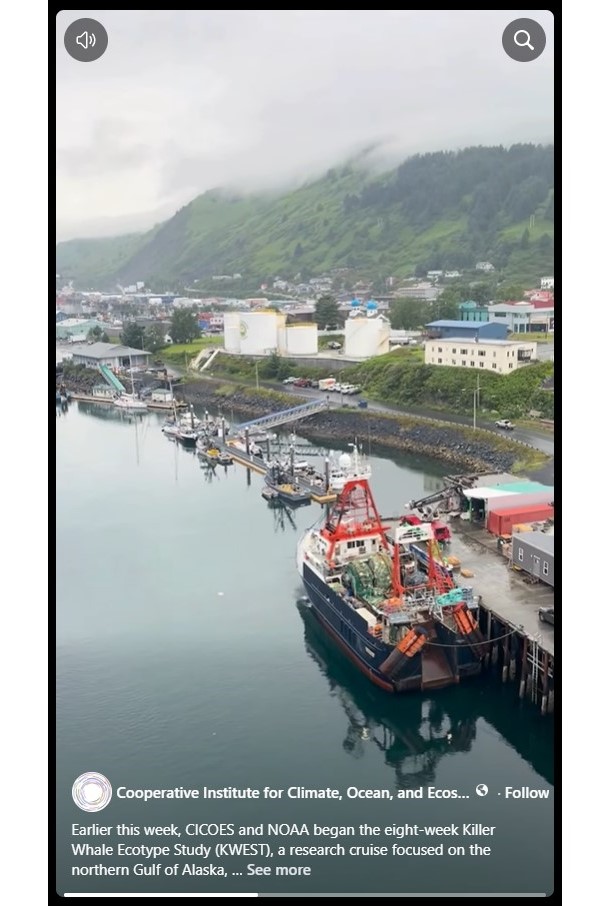
The KWEST cruise is a partnership between the University of Washington’s Cooperative Institute for Climate, Ocean, and Ecosystem Studies and NOAA’s Alaska Fisheries Science Center. The US Navy, which is funding this survey, will use the collected data to further inform marine species monitoring and mitigation requirements for training activities during Exercise Northern Edge in the Gulf of Alaska. The Navy has funded marine research, surveys, and data collection efforts in Alaska since 2004.

